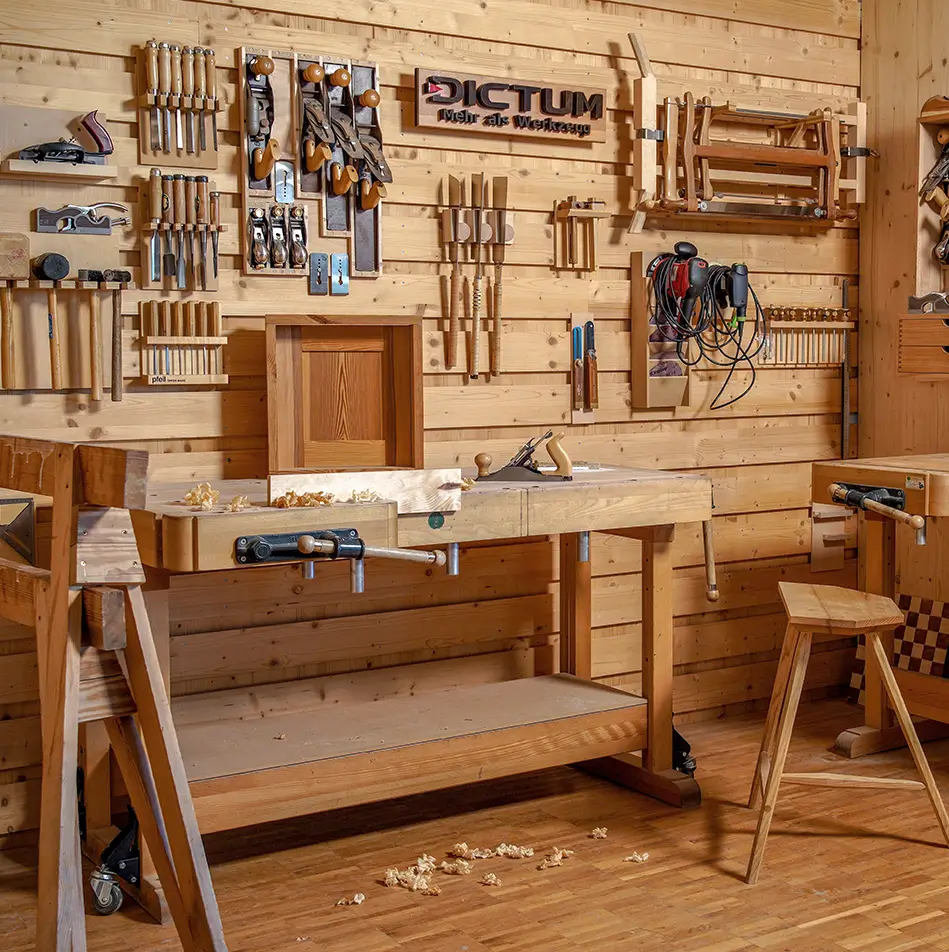
Woodcutting tools


Woodcutting tools
EXPERT KNOWLEDGE WOODCUTTING TOOLS

Construction of the wood carving tools

Wood carving tools have a metal blade with a length of approx. 70 mm. In contrast to linocut knives, the shaft is somewhat more solid. The knife has a mushroom-shaped wooden handle, which enables precise and ergonomic handling.
Matériau du manche tools for woodcutting
In addition to classic wood carving knives, carving knives, tarso knives and classic carving chisels are often used for this technique. These carving tools complement each other and enable a variety of carving techniques. Carving knives are particularly useful for fine lines and details, while tarso knives are used for larger areas and deeper cuts. Chisels (colloquially known as Skew chisels) are also frequently used in wood carving. This variety of knives and carving tools allows for detailed and versatile woodworking.
Sharpening and maintaining tools
Proper care is crucial to prolong the life of your wood carving tools. Slipstones shaped stones in different grits are ideal for sharpening the irons. It is important to clean the tools after each use and store them in a dry place to prevent rusting. A well-sharpened Carving knives and Skew chisels are essential for successful woodworking.
Types of wood for woodcutting
Linoleum (linoleum), or sheets made of plastic, which are used as printing plate material for linocuts, have a uniform structure due to their artificial production. Naturally grown material is used for woodcutting, which must be carefully selected in terms of the type of wood and the grain pattern. The wood must be correspondingly splice-resistant and the degree of hardness must be able to withstand the pressure load. Softwoods are not suitable for this purpose. Fruit woods such as pear, apple or cherry are suitable for cutting. These woods are hard enough to hold the fine details of the cut and are still pleasant to work with.
Process of woodcutting
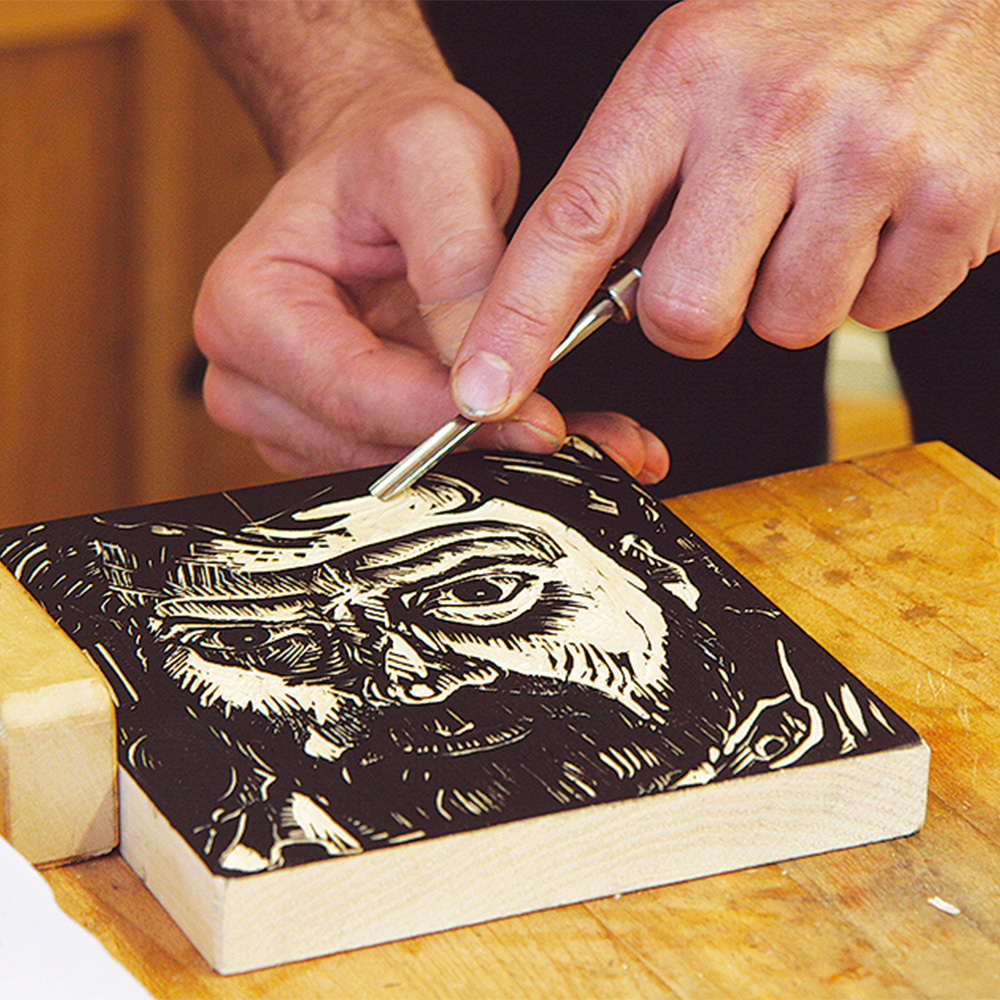

Tips for beginners
For beginners, it is important to familiarise yourself with the various wood carving tools and learn the basics of the technique. Start with simple designs and work your way up to more complex patterns. It is helpful to experiment with different types of wood to get a feel for the different properties. A wood carving set can be a good aid here.
Safety when working with wood carving tools

Safety is important when working with wood carving tools. Always use a stable work surface and make sure that your knives are sharp. Blunt blades require more force and increase the risk of injury. Wear protective gloves if necessary and always work with concentration and attention.
Matériau du manche:
A cut printing plate (printing block) is only the first step for a successful woodcut. For printing, you need the appropriate printing ink, application rollers, folding bone and high-quality paper, a printing press if necessary and other equipment.
You can find courses on this topic here.