Abrasives


Abrasives
EXPERT KNOWLEDGE ABRASIVES
Types of abrasives
There are different types of abrasives, which are used differently depending on the Use and Material.
- Abrasive paper sandpaper: Abrasive particles applied to paper backing material. Mainly suitable for surface sanding.
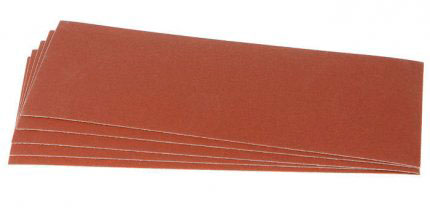
- Abrasive cloths: A more robust fabric backing on which abrasive particles are applied. Particularly suitable for contours and irregular surfaces.
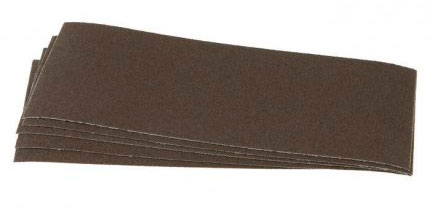
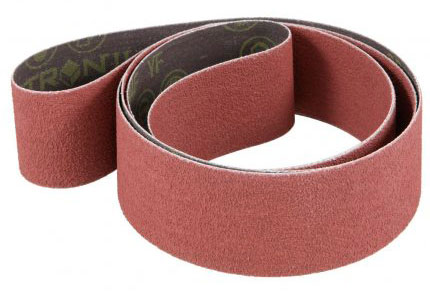
- Sanding belts: Lengthy, endless belts with abrasive grains on a fabric or paper backing. They are used in belt sanders and are ideal for processing large areas.
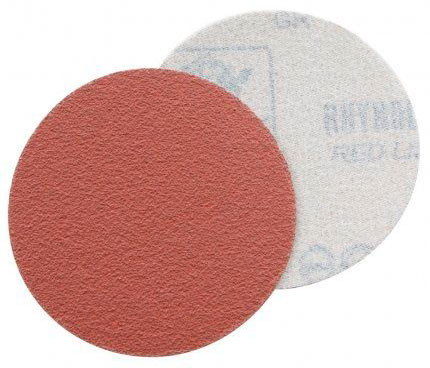
- Grinding wheels sanding discs: Round Grinding wheels sanding discs for machines such as Random orbital sanders or Angle grinders. With Velcro backing or self-adhesive film, depending on use.
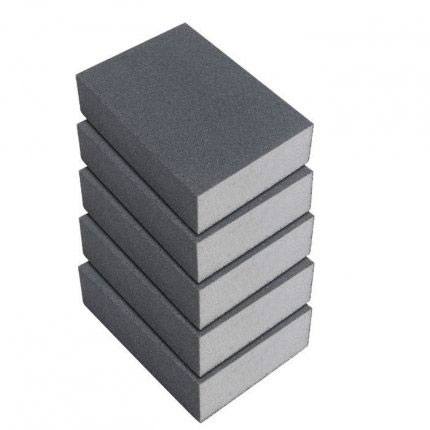
- Abrasive sponges: Coated foam blocks. Flexible and ideal for fine sanding and profiles, as they adapt well to irregularly shaped surfaces.
Sanding materials used
Different abrasive particles are used depending on the use:
-
Aluminium oxide (corundum): This abrasive is particularly versatile and is often used for processing wood, metal and plastic. It is characterised by its high hardness and toughness, which enables a Lengthy service life.
-
Silicon carbide: This abrasive is harder and more brittle than aluminium oxide and is ideal for processing glass, stone, ceramics and non-ferrous metals. It enables fast Material removal and ensures a particularly fine surface.
-
Zirconium oxide: A very durable abrasive. It is often used for processing metals and hardwoods. Thanks to its self-sharpening properties, it retains its cutting properties and performance for a long time. The disadvantage is that it is more expensive than aluminium oxide or silicon carbide.
-
Ceramic Abrasives: These abrasive particles offer extremely high removal rates and a long service life, making them ideal for hardness metals (e.g. stainless steel) and demanding Uses. They have a self-sharpening property, which makes them particularly efficient. However, ceramic Abrasives are generally more costly and often require specialised machines to reach their full potential.
Selecting the right abrasive for different surfaces
The selection of the right abrasive should always be tailored to the specific requirements of the use in order to achieve optimum results.
Sanding work and its use
Sanding work can be divided into different categories, depending on the Intended use:
-
Surface sanding: Large-area processing, usually with belt sanders or Oscillating sanders orbital sanders.
-
Profile sanding: Precise shaping, often with Abrasive cloths or Abrasive sponges.
-
Bevelling before surface treatment or bonding: Ensures better adhesion of paints, stains or adhesives.
-
Intermediate sanding during surface treatment: Fine sanding between layers of lacquer or glaze to improve adhesion and evenness.
Durability and replacement of abrasives:
The service life of an abrasive depends on factors such as Material, pressure and Use. A change is necessary if:
-
Reduced removal rate: The abrasive removes less material.
-
Shiny or smooth spots: Indicates worn abrasive grain.
-
Excessive heat development: May indicate dull abrasives.
Quality characteristics of abrasives:
-
Uniform Grit: Ensures a homogeneous sanding pattern.
-
High-quality bond: Ensures a firm hold of the abrasive grains and extends the service life.
-
Flexible and robust backing: Enables adaptation to different surfaces and increases durability.
Some high-quality abrasives, such as Micromesh, offer grits up to 12000 and are suitable for finishing and polishing. They are suitable for materials such as plastic, horn, wood, many metals and painted surfaces.
What is a "cool cut"?
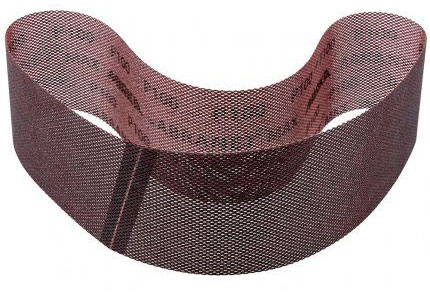
There are special abrasives that enable so-called " cool sanding". These mesh abrasives usually consist of an open-meshed backing material (e.g. polyamide or polyester fabric) to which the abrasive particles are applied.
Shapes of mesh abrasives
- Sanding belts - for belt sanders, suitable for large surfaces
- Grinding wheels sanding discs - for random orbital sanders or angle grinders
- Sanding rollers - for manual processing or customised cuts
- Sanding strips/pads - for hand sanders or sanding blocks
Advantages of mesh abrasives
- Cooler sanding: The open structure allows heat to dissipate better, which prevents the Material from overheating.
- Longer service life: Less clogging with dust and chips leads to a longer service life.
- Better extraction: The mesh structure allows sanding dust to be extracted more effectively.
- Flexibility: Particularly suitable for uneven surfaces or contours.
- More even sanding pattern: Reduced scoring and even material removal.
Brands such as Abranet (Mirka) or Cubitron mesh (3M) are particularly well known for this type of abrasive. They are ideal for uses where freedom from dust, durability and temperature control are important.
Accessories for Abrasives: Practical aids for optimum results
In addition to the abrasives themselves, the right accessories play an important role in achieving efficient and precise sanding results. Useful accessories and aids are presented below.
1. Sanding blocks and grinding aids
-
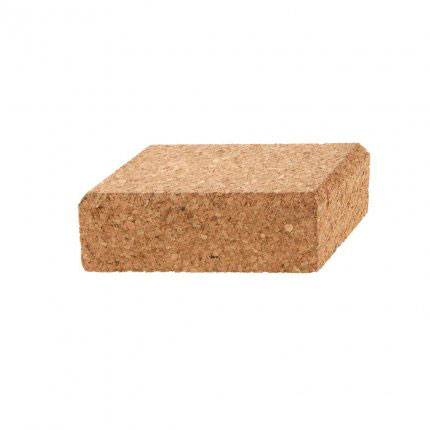
Sanding blocks:
- Sanding blocks serve as a base for Abrasive paper sandpaper and provide even pressure distribution.
- They are available in various materials such as wood, cork or plastic and are often equipped with ergonomic handles.
- They make sanding easier and are easy on the hands, especially when working on larger surfaces or over longer periods of time.
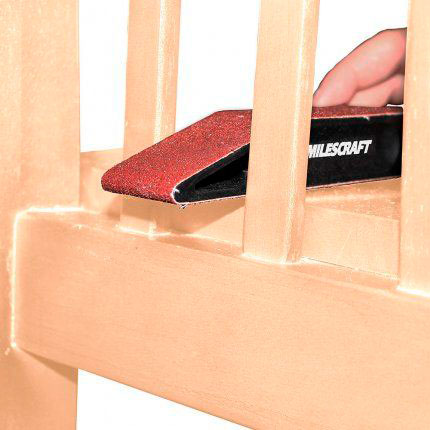
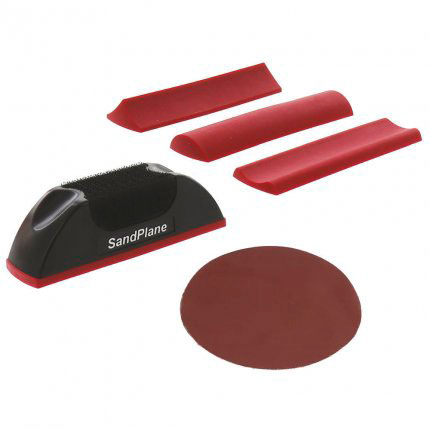
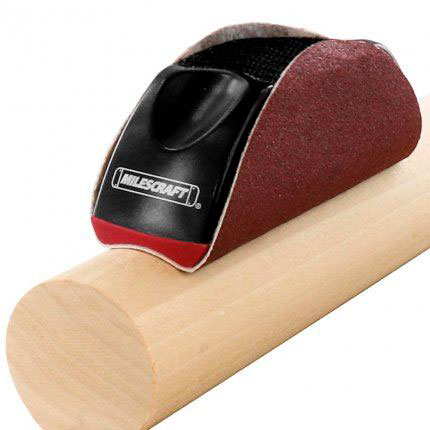
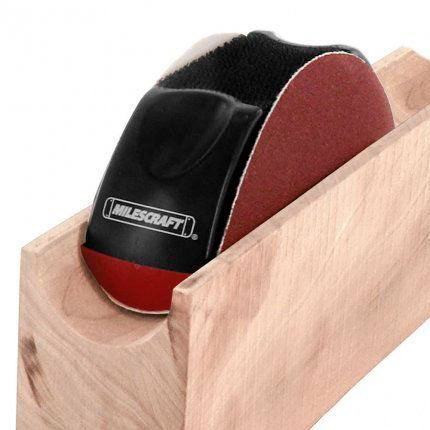
- Grinding aids:
- Specialised grinding aids are available for precise work on corners, edges or hard-to-reach areas.
- These include Profile or angle sanding aids that adapt to the geometry of the workpieces.
2. cleaning options for Abrasives
-
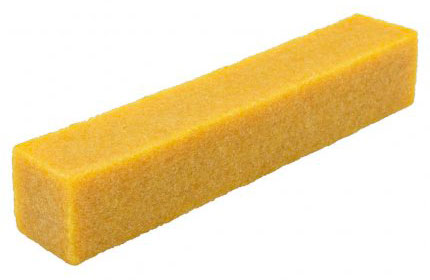
Rubber cleaner:
- A cleaning block made of natural rubber or synthetic Material removes residues such as dust, resin or lacquer from sanding belts, discs or paper.
- The service life of the Abrasive can be significantly extended by regular cleaning.
-
Compressed air:
- Particularly with sanders, residues on the abrasive used can be effectively removed using compressed air.
-
Water and brushes:
- Wet cleaning can be used with certain abrasives, such as Waterproof Abrasive paper sandpaper. A soft brush is suitable for this in order not to damage the abrasive grains.
Tips for using sanding accessories
- Make sure that the Abrasive paper sandpaper sits firmly on the sanding block or machine to achieve an even sanding result.
- Clean Abrasives regularly to increase their service life and avoid wasting material.
Machines for grinding
Our abrasives are compatible with the DICTUM grinders and leave nothing to be desired. Different machines are used depending on the Material, desired removal rate and surface finish. Factors such as Sanding belts Dimensions, Grit of the Abrasive and additional functions such as a compatible dust extraction system play an important role.
- Oscillating sanders orbital sanders: The linear, reciprocating movement of the sanding pad creates a uniform sanding pattern that is particularly suitable for fine and medium-sized flat surfaces. It is often used forintermediatesanding before varnishing or sealing.
-
Random orbital sanders: This sander combines an eccentric rotation with an oscillating movement, resulting in a particularly fine and even sanding pattern without scoring. Models with a125mm diameter are particularly common and are ideal for working on wood, metal and plastics. Thanks to the high removal rate and the option of using fine grits for intermediate sanding or polishing, the Random orbital sanders are versatile tools.
-
Belt sanders: These machines are equipped with a rotating sanding belt that enables a high removal rate on large surfaces.Sanding belt dimensions vary depending on the model, but common variants are75x 533 mm or 100 x 610 mm. Coarse grits are suitable for removing material quickly, while finer grits ensure a smooth finish.
-
Disc sanders: With a rotating125mm or larger diameter sanding wheel, precise sanding of edges and flats is possible. These semi-stationary machines are ideal for fine sanding, polishing or controlled material removal.
- Combined Belt disc sanders and disc sanders: combines the advantages of a belt sander and disc sander in one machine
- Angle grinders: A particularly powerful tool for material removal, especially for metalworking. Equipped with125mm Diameter Grinding wheels sanding discs or larger variants, the Angle grinders can be used fordeburringSteel as well as for coarse grinding work on stone or concrete.
By choosing the right grinder, the right Abrasive Grit and using a dust extraction system, the grinding result can be optimised in a targeted manner during machine grinding, whether for coarse removal work or fine polishing processes.