
Japanese saws with interchangeable blade


Japanese saws with interchangeable blade
EXPERT KNOWLEDGE JAPANESE SAWS
What are the advantages of Japanese saws?

Reduced cutting effort due to thin blades
Conventional saws cut on the push stroke, which requires relatively thick blades to ensure sufficient stability. Japanese saws, by contrast, cut on the pull stroke. This allows the blades to be much thinner, as they are only subjected to tension and cannot buckle. The resulting kerf is finer, and the required cutting effort is significantly reduced.
Which Japanese saw should you choose?
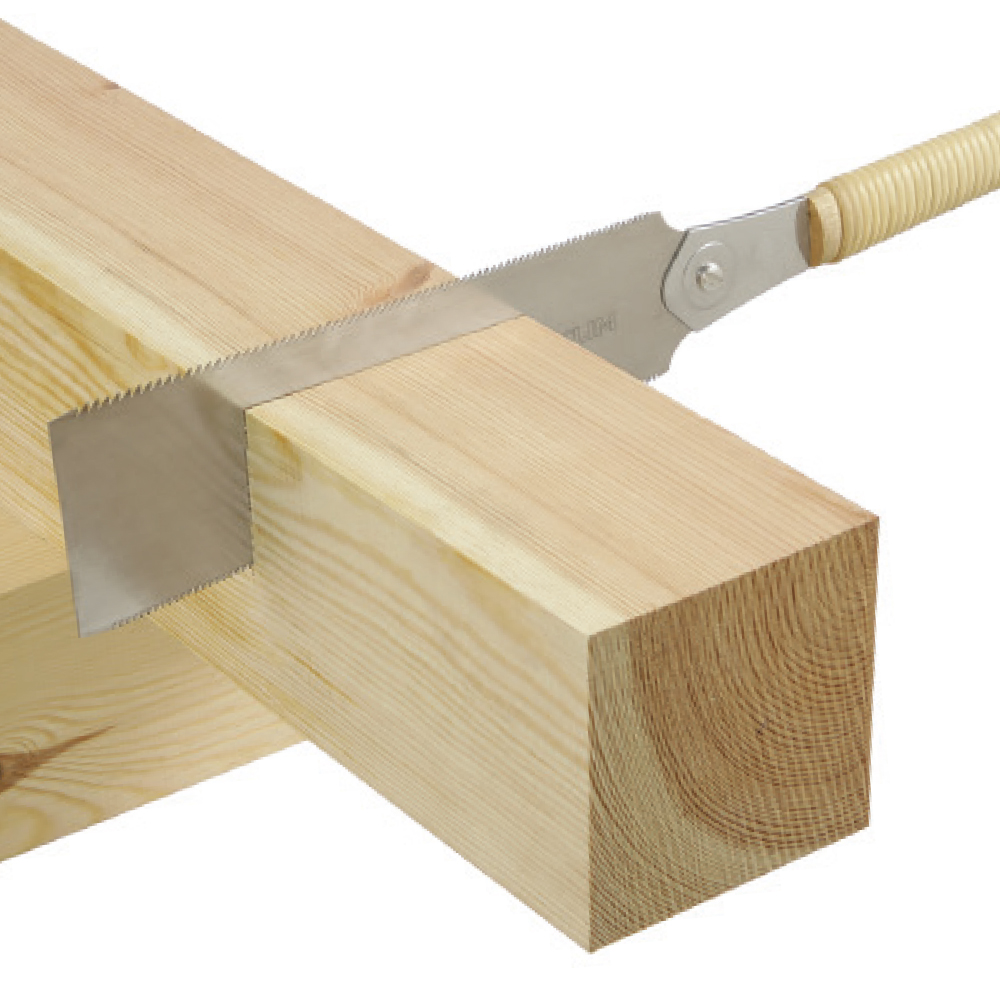
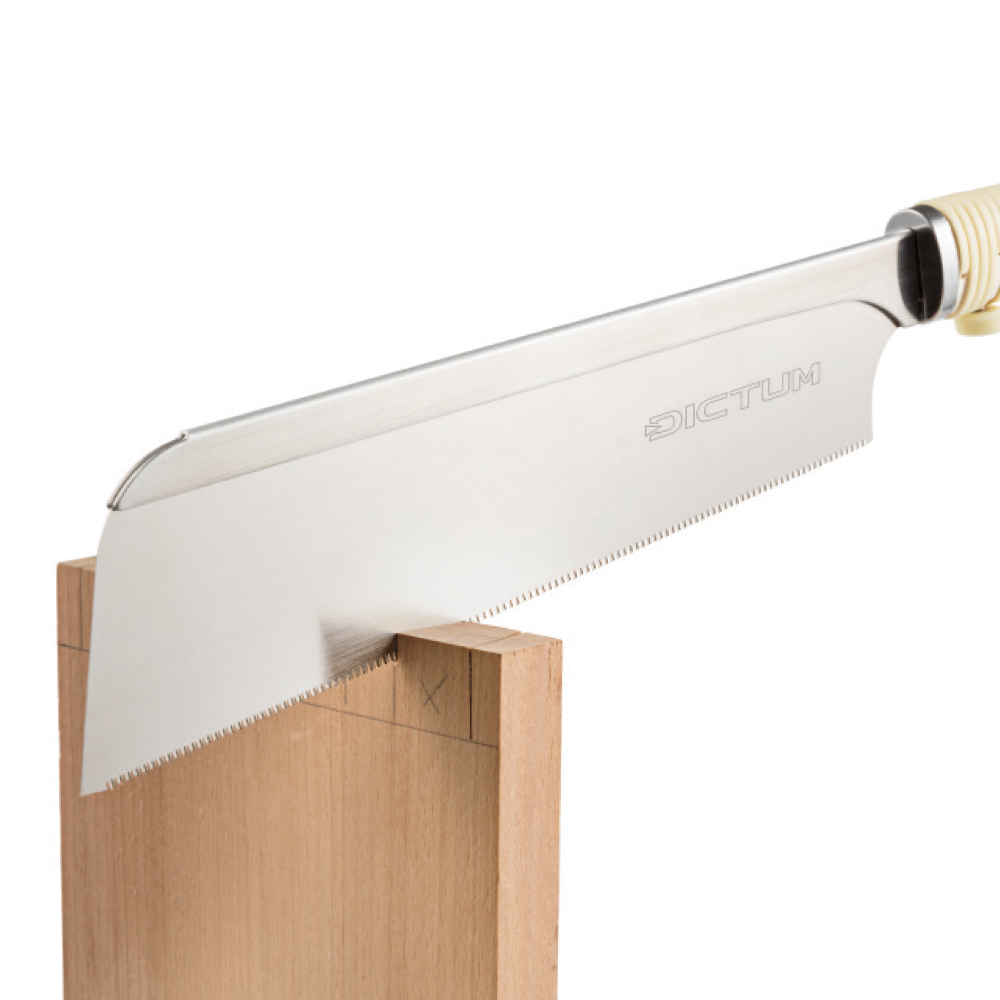
Versatile Ryoba (left) and fine Dozuki (right) in direct comparison.
Japanese saws work on the pull stroke rather than the push stroke used by Western saws. For many users, this technique takes some getting used to. Each type of Japanese saw is designed for a specific purpose.
A Ryoba is an excellent starting point. Its blade is toothed on both sides: one side for rip cuts, the other for crosscuts. The blade is comparatively thick and robust (approx. 0.6 mm), making it ideal for deeper cuts and for cutting tenons, for example in mortise-and-tenon joints.
For finer work, a Dozuki is the preferred choice. Its blade is reinforced by a back, allowing for particularly precise cuts. The blade is thinner (approx. 0.3–0.5 mm) and more finely toothed than that of a Ryoba. Dozuki saws are therefore ideal for accurate crosscuts and joinery work. The depth of cut is limited by the back.
If you need a robust saw with unlimited cutting depth, a Kataba is the right option. This backless Japanese saw is available with rip, crosscut or universal tooth patterns.
Should you buy a set or individual saws?
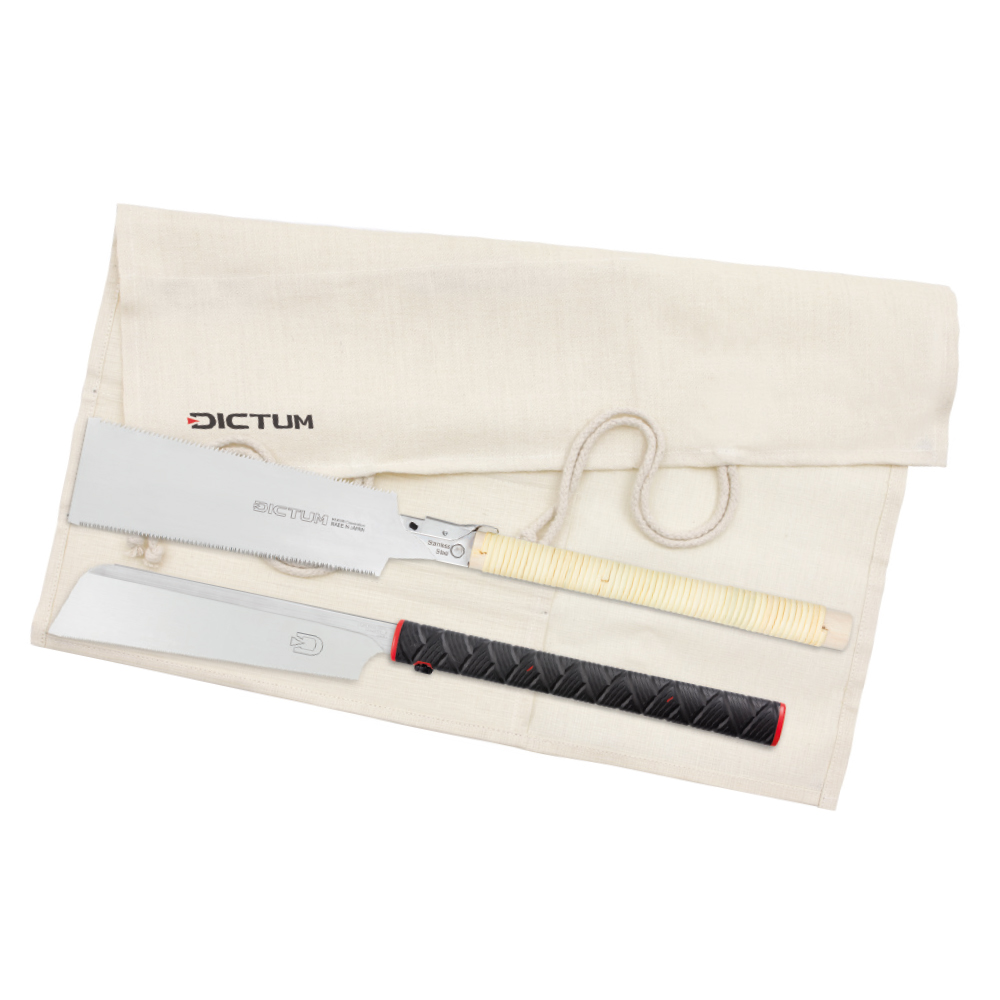
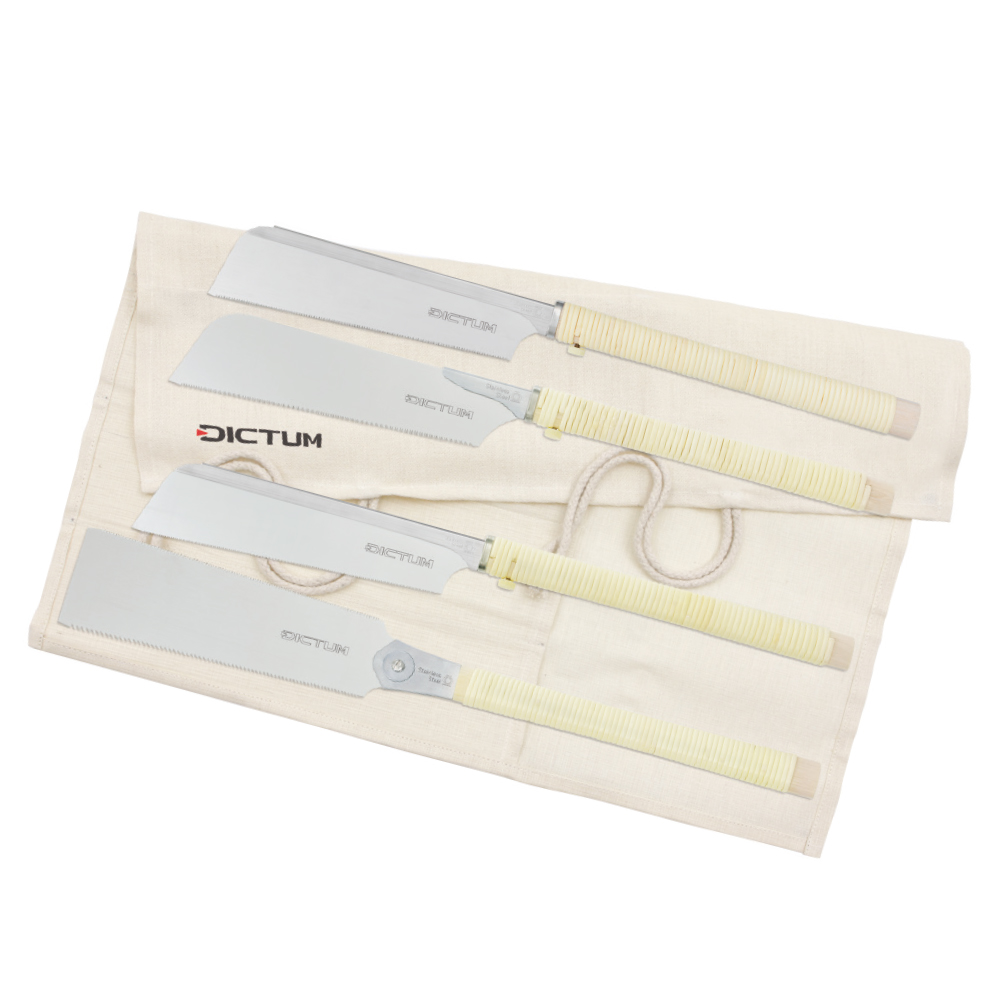
Japanese saws in 2-piece and 4-piece sets
We offer Japanese saws both individually and in multi-piece sets. When choosing a set, you can select from configurations with two, three or four saws. The composition of the sets is designed to build progressively on each other.
A two-piece set provides a solid basic setup for common joinery cuts. DICTUM two-piece sets typically include a Ryoba and a Dozuki. These sets can be usefully supplemented with a more robust saw for crosscuts in hardwoods and sheet materials. A Kataba with a specially hardened blade is therefore often added as a third saw.
Four-piece sets are intended for more demanding woodworkers. An additional fine-toothed Dozuki for precise crosscutting completes the set.
All our Japanese saw sets include a practical roll case with multiple compartments. This allows you to expand a 2-piece or 3-piece set at a later stage.
Compact sets are designed as entry-level options for smaller projects and model making. For users who require greater flexibility on the move, we also offer sets with interchangeable blades. These consist of a single handle combined with different blades that can be easily changed using a quick-release mechanism.
Japanese saws - FAQ
Which Japanese saw is suitable for fine joinery?
A fine-toothed Dozuki with universal tooth pattern is generally recommended. Japanese joinery often involves cuts in multiple directions (rip, cross and diagonal). The reinforced blade allows for precise control.
Which Japanese saw is suitable for larger joints?
A Ryoba is the traditional choice. Its double-sided blade allows you to cut the tenon with the coarser rip teeth and then trim it cleanly with the finer crosscut teeth.
Which Japanese saw is suitable for sheet materials?
Adhesives in sheet materials place considerable strain on the blade. For these materials, as well as for impregnated timber or hardwood, choose a saw labelled »Super Hard«. These are available as Dozuki, Kataba or Robusuta folding saws.
What tooth forms do Japanese saws use?
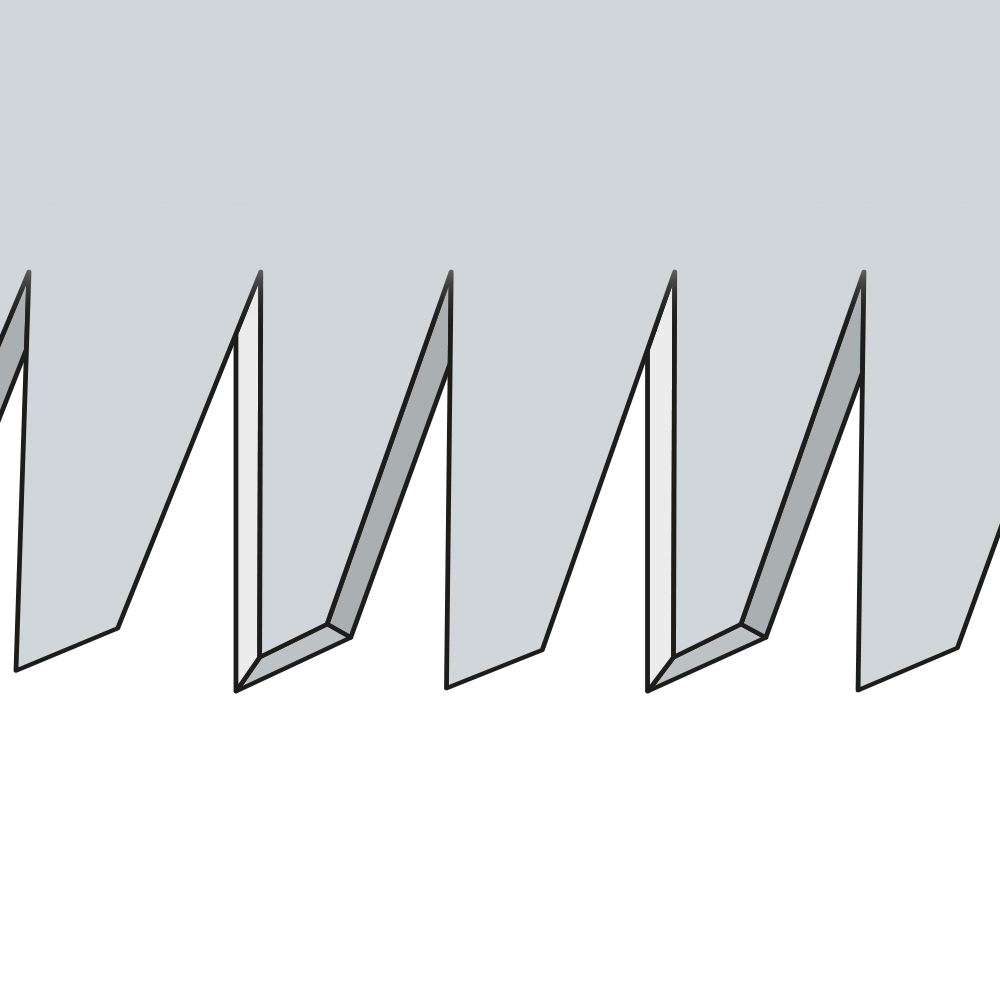
Trapezoidal teeth
Primarily used for crosscuts. The teeth are ground with three cutting edges, allowing them to sever the wood fibres cleanly and produce very smooth surfaces.
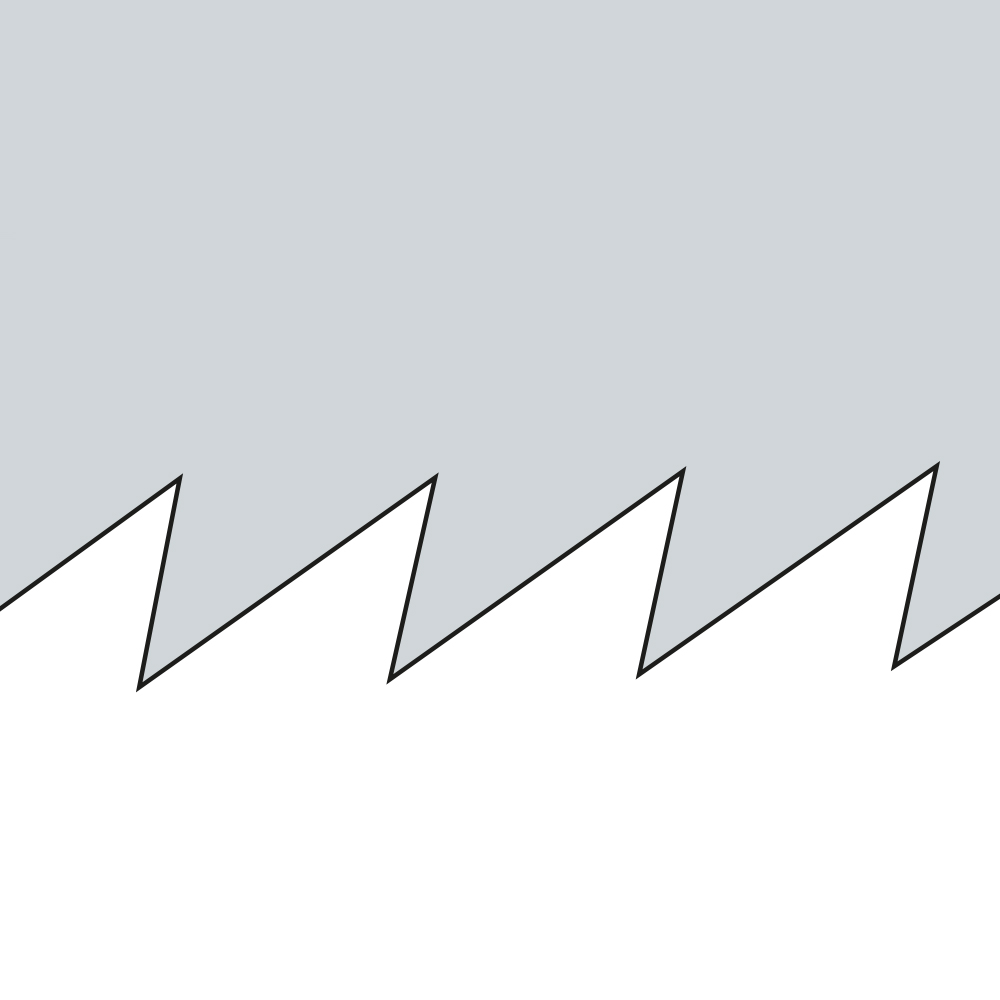
Triangular teeth
Ideal for rip cuts. These teeth act like small plane blades, lifting the fibres out of the wood. The tooth pitch often varies along the blade: finer near the handle for easier starting, then coarser towards the tip for higher cutting performance.
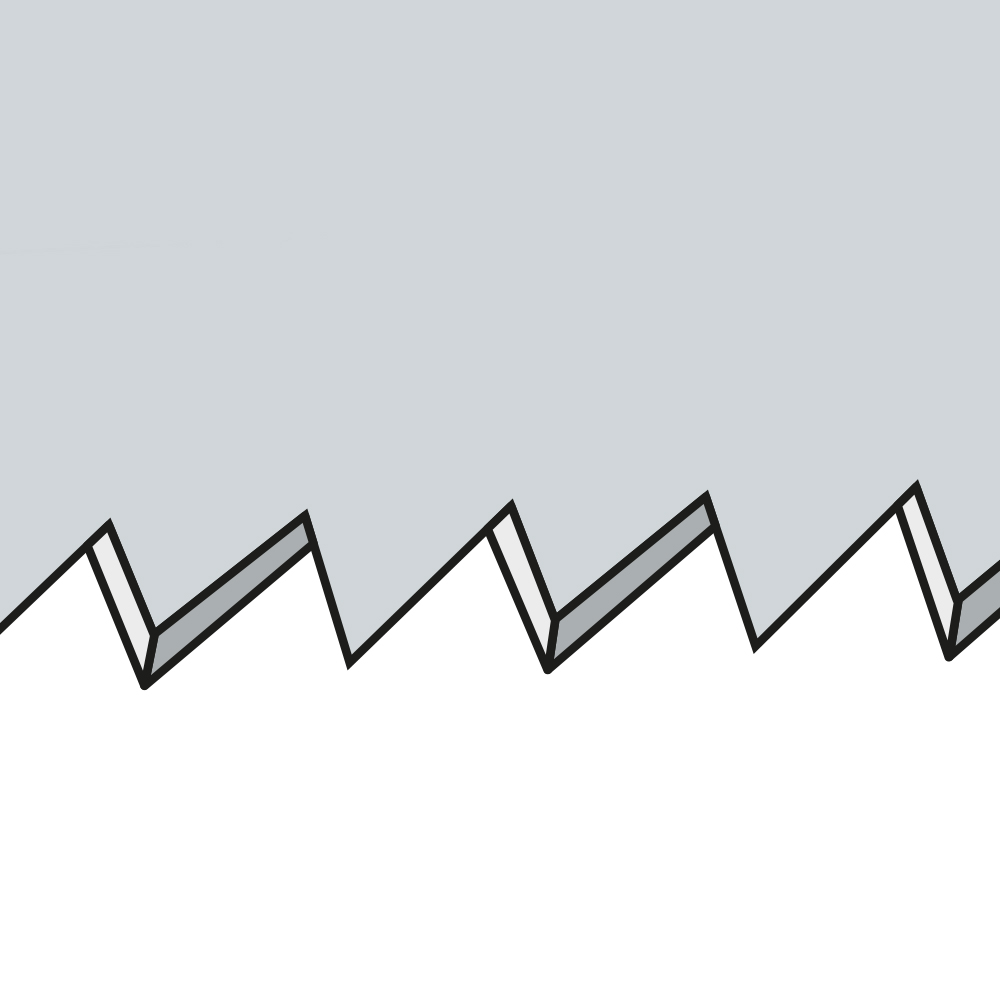
Universal teeth
A combination of the above tooth forms, suitable for rip, cross and diagonal cuts.
Japanese saws are designed with tooth geometries specifically optimised for different cutting directions relative to the grain.
The extremely sharp tooth geometry produces clean cut surfaces that usually do not require further finishing with chisels or planes. Even with fibrous wood, the edges of the cut remain clean. This saves time and improves the final result.
Can Japanese saws be sharpened?
Japanese saws with fixed blades, traditionally made in small workshops, can be resharpened. However, sharpening these saws requires considerable experience, specialised tools and patience.
For this reason, many woodworkers prefer Japanese saws with interchangeable blades. These blades are hardened for long service life but cannot be resharpened. Once dull or damaged, they can simply be replaced. We offer suitable replacement blades for almost all Japanese saws in our range.
Which handle should you choose?

We offer five handle types for Japanese saws:
- Wave Grip: Lightweight alderwood handle with enhanced grip
- Traditional Grip: Original Japanese wooden handles with rattan wrapping (no plastic or inferior materials)
- Power Grip: Rubberised, low-maintenance handles for demanding use (e.g. on site or during installation)
- Interchangeable handles: For flexible use with different blades
- Folding handles: Hardwood handles for compact transport and protection of the teeth
Why does DICTUM specify tooth pitch in mm?
Japanese saw blades are generally much finer than Western saws, where tooth pitch is usually given in TPI (teeth per inch).
We specify the tooth spacing — the distance between two tooth tips — in millimetres to make this important parameter easier to understand. For example, a blade with 6 TPI corresponds to a tooth spacing of 4.28 mm. Some Japanese saws have tooth spacing of 1 mm or less.
