
Buffing wheels


Buffing wheels
EXPERT KNOWLEDGE BUFFING WHEELS
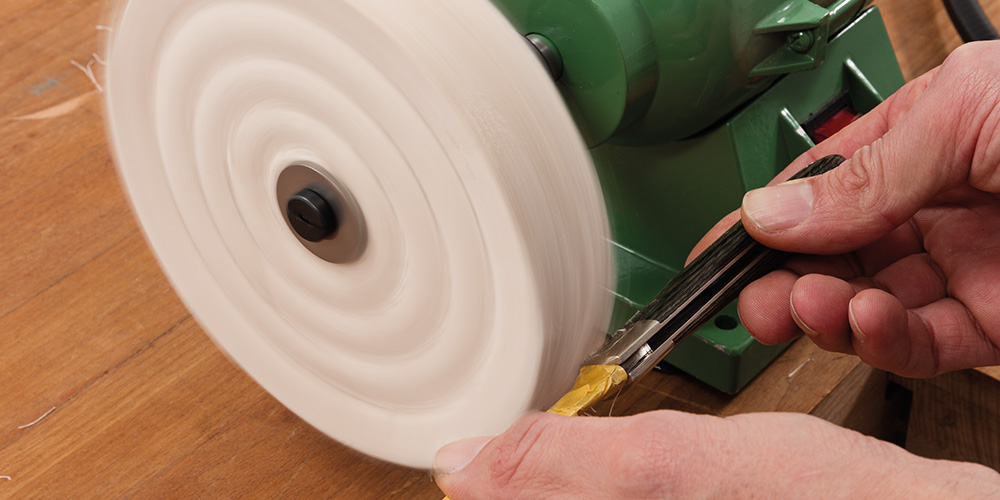
Structure and materials of the buffing wheels
Buffing wheels are usually made of cotton, sisal (a natural fibre from the Algarve) or another soft material, which is stacked in many thin layers and sewn together tightly. Cotton is a particularly popular material as it is soft and robust at the same time, making the buffing wheels suitable for more delicate metals such as brass and copper without scratching the surface.
Different types of buffing wheels can be used depending on the use and the desired result. Unbleached discs are particularly popular, as they absorb polishing pastes particularly well and enable an even finish. Harder buffing wheels or polishing wheels made of Felt can be used for coarser work or materials that need to be polished more intensively.
Range of application and use
The main task of buffing wheels is to polish metal surfaces. Not only can they be used to polish bare metals to a high shine, but also to remove light scratches and grinding marks. Buffing wheels are used for workpieces made of aluminium, brass and copper, as these metals have an attractive, shiny surface after polishing.
The buffing wheels are used on a drill, pillar drill or bench polisher or by means of a flexible shaft. Special adapters or spindles are often required to securely fasten the disc. There are also special discs for Angle grinders, but these are usually made of harder Felt.
How the Polishing pastes work
To achieve optimum results, the Buffing wheels are usually used with a Polishing pastes. The Polishing pastes are used to increase the removal rate of the Buffing wheels and to achieve an even finish. The pastes are available in different grits, from coarse to fine, so that polishing can be carried out in several steps depending on the initial condition of the workpiece.

Coarse polishing pastes are used to smooth out larger irregularities, while fine polishing pastes are responsible for the final high-gloss finish. The combination of buffing wheels and polishing pastes makes it possible to smooth out scratches and unevenness and polish the surface to a high gloss.
Accessories and care
Various accessories are useful for making optimum use of the buffing wheels. Adapters and spindles allow the disc to be securely attached to the machine. It also makes sense to have several Buffing wheels with different degrees of hardness or combined with different Polishing pastes at hand in order to process the surface in several steps to the desired smoothness.
To maintain the buffing wheels, it is advisable to regularly remove excess polishing pastes with a wire brush so that the pores of the cotton do not clog and the wheel can continue to work effectively. The discs should also be stored in a dry and clean place to increase their longevity.
