
Folding knives


Folding knives
EXPERT KNOWLEDGE FOLDING KNIVES
Find out everything you need to know about folding knives and pocket knives — from choosing the right model to proper care, for everyday use, outdoor activities and collectors.
Folding knives and pocket knives are indispensable tools for everyday use, outdoor activities and specialist applications. Thanks to their compact design and folding blades, they are safe and easy to carry. Here you will find all the key information about folding knives — from how they work and the materials used to proper care.
Construction and function of folding knives
Folding knives and pocket knives are characterised by their folding blade, which can be stored safely inside the handle. Depending on the intended use, different mechanisms such as slip joint, back lock, liner lock, friction folder and frame lock ensure that the blade remains securely locked in the open position. These mechanisms are essential for the safe handling of folding knives.
Folding knives offer different opening mechanisms
These are the most common opening systems:
- Thumb stud
Description: A small protruding stud on the blade that is operated with the thumb to open the blade.
Advantage: Easy to use and widely found on different types of knives.
Disadvantage: Often requires a little practice to open the blade quickly.
2. Flipper
Description: A lever attached to the back of the blade which, when pressed, quickly flips the blade out of the handle.
Advantage: Allows very fast one-handed opening.
Disadvantage: Can be stiff for smaller hands or if the knife is poorly made
3. One-handed button / button lock
Description: A button that is pressed to unlock the blade and allow it to open.
Advantage: Provides a simple and fast one-handed opening option.
Disadvantage: The button could be pressed unintentionally if it is poorly positioned.
4. Automatic opening / out-the-front, OTF
Description: A mechanism in which the blade is automatically pushed forward by pressing a button or lever.
Advantage: Very fast and easy opening.
Disadvantage: Automatic knives are often more expensive and more strictly regulated in many countries.
5. Classic manual opening
Description: The blade is opened by hand, without any special mechanism.
Advantage: Simple and reliable, with no additional moving parts.
Disadvantage: Slower to open than mechanical systems.
6. Combined opening systems
Description: Some folding knives combine several opening options, for example thumb stud and flipper, to increase flexibility when opening.
Advantage: Offers several options depending on preference and situation.
Disadvantage: Can be more complex and more expensive.
7. Index finger hole
Description: A finger hole in the blade through which the index finger is inserted to open the blade.
Advantage: Provides precise control when opening.
Disadvantage: Can be less practical for people with larger hands or when opening the blade quickly.
8. Nail nick
Description: A small cut-out or notch in the blade that is used with a fingernail or finger to open the blade.
Advantage: Offers a traditional and often elegant way of opening the blade, especially on classic pocket knives.
Disadvantage: Opening can be slower than with modern mechanisms and requires a certain amount of dexterity and finger strength.
These opening mechanisms offer different advantages and can be chosen according to personal preference and intended use.
Materials and workmanship
The quality of a folding knife or pocket knife depends largely on the materials used.
- Steel: High-quality folding knives use stainless steel or carbon steel. Stainless steel is corrosion-resistant, while carbon steel is known for its sharpness and durability.
- Coatings: Some folding knives have special coatings that protect the steel against corrosion and improve cutting performance.
-
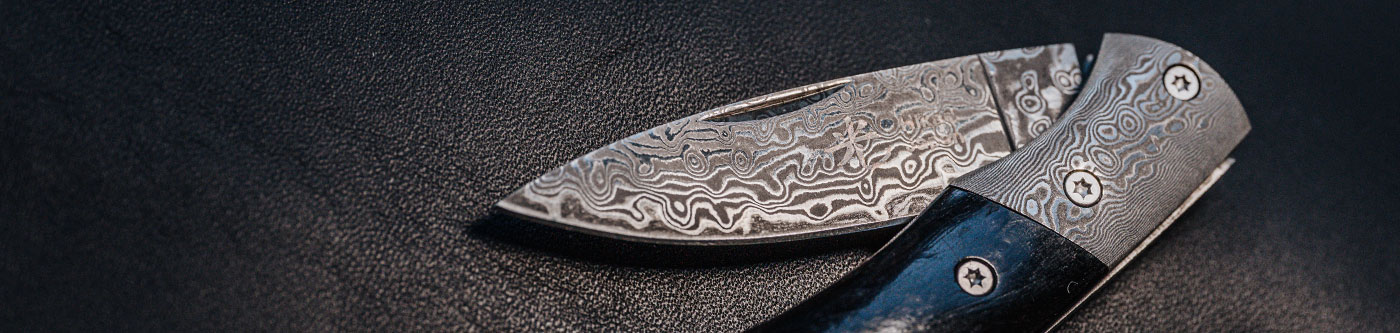
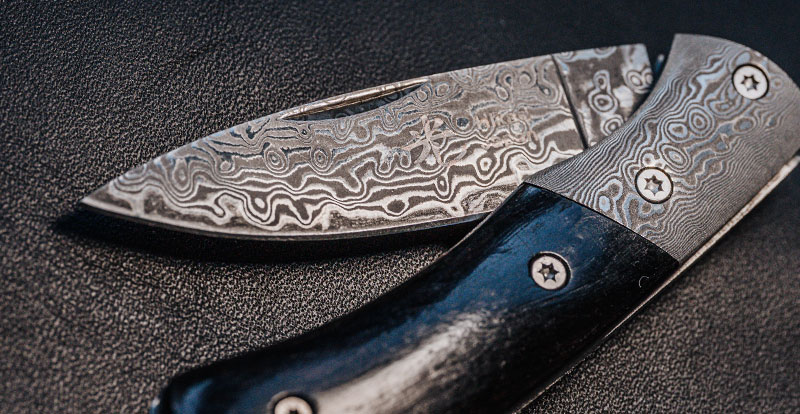
Some premium folding knives have powder-metallurgical Damascus steel blades, combining outstanding edge retention with an exceptional appearance.
Handle materials
The most common handle materials and their characteristic differences:
The blade steel of a neck knife plays a crucial role in its functionality. Many high-quality models use D2 steel. This high-alloy tool steel is known for its excellent wear resistance, edge retention and hardness, making the neck knife ideal for everyday use. It is also robust enough to perform reliably even in demanding tasks.
In addition to the blade material, the handle material is also important. Commonly used handle materials for a neck knife include Micarta and G10. Micarta is a durable, lightweight material that feels pleasant in the hand and provides good grip even in wet conditions. G10 is an extremely resistant glass-fibre composite material, valued especially for its stability and grip.
Metal handles
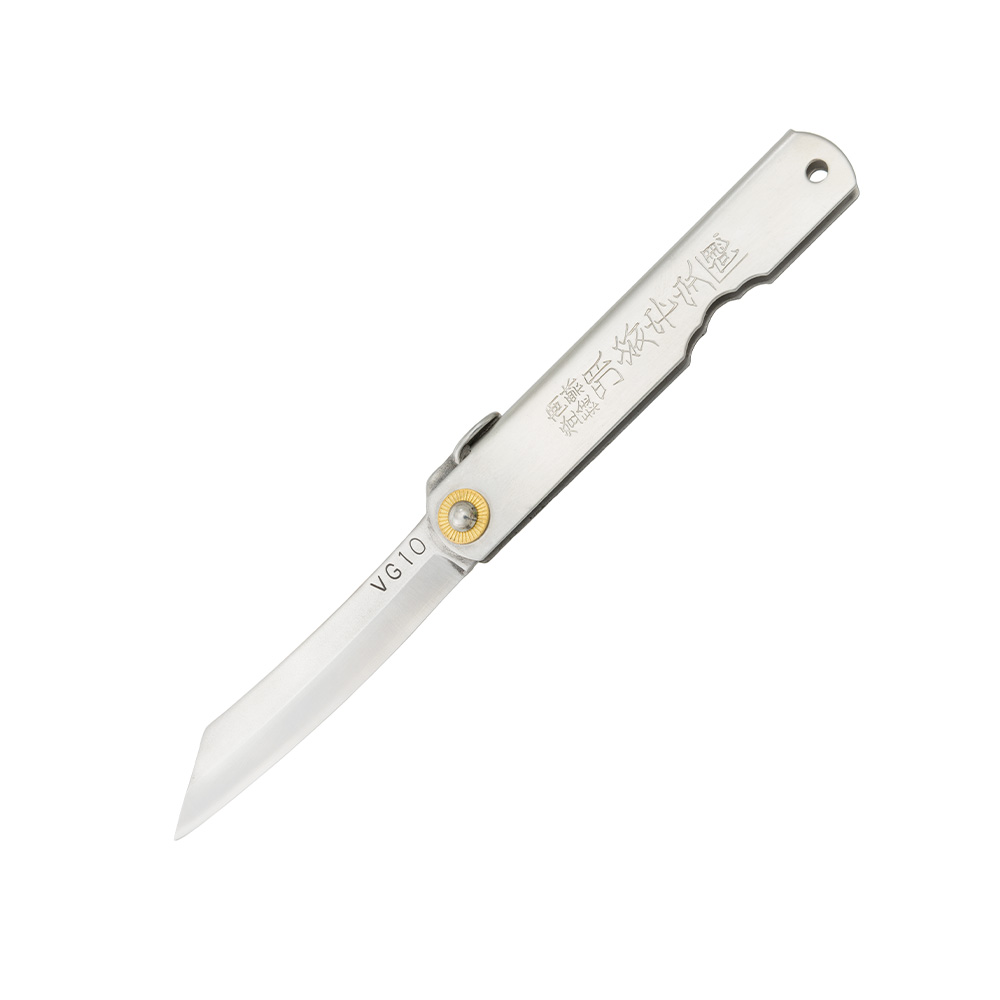
- Advantages: Robust, usually corrosion-resistant, modern appearance.
- Disadvantages: Can feel uncomfortably cold or warm in extreme temperatures.
G10 and Micarta handles
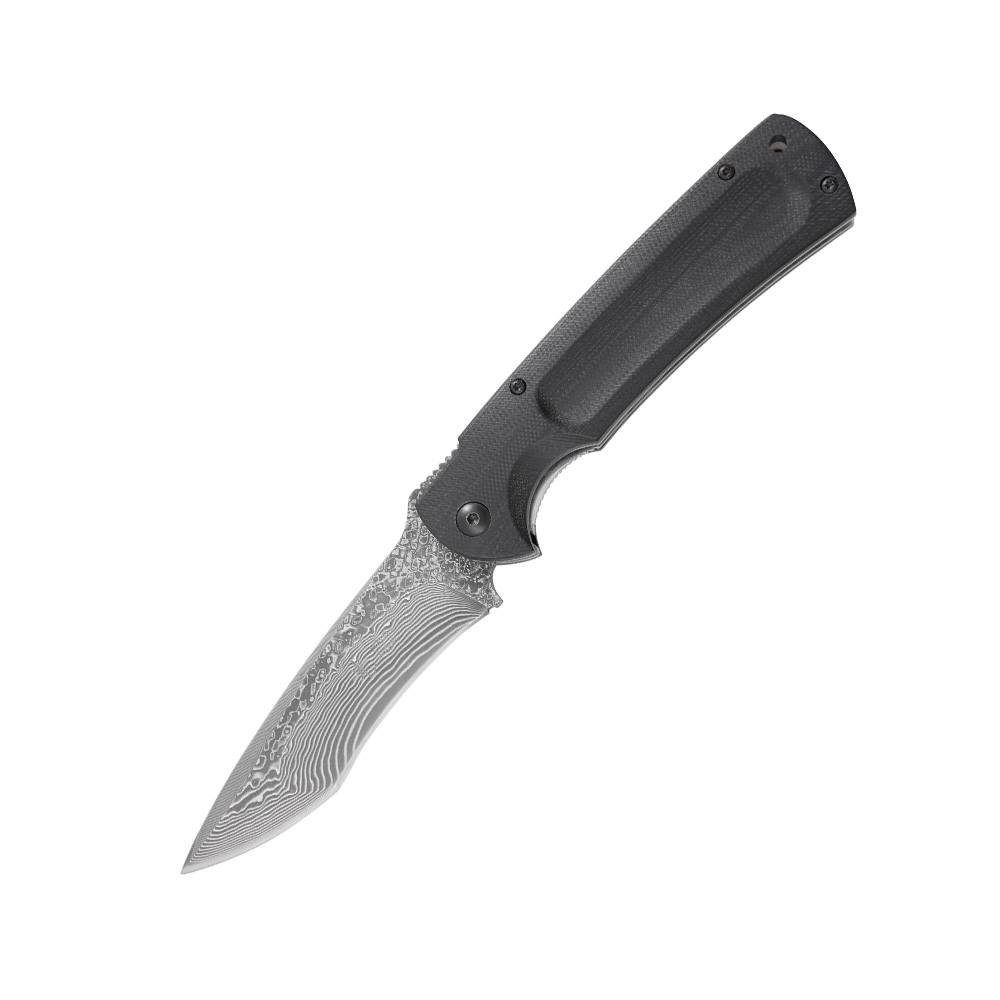
- Advantages: Lightweight, robust, not susceptible to moisture, good grip.
- Disadvantages: Can feel less warm and slightly slippery.
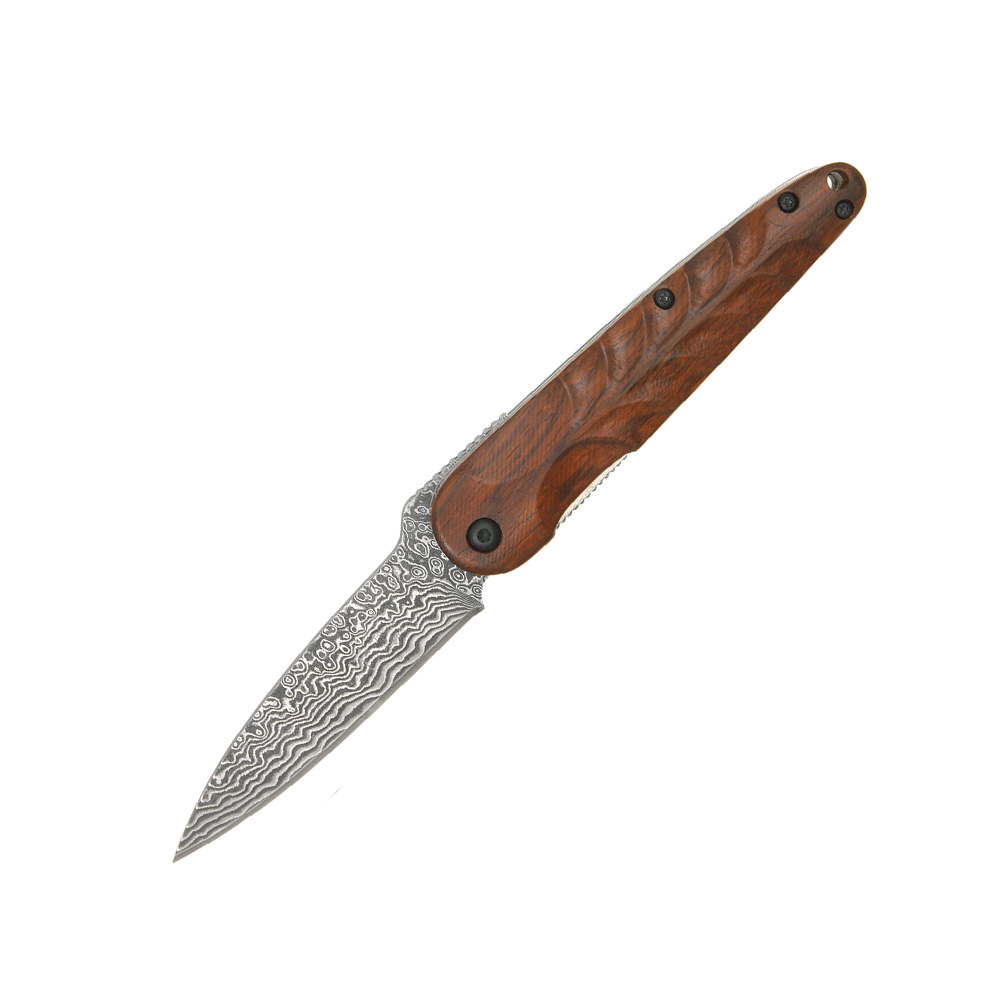
Wood handles
- Advantages: Natural, warm appearance, comfortable in the hand.
- Disadvantages: Susceptible to moisture and temperature fluctuations, requires regular care.
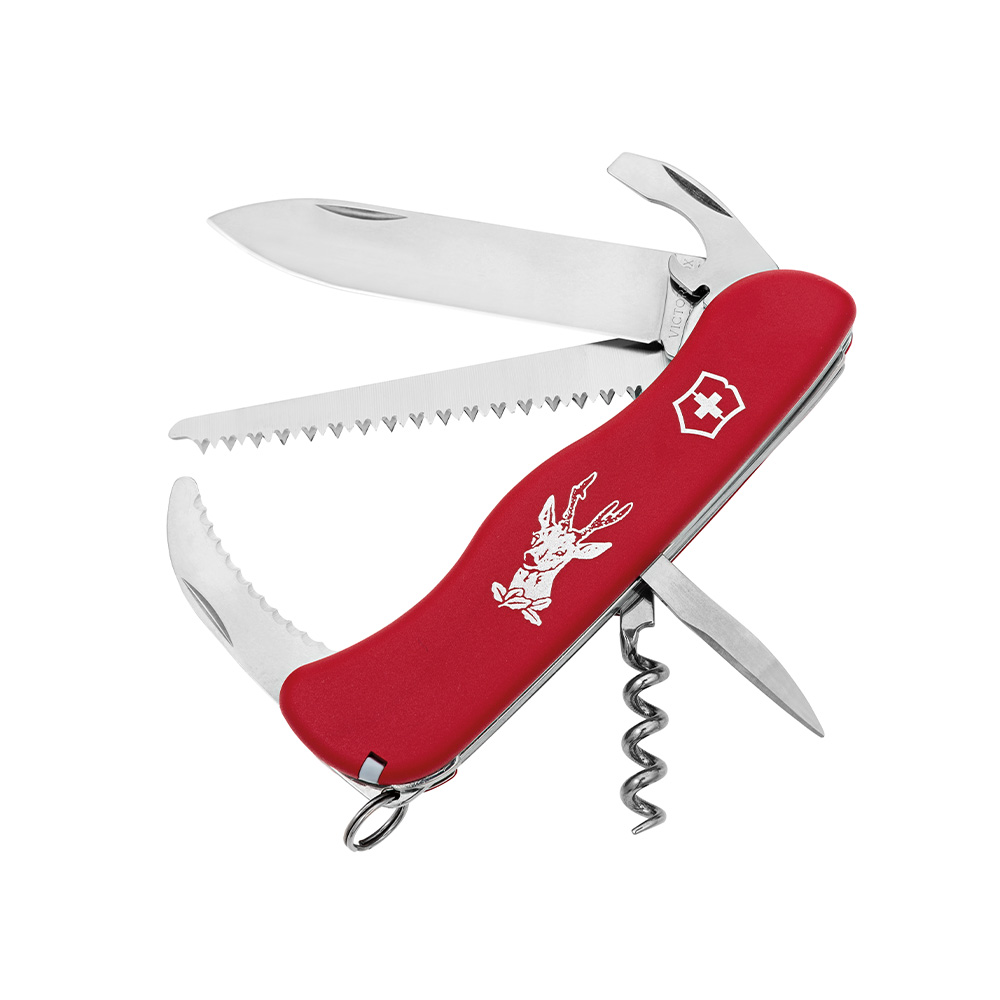
Plastic handles
- Advantages: Lightweight, cost-effective, often non-slip.
- Disadvantages: May not be as aesthetically appealing as other materials.
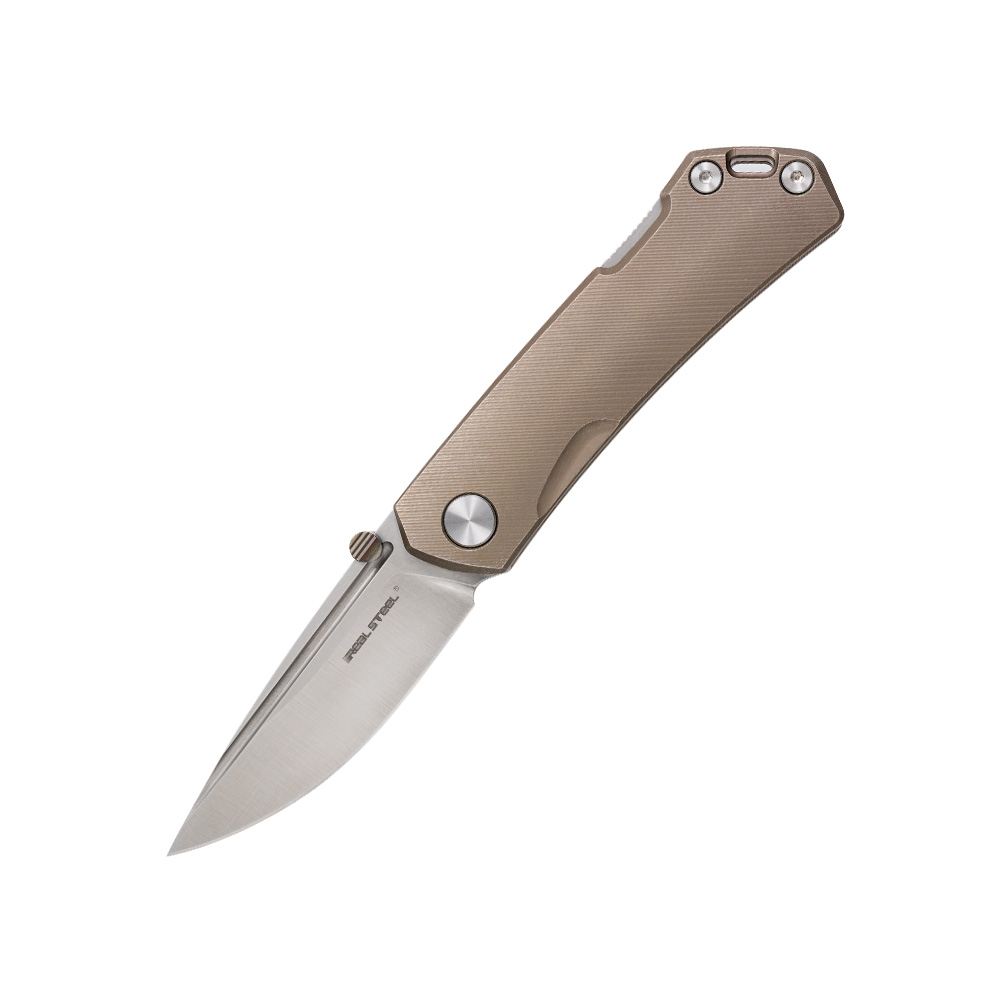
Titanium handles
- Advantages: Lightweight, corrosion-resistant, strong and durable.
- Disadvantages: Can be more expensive and may feel uncomfortably cold or warm in extreme temperatures.
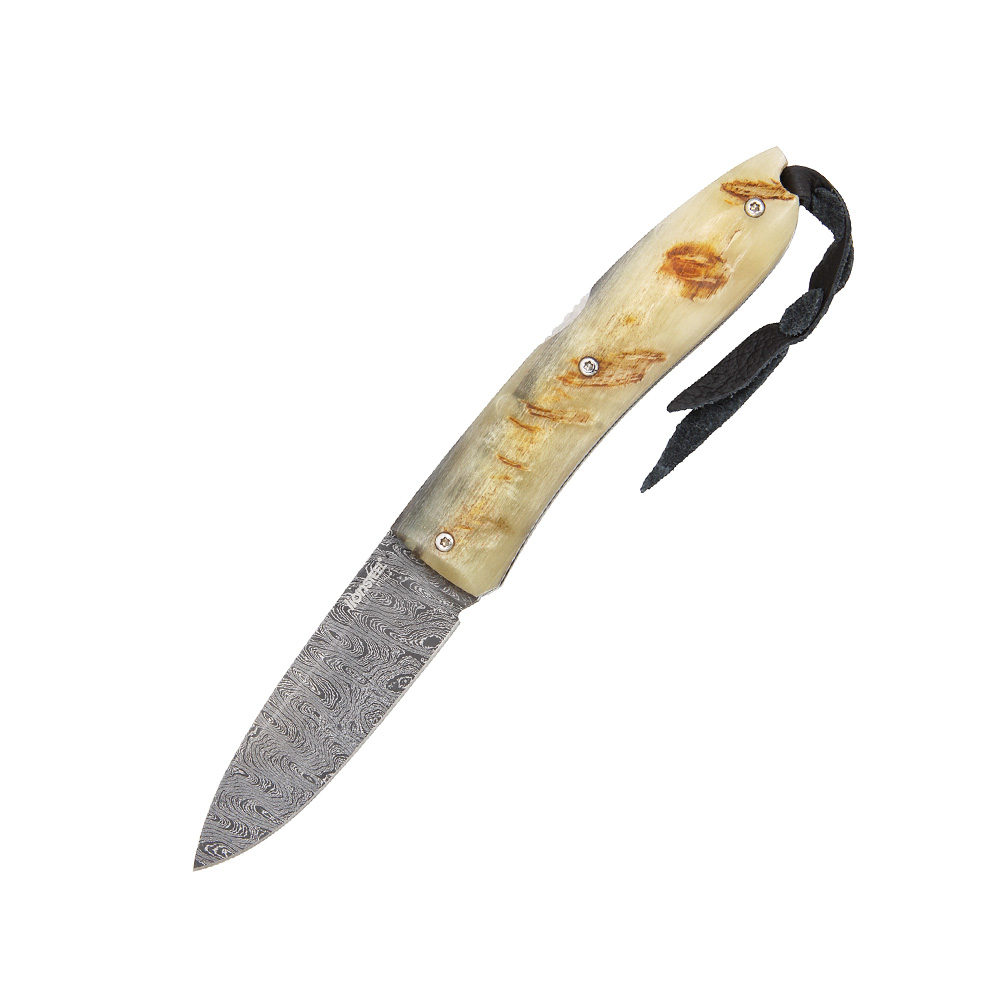
Horn handles
- Advantages: Naturally beautiful, grippy, robust and sustainable.
- Disadvantages: Can be more expensive, susceptible to temperature fluctuations and requires regular care.
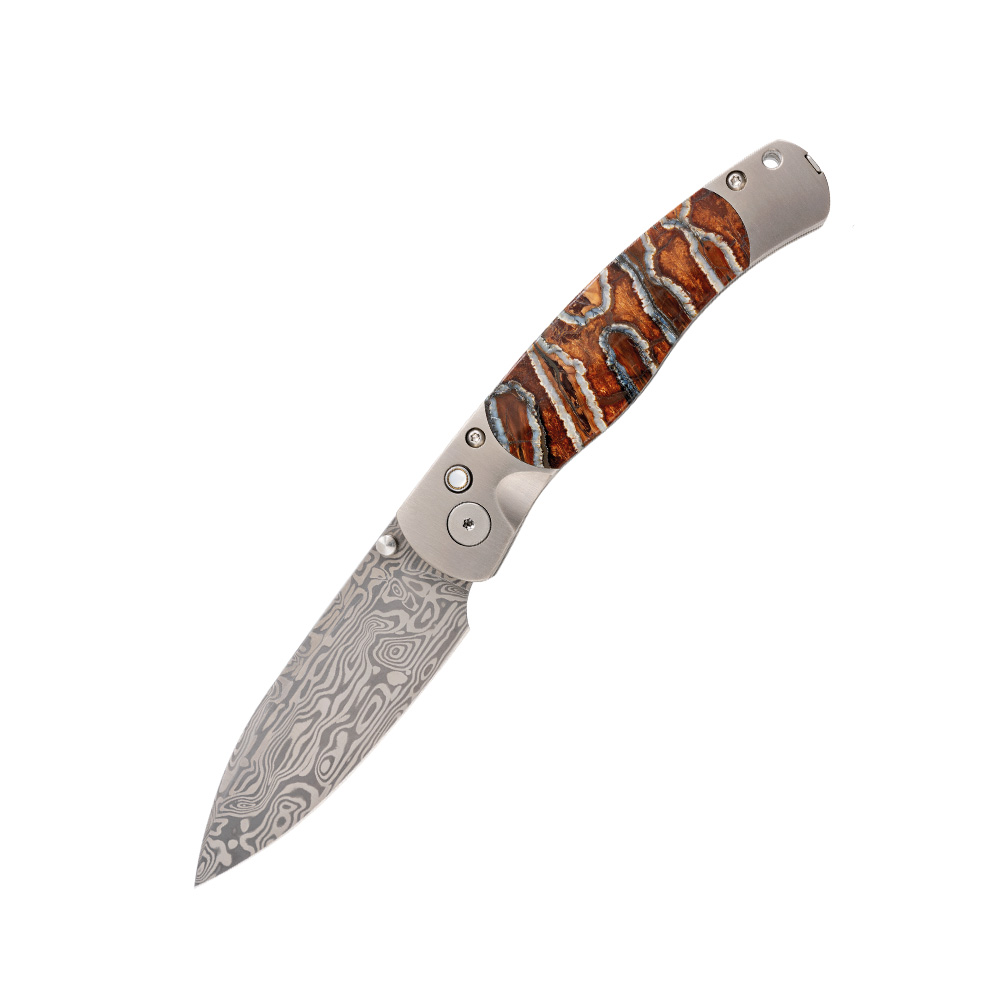
Exclusive handles made of stone, mother-of-pearl and fossils
- Advantages: Unique appearance, robust and resistant, exclusive.
- Disadvantages: Some stones can be heavy, some are prone to scratches or breakage, handles may not be exactly identical, and production requires special skills and tools. These handles can also be expensive.
The choice of handle scales depends on personal preference, intended use and budget. A robust outdoor knife may require a different handle from an elegant pocket knife for everyday use. Differences in weight, texture and care requirements provide a wide range of options for every knife enthusiast.
Legal regulations for folding knives and pocket knives
It is important to know the legal regulations for folding knives in your country.
Section 42a of the German Weapons Act, briefly explained
Section 42a of the German Weapons Act regulates restrictions on carrying weapons and ammunition in public. It defines the conditions under which, and with which proof, weapon owners may transport or carry their weapons outside the private sphere.
Accordingly, publicly carrying locking one-handed knives, for example, is not permitted. A one-handed knife is defined as a folding knife whose mechanism allows the blade to be locked with one hand.
Before purchasing and using a folding knife, find out about the applicable laws in order to avoid legal problems.
All knives in our shop that are subject to a carrying ban without legitimate interest under Section 42a of the German Weapons Act are marked accordingly.
What is a carrying ban without legitimate interest?
A carrying ban without legitimate interest under Section 42a of the German Weapons Act means that carrying certain knives in public is generally prohibited unless the owner can prove a specific, recognised interest, such as professional necessity or a specific leisure activity. Without such proof, these knives may not be carried openly or carried on the person.
Storing folding knives and pocket knives
Suitable leather cases are available for many folding knives, providing safe and protective storage. In most cases, the case can be carried horizontally or vertically on the belt using a belt clip or loop.
Conclusion on folding knives and pocket knives
Folding knives and pocket knives are indispensable tools for numerous applications. Their quality depends on the materials used, the workmanship and proper care. Whether for everyday use, outdoor adventures or as a collector’s item, a high-quality folding knife is a reliable companion.
Pay attention to quality, regular care and compliance with legal regulations to enjoy your knife for a long time.
