Wood wax (solid) / additives for wax mixtures


Wood wax (solid) / additives for wax mixtures
EXPERT KNOWLEDGE WOOD WAX (SOLID)
Wood wax: protection and care for wooden surfaces
Wood wax, also known colloquially as furniture wax, is a proven product for the long-term protection of wooden surfaces, preserving and enhancing their natural beauty. With its unique properties, wood wax is ideal for furniture, floors or decorative objects and offers both protection and visual enhancement. Natural wood wax based on beeswax and carnauba wax is particularly popular.
Beeswax
- Origin: Produced by bees.
-
Properties:
- Soft and supple, easy to polish.
- Shapes a slightly water-repellent but breathable protective layer.
- Gives wood a warm, slightly glossy appearance.
- Protects against drying out, but is not very abrasion-resistant.
- Areas of application: Furniture, wooden floors, antiques, children's toys.
Beeswax is a soft, easy-to-apply wax that penetrates deep into the wood pores. It offers intensive protection and nourishes the wood from the inside out.
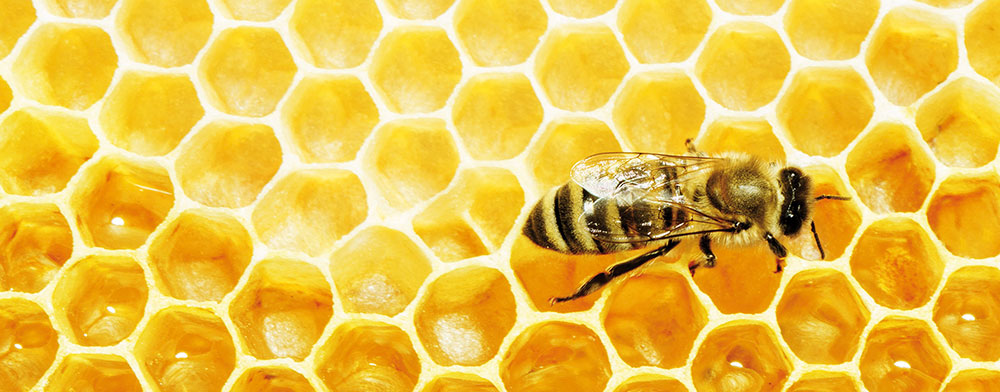
Beeswax is a wax produced by honeybees that they use to build their honeycombs. Worker bees produce it in their wax glands, which are located on the underside of their abdomen. The bees need plenty of energy for production, which they obtain by consuming honey.
The wax is excreted in small flakes, which the bees shape with their mouthparts to form the typical hexagonal honeycombs, which serve as a breeding ground and for storing honey and pollen.
It is characterised by its pleasant texture, natural warm colour and versatility. After application, beeswax is usually colourless or slightly yellowish, depending on the purity and origin of the wax. Bleached beeswax is significantly lighter in colour than natural beeswax and can appear almost transparent after application.
Carnauba wax
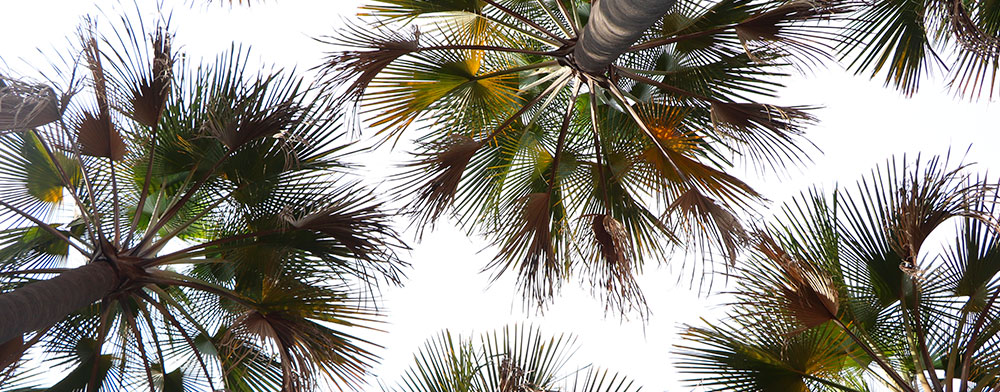
- Origin: Extracted from the leaves of the carnauba palm.
-
Properties:
- Very hard and resistant.
- Colourless.
- High gloss level and strong Water-repellent effect.
- Often mixed with beeswax to increase its hardness.
- Areas of application: High-quality furniture, floors, musical instruments, polishes.
Carnauba wax is one of the hardest natural waxes. It is known for its silky matt lustre and exceptional durability, making it ideal for the protection and care of wooden surfaces.
However, due to its hardness, carnauba wax is difficult to work with, especially in its pure form. Applying it evenly to surfaces often requires specialised tools and techniques. It is usually applied on a lathe, as the rotation generates friction and therefore heat, which melts the hard wax and allows it to be spread evenly. Use is extremely time-consuming and impractical without this mechanical support.
Solution: Oil-wax mixtures
Mixtures of carnauba wax and natural oil, such as linseed oil, are a much simpler and more versatile alternative. This combination makes the wax smoother and easier to apply to wood. The oil-wax mixture also offers deep wood care thanks to the oil and the robust protective layer of wax, without making Use unnecessarily complicated.
How is wood wax used?
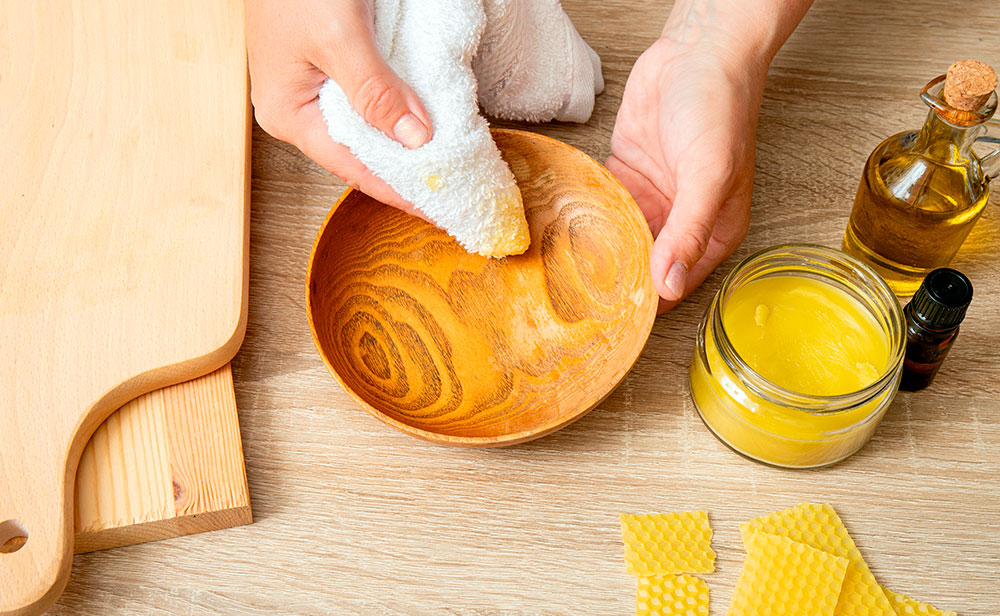
Effect of wood wax as a surface treatment
-
Pore fillers & penetration
- Wood wax does not penetrate deep into the wood as it has a larger molecular structure compared to oils.
- It remains mostly on the surface and in the uppermost wood pores, creating a protective layer.
- Slight heating or polishing allows the wax to penetrate deeper into fine pores and fibres.
-
Surface protection
- It shapes a water-repellent layer that repels moisture.
- It reduces the penetration of dirt and dust as it closes the pores of the wood.
- It prevents the wood from becoming brittle or drying out.
-
Protection against external influences
- Moisture & water: Protects against light water contact (e.g. splash water), but not against standing water.
- Dirt & dust: Makes the surface smoother and less susceptible to soiling.
- UV radiation: Some waxes contain additives that slow down yellowing or fading caused by sunlight.
- Mechanical protection: Offers a certain resistance to scratches, but is softer than lacquers or resins.
-
Visual effect
- Enhances the natural wood grain and gives the wood a warm, slightly glossy appearance.
- Preserves the natural feel and breathability of the wood - in contrast to varnishes, which form a closed layer.
Limitations of wood wax
- It does not offer complete protection against heavy mechanical stress.
- Is not as resistant to heat or standing liquids as lacquers or hard wax oils.
- Must be refreshed regularly as it grades of wear over time.
- Only suitable for indoor use.
The use of natural waxes is ideal for furniture, interior wooden surfaces and decorative objects that should have a natural, easy-care surface. Harder protective coatings (e.g. hard wax oil or varnishes) are more suitable for surfaces subject to heavy wear, such as floors or kitchen worktops.
Use of wood wax
Preparation of the surface:
Clean the wood surface thoroughly to remove dust, dirt and grease.
Ideally, the wooden surfaces should be freshly sanded to create a smooth, receptive surface.
Applying the wax:
Solid waxes can be applied directly with a scraper or sponge and massaged into the wood fibres in a circular motion.
Wax in granulate Shape is melted in a water bath, optionally mixed with oils and then applied with a brush or scarves.
Allow to soak in:
Allow the wax to soak in for a few minutes. This allows it to penetrate deep into the pores of the wood and develop its nourishing effect.
Polish:
After the application time, polish the surface with a soft, lint-free scarves to create an even shine. This step is important to remove excess wax and make the wood surface silky matt or silky glossy.
Production of wood wax mixtures
Homemade wood wax is a natural and cost-effective alternative to ready-made products.
Comprehensive information and practical tips can be found inoursurface primer, which provides you with all the important basics for natural wood care and finishing. We also offeroursurface primer sets, which are specially tailored to the respective mixtures. This gives you not only theoretical knowledge, but also the opportunity to put the recipes directly into practice.
OurnaturalSurface treatment sets are the ideal basis for your first steps. They contain a selection of high-quality waxes and oils that are perfectly matched to each other to make it easier for you to get started with the Production and Use of your own mixtures. With these sets, you can try out different combinations to find the optimum care formula for your wooden surfaces.

Simple recipe for homemade wood wax:
Ingredients: 100 g beeswax, 50 g carnauba wax, 300 ml linseed oil
Instructions:
- Melt the beeswax and carnauba wax in a bain-marie until it is completely liquid.
- Add the wood oil and stir the mixture thoroughly so that all the ingredients are well combined.
- Pour the liquid wax into a clean, airtight container.
- Allow the mixture to cool and solidify. The wood wax is then ready for use.
With this recipe, you can customise the composition to optimise the wax for different types of wood or uses.
Wood wax is not only easy to use, it is also easily customisable due to its production. It offers a sustainable way to maintain and protect wooden surfaces.