
Bench polishers


Bench polishers
EXPERT KNOWLEDGE BENCH POLISHER
Structure of the Bench polisher
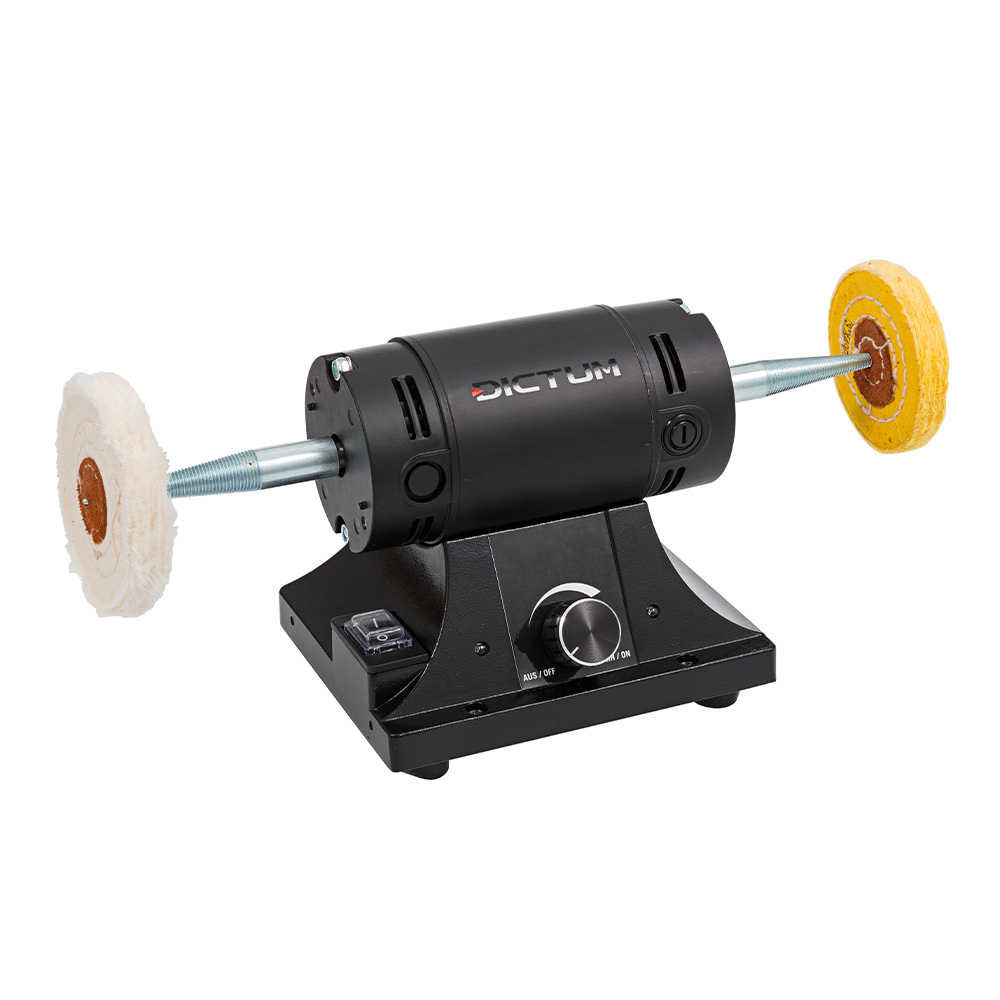
A bench polisher or polishing machine usually consists of a sturdy base frame on which two polishing wheels are mounted. These discs are often made of different materials, including Felt, cotton or synthetic fabrics, which are suitable for different polishing applications. Unlike bench grinders or sanders, these discs are not guided on cylindrical shafts but on conical Mandrels.
How a bench polisher works
- Drive system: The Bench polisher is driven by an electric motor, which usually has a performance of 400 to 1500 watts. It sets the polishing discs in rotation. The watt or KW specification (performance) is matched to the diameter of the polishing disc. Discs with a diameter of 75 mm should be operated with a performance of 400 W, while Polishing discs with a diameter of 250 mm require approx. 1500 watts. The speed can usually be adjusted variably. It depends on the Material to be processed, the Type of disc and the Disc diameter. As a guide: If metal is to be polished, a peripheral speed of 36 m/s is recommended. With a disc diameter of 250 mm, this is achieved at 2800 rpm. If the disc diameter is reduced by half, twice the Speed must be used to achieve the same peripheral speed. For this reason, our mini polishing motor has a Garde load speed of 3000-8000 rpm. A high Speed ensures efficient and even polishing.
- Polishing wheels: Two Polishing discs are usually mounted on the Bench polisher, which can be made of different materials, such as cotton or sisal. Each disc can be treated with polishing pastes to achieve different surface finishes for different metals.
- Polishing process: During use, the workpiece is brought into contact with the rotating polishing wheels. The movement and friction between the disc and the workpiece are necessary to smooth the surface and create a high gloss. The user can guide the workpiece with varying pressure to achieve the desired result.
Areas of application
Bench polishers are used in various areas, including:
- Metalworking: for polishing tools, machines and other metal parts.
- Jewellery making: to polish jewellery to a high shine and remove small scratches.
- Woodworking: for polishing wooden surfaces and furniture.
Accessories and variants
A Bench polisher can be fitted with a variety of accessories to extend its range of applications. These include
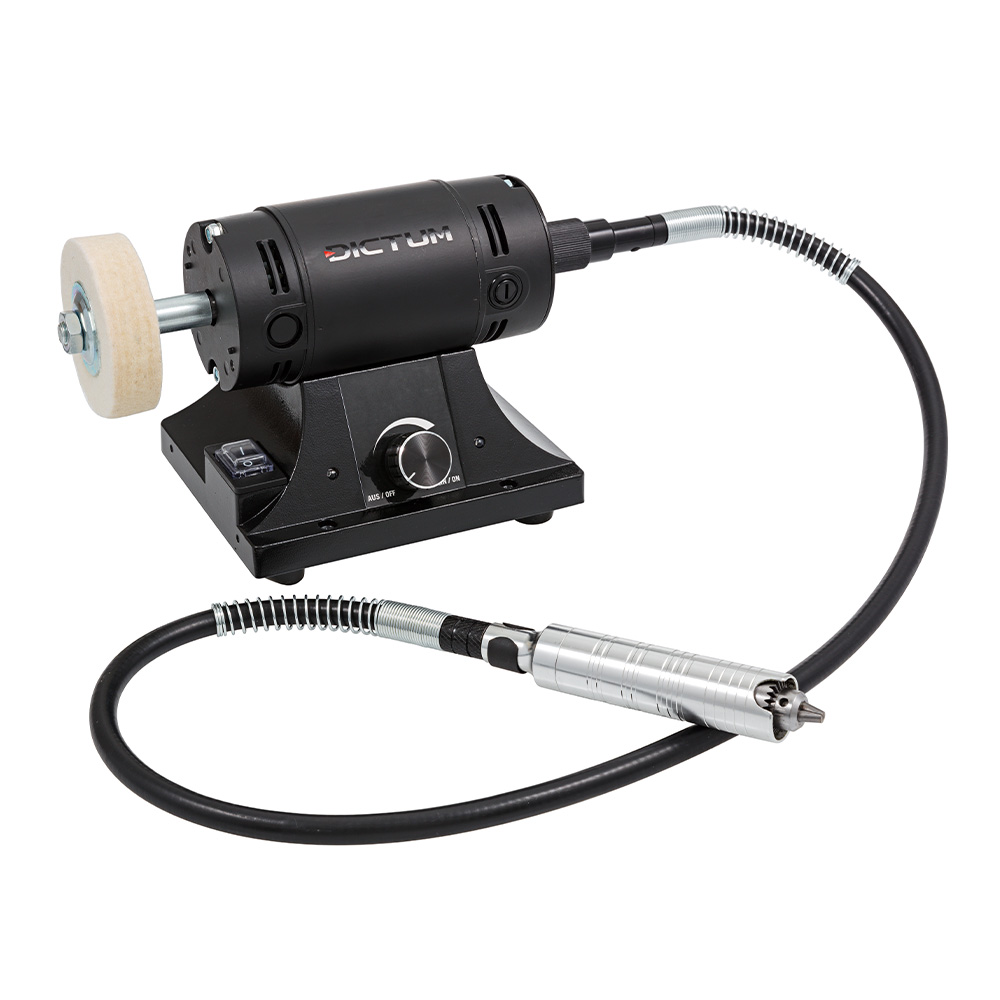
- Polishing pastes: These are applied to the polishing wheels to increase the efficiency of polishing. Different pastes are suitable for different materials and surfaces.
- Different Polishing wheels: The choice of discs can have a significant impact on the polishing process. Felt discs, for example, are ideal for fine sanding, while coarse cotton discs can be used for removing scratches.
- Attachments: Special attachments (so-called flexible shafts) can be attached to the Bench polisher to work on hard-to-reach areas.
Security measures
As with any tool, safety must be considered when using a bench polisher.
Some important safety measures include
- Safety goggles: small particles and dust can be kicked up or thrown around when polishing, so wearing safety goggles is highly recommended.
- Hearing protection: When working for Lengthy periods, the noise level of the motor can be harmful, so hearing protection is advisable.
- Suitable clothing: Avoid loose clothing that could get caught in the rotating discs.
Advantages of polished surfaces
High-gloss surfaces on metals offer numerous advantages in terms of durability. One of the main strengths of these surface treatments is their ability to reduce the degree of wear caused by mechanical influences. High-gloss surfaces are often smoother, which means that they generate less friction and therefore reduce wear.
In addition, the surface treatment plays a decisive role in corrosion resistance. Metal surfaces that are polished to a high lustre are better protected against environmental influences. The polish can prevent the penetration of water and aggressive chemicals, which extends the service life of the metal and significantly reduces corrosion.
Another advantage of high-gloss surfaces is their aesthetic appeal. High-gloss surfaces reflect light and offer an attractive appearance, which is appreciated in many uses, from furniture to technical devices. In addition, the smooth surface makes cleaning easier as less dirt and debris sticks to it.
