
Pyrography pens / wood burning tools

Pyrography pens / wood burning tools
EXPERT KNOWLEDGE PYROGRAPHY PENS WOOD BURNING TOOLS
Ergonomics
Ergonomics is an important aspect when choosing a branding iron for branding. An ergonomically shaped handle makes it easier to work for longer periods of time, which is particularly important for larger projects. A well-designed handle ensures that you can hold the branding iron comfortably and securely in your hand without tiring your hand.
Which versions are available?
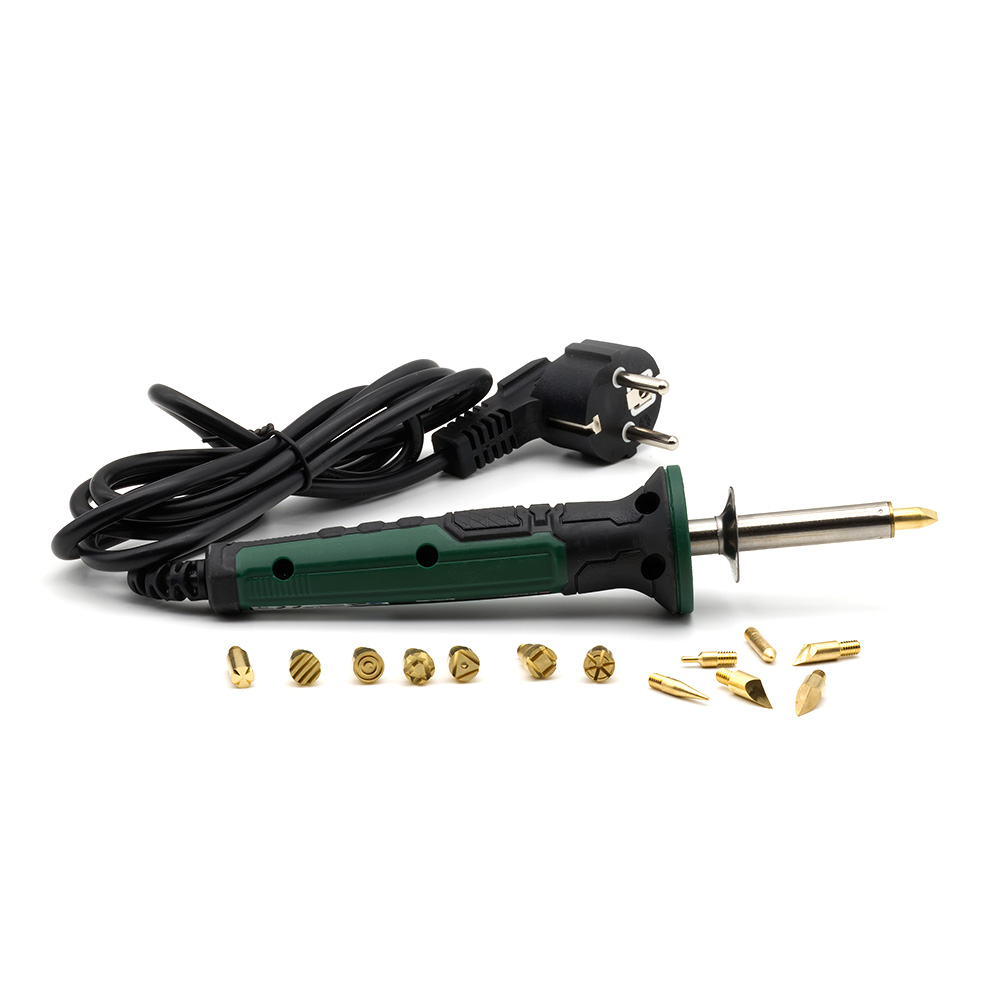
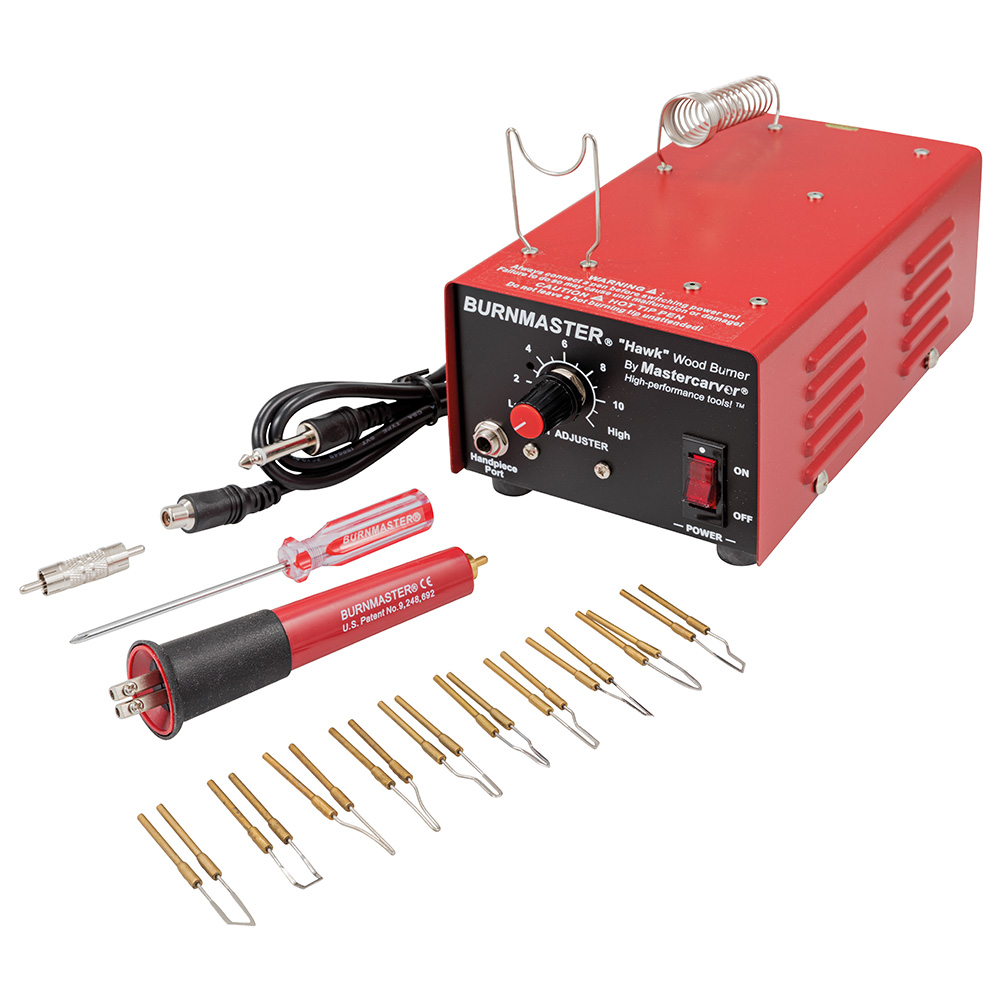
Replaceable burner tips
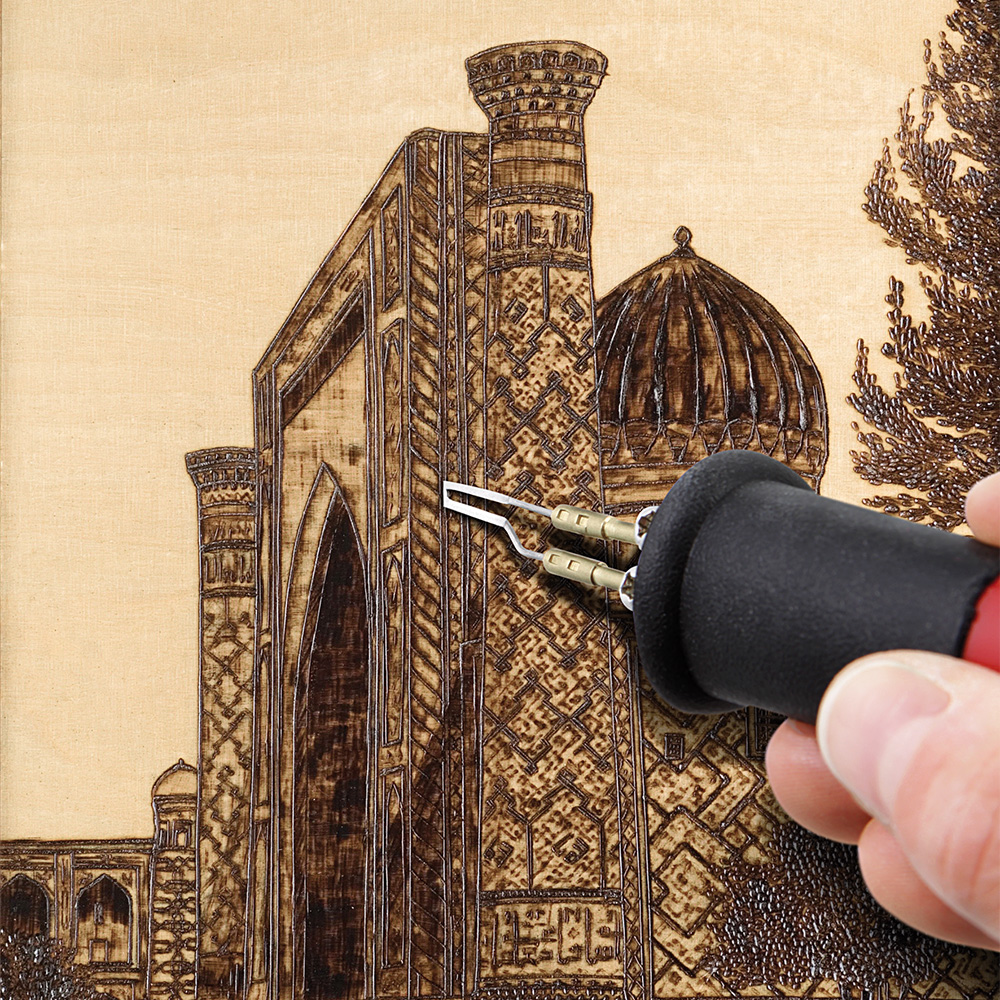
High-quality pyrography tools allow the pyrography tips to be released with a screwdriver even when warm. Pyrography pens wood burning tools cool the Pyrography tips faster than pyrography pens. If you often switch between two pyrography tips, we recommend using devices with two torch handles.
Possible applications for branding flasks

These versatile tools allow you to design not only wood, but also materials such as leather and cork. The technique of branding is suitable for both hobby artists and professional craftsmen and opens up numerous creative expression possibilities.
Guiding the branding iron
Hold the branding pen / branding iron like a biro. Make sure you keep your fingers far enough away from the hot end, but still close enough to guide the pyrography tips well. Ensure that the finger protection insulation is intact.
Which materials can be fired with a branding iron?

In spruce and pine, the early and late wood zones are often easily recognisable. The darker areas of the late wood zones take on the engraving less well. The result is often an uneven image. Hardwoods such as poplar, lime and birch without a large grain are the favoured types of wood. Plywood made from poplar or birch can also be used with peeled veneer. Hardness hardwoods such as books are also suitable. A higher temperature is required when burning hardwood. Branch cuts, i.e. wooden discs with bark, can be fired well, e.g. as table decorations.

Board materials such as MDF and cork enable very even fire shading as they have no grain. Cork may need to be worked on at a lower temperature.
Leather offers a good surface for working with a branding iron. Pyrography tools are absolutely essential here, as the firing temperature must be significantly reduced compared to firing wood.

Turned Shawls can also be decorated with branding irons. These are usually pre-processed with a texture tool and then fired. This ensures that the division of the pattern is correct.
How do I design surfaces in fire painting?
Carbon paper (tracing paper, blue paper or transfer paper) is ideal for transferring basic shapes.
Matériau du manche can use a variety of hatching techniques to achieve visually appealing effects with the Pyrography pens wood burning tools. These include cross-hatching with different line densities, dotted areas, line patterns or shading with colour transitions.
It is best to create a test board on which you can try out and refine different techniques. This test board can also be used later as a selection option, e.g. for different backgrounds.
Safety tips
Never place the switched-on stylus unsecured and always use a suitable holder. Many firing stations have specially shaped holders for this purpose. Branding irons do not offer this advantage. Always work in a well-ventilated room. A fan that removes the vapours from the workpiece is very useful. Keep the work area free of flammable waste such as adhesive tape residue. Make sure that the appliance cables are not twisted. A torch tip can reach temperatures of up to 800 °C. The temperature may not be visible due to a change in colour. Always test the burner tip on a piece of paper to find out whether it is still hot or can be replaced. Changing it is only recommended when it has cooled down.
Can I also use a soldering iron instead of a branding iron?
In principle, it is also possible to work with a soldering iron. However, a soldering iron usually only has a simple, large tip and a different heat output than pyrography pens wood burning tools. Soldering does not have much in common with burning. The option of using other pyrography tips is usually not available for soldering irons.
