
Chisels


Chisels
EXPERT KNOWLEDGE - CHISELS
... essential for precise woodworking!
The quality and sharpness of a chisel have a major influence on the results you achieve. The blade needs to hold an edge well while still being easy to sharpen, and the tool itself should be well balanced and comfortable in the hand. Chisels are available in graduated widths from 4 mm to 40 mm, with 20 mm being one of the most commonly used sizes. Most woodworkers rely on a six-piece chisel set for general work. A variety of names are used for chisels, particularly in German-speaking countries. In many cases, these refer to essentially the same tool, although some terms indicate how the chisel is intended to be held or used.
For hand pressure or for striking?
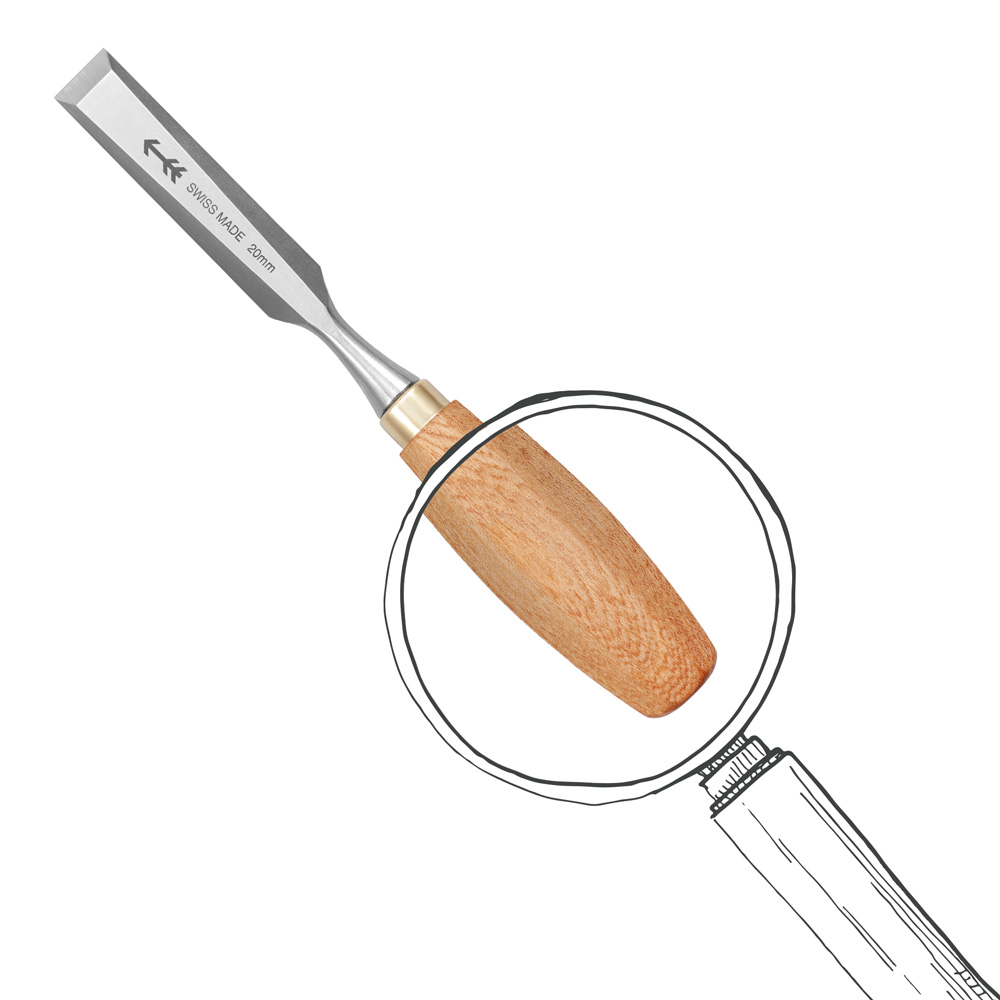
Chisels intended for light to medium-duty work are generally pushed by hand rather than struck. They therefore do not require a metal striking ring at the end of the handle.
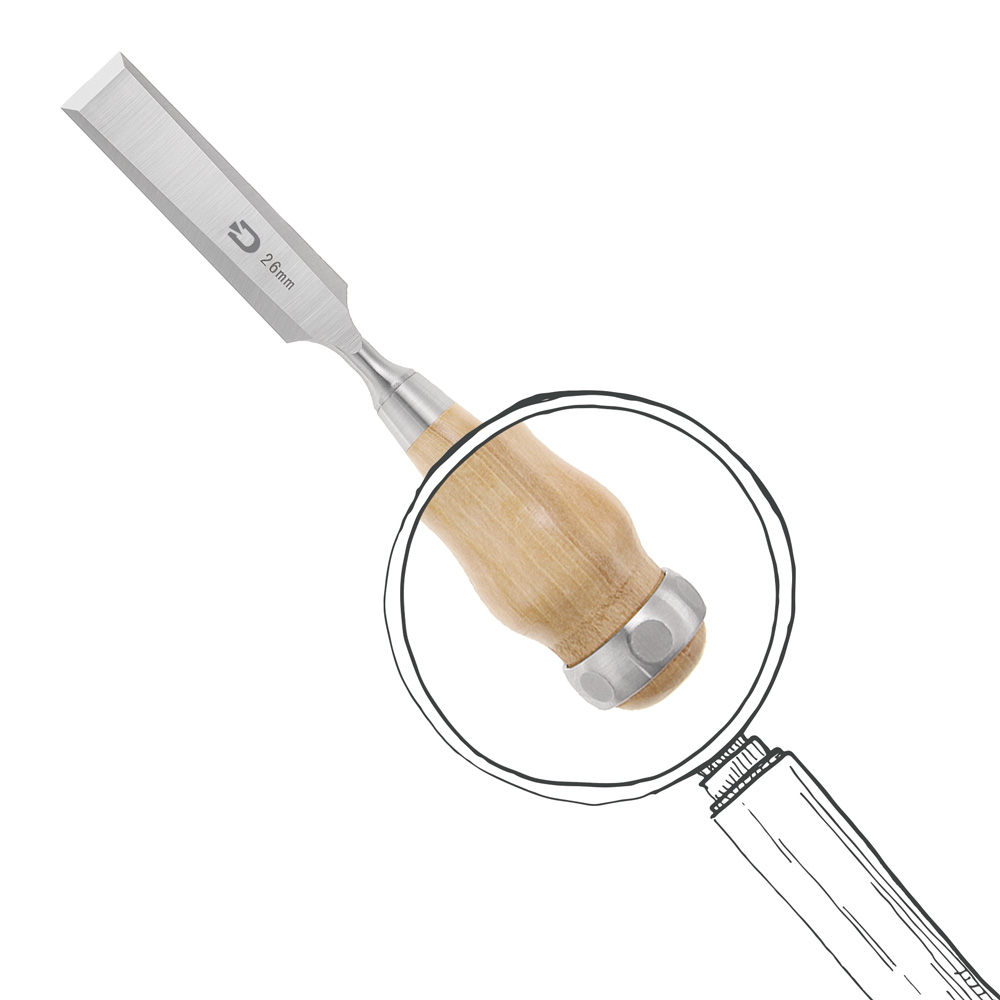
Chisels designed to be struck with a mallet or hammer need to withstand considerably greater loads. European chisels are traditionally struck with a wooden mallet, while Japanese chisels are commonly used with a steel hammer. These tools have more robust blades and reinforced handles.
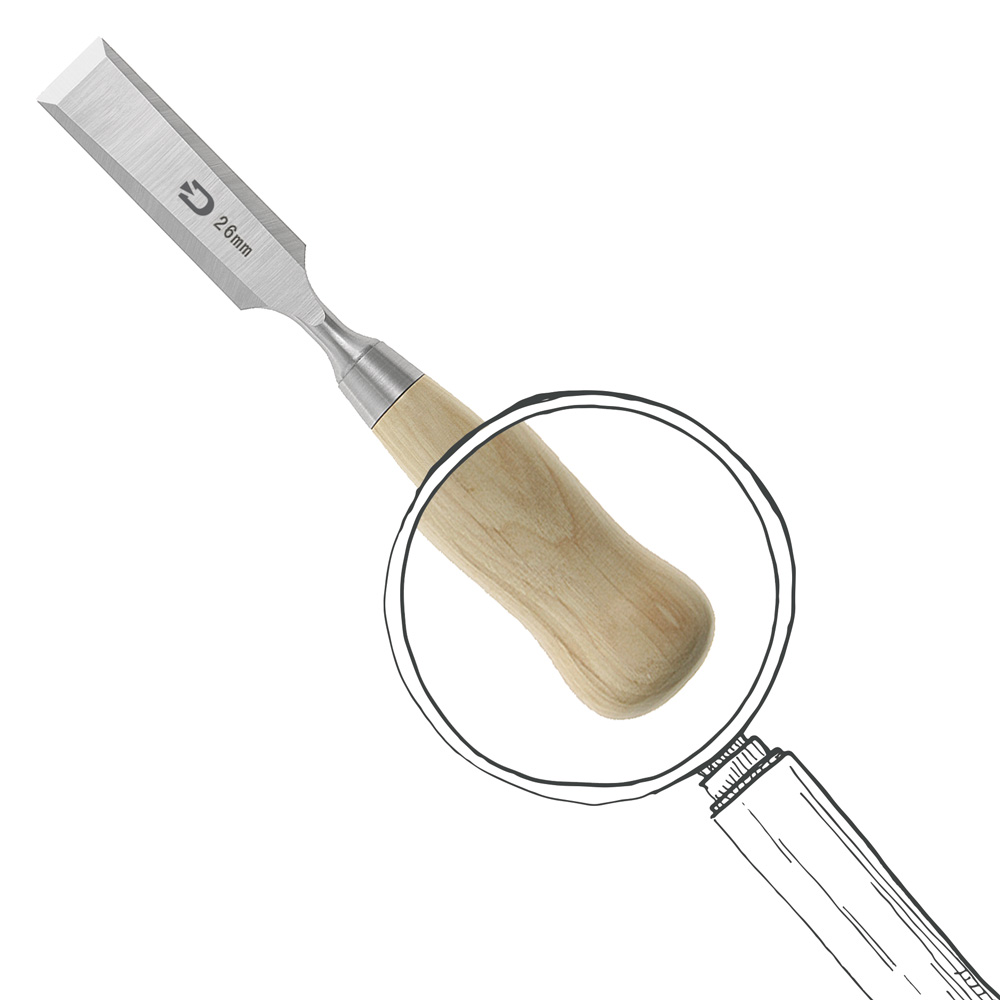
Traditional English-style chisels typically have a shorter blade and an ergonomically shaped handle with a wider end. They can also be struck with a mallet.
Whether or not a chisel has additional metal reinforcement, a handle made from impact-resistant hardwood is essential if the tool is to be struck with a mallet. Hornbeam is commonly used, while elm and ash are also well suited to chisel handles.
What types of construction are there?
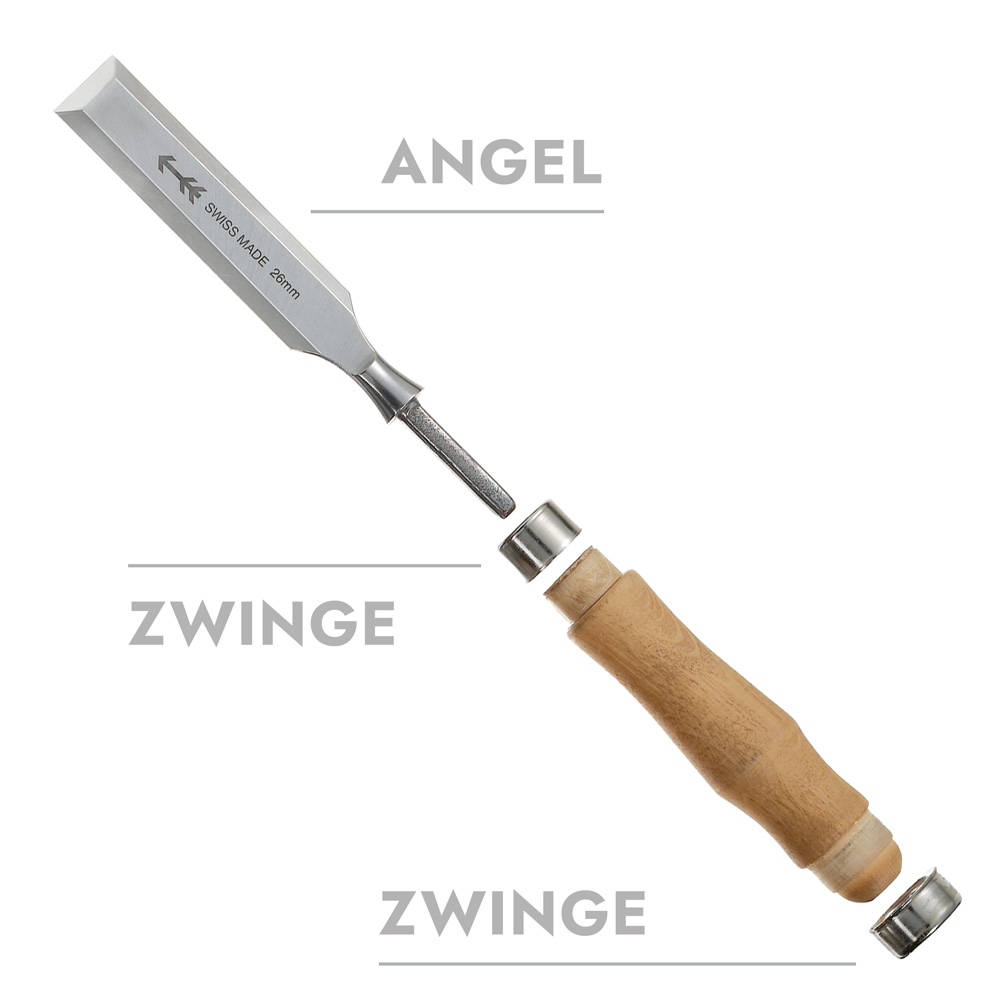
Tang chisels
This is the classic construction, with a tang that anchors the blade securely in the handle. On inexpensive tools without a ferrule to reinforce the handle around the tang, heavy blows can cause the wood to split.
Ferrules may be made from sheet metal, as on some Stubai and Pfeil chisels, or from solid steel, as on DICTUM chisels. Solid-steel ferrules are particularly advantageous on tools that see frequent use and when handles need to be replaced.
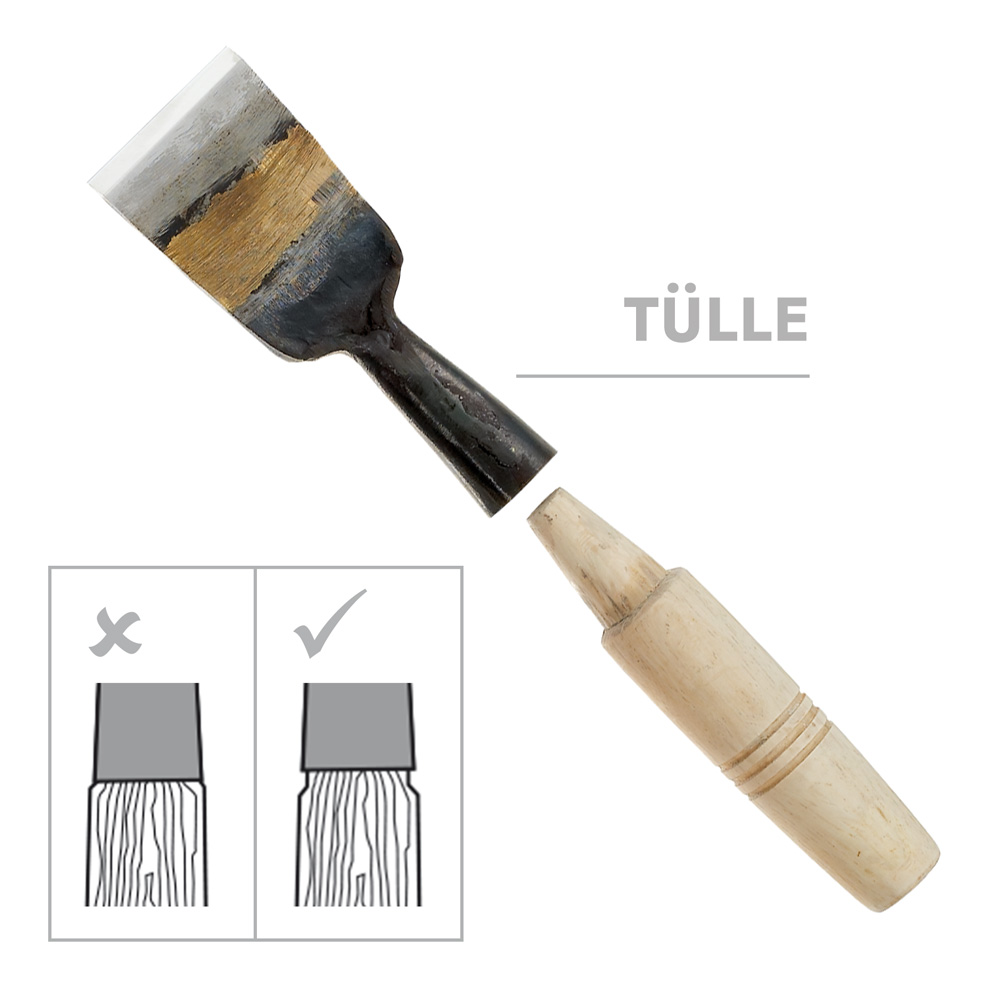
Socket chisels
This less common construction creates a smooth transition from the neck of the blade to the handle, making the tool particularly comfortable to hold.
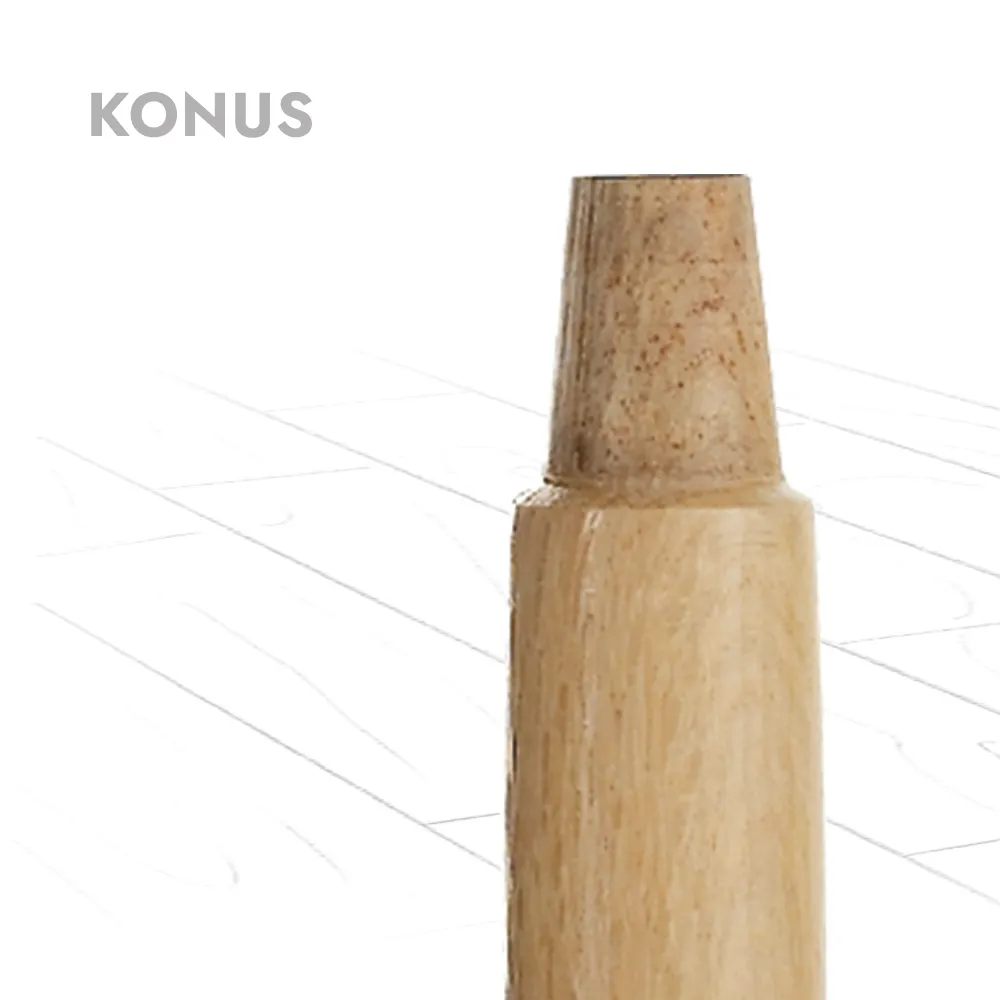
The tapered fit between socket and handle allows substantial striking forces to be transferred securely. Lateral loads, for example when chopping mortises, can cause the handle to loosen. Because the force is transmitted through the tapered joint rather than the rear edge of the socket, a small gap between socket and handle is normal.
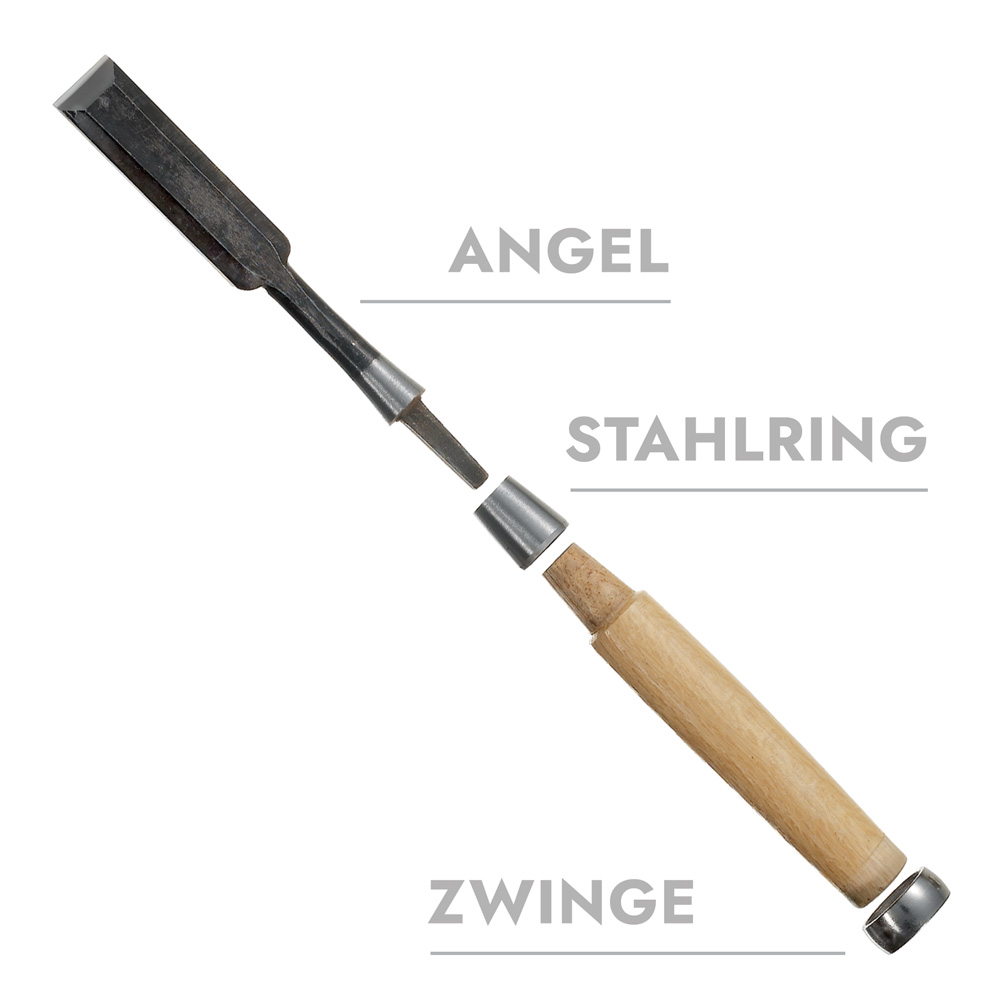
Japanese chisels
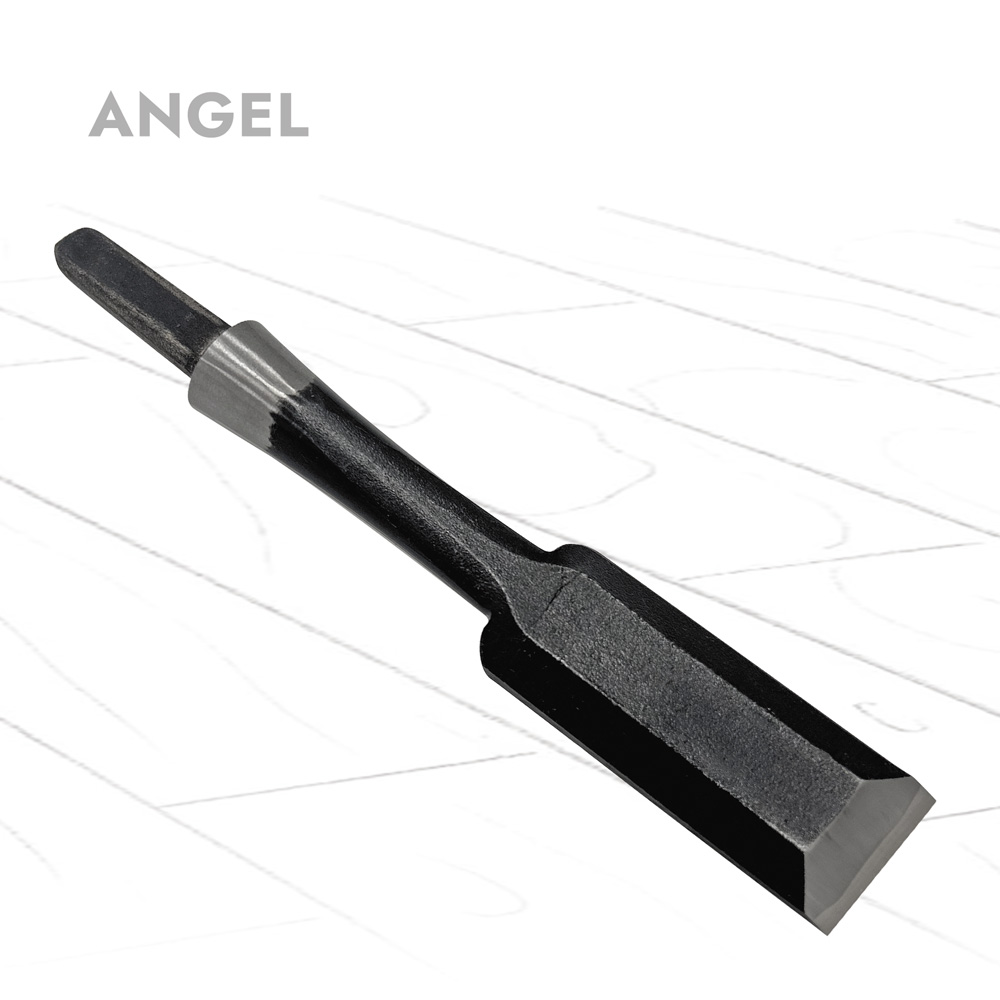
Japanese chisels are also known as Nomi. Their construction combines advantages of both designs described above: the tapered connection transfers striking forces efficiently, while the tang anchors the handle securely.
Here too, there should be a small gap between the steel collar and the handle. This ensures that the tapered surfaces seat correctly.
Seating the steel collar on Japanese chisels
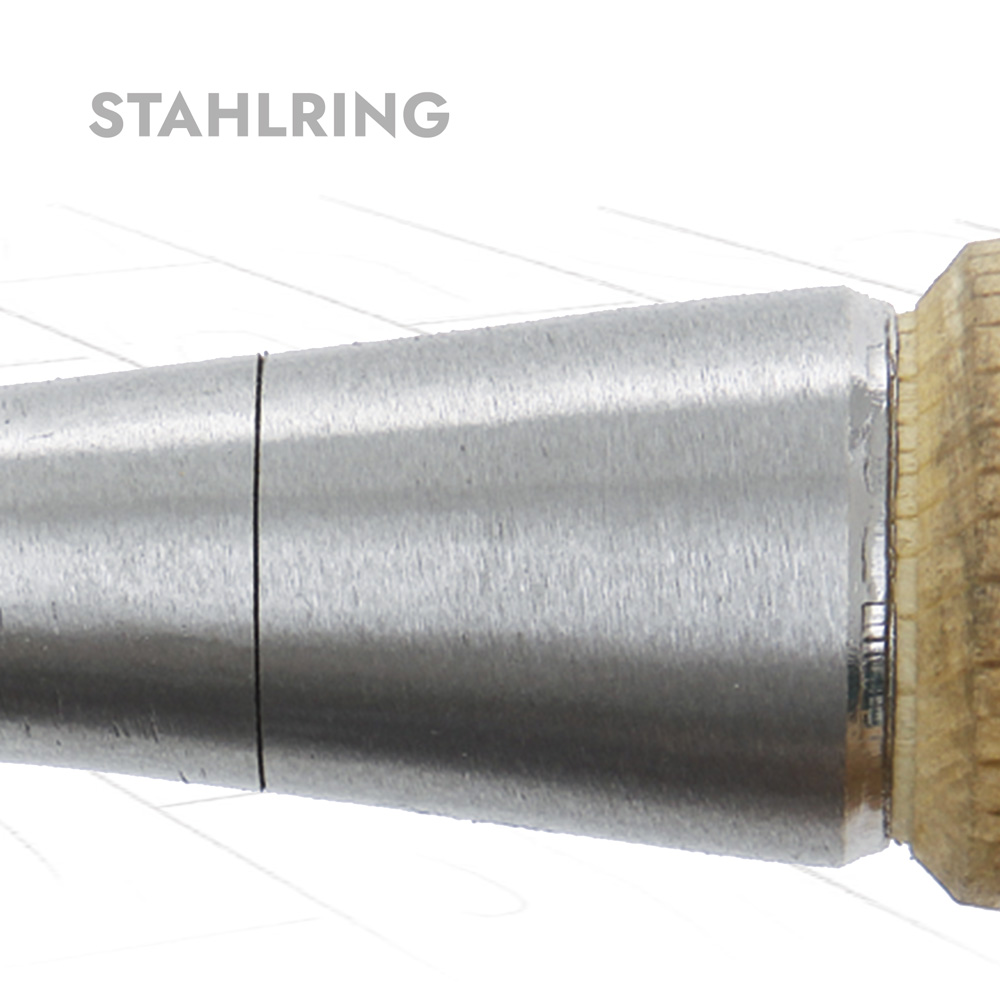
The steel collar transfers the striking force through the tapered joint. If the collar bears against the forged shoulder instead, a small amount of wood should be removed from the contact area so that the taper can seat correctly and carry the load.
During manufacture, the transition between the steel collar and the forged shoulder is ground flush. If the collar later loosens slightly, the joint may look like a crack in the chisel. In fact, this is simply a slight deformation created when the collar and blade are fitted together.
Because the edge of the collar deforms slightly during assembly, the collar will fit correctly in only one position. This visual irregularity has no effect on the strength of the chisel.
How do you sharpen chisels?
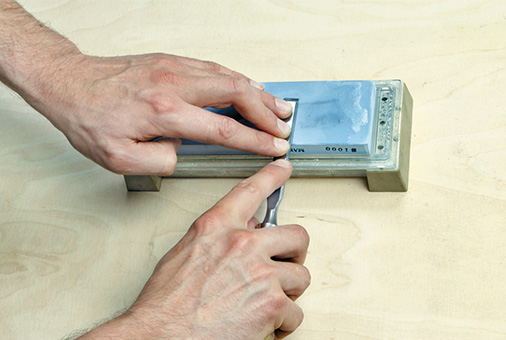
Flattening and polishing the backs of chisels
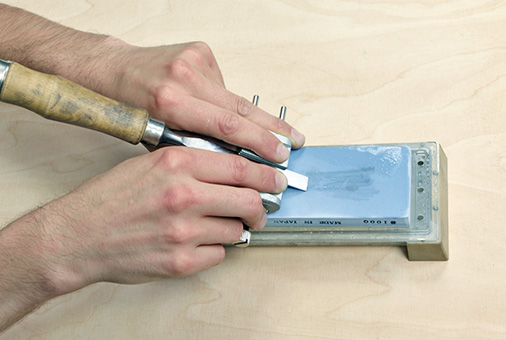
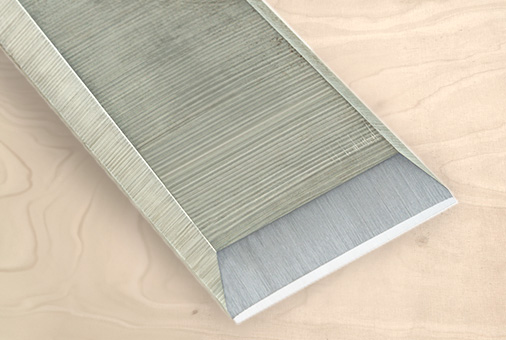
The flatter and more finely polished the back, the sharper the cutting edge can be. For optimum performance, the back of the chisel must be perfectly flat, as it also serves as a reference and bearing surface during precision work.
New tools are not always completely flat and may still show grinding marks from manufacture.
A standard sharpening-stone width of 60 mm covers the area of the blade normally used for most joinery work. Mortises of up to around 90 mm depth are an exception; mortise chisels are used for this type of work.
How easily a chisel can be sharpened depends largely on the steel. Western chisels are commonly made from alloy tool steels such as chromium-vanadium steel, with hardness values of around 60–62 HRC. Many manufacturers, including Pfeil, Kirschen and Stubai, do not specify the exact grade of steel and instead use descriptions such as “special tool steel”.
Japanese chisels made from low-alloy carbon steel typically have a hardness of around 62–63 HRC. HSS chisels reach approximately 63–64 HRC and combine high hardness with excellent toughness.
Put very simply: the harder the steel, the longer it tends to hold its edge — but the more effort it usually takes to sharpen.
