
Adhesives


Adhesives
EXPERT KNOWLEDGE ADHESIVES
What are Adhesives?
Adhesives are indispensable in many areas of industry, trade and everyday life. They bond different materials together and ensure that they hold together stably and permanently. There is a wide range of adhesives that are tailored to different uses and materials.
What is adhesive strength?
Adhesive strength describes the ability of an adhesive to bond two surfaces together and create a permanent bond. It depends on various factors, such as the chemical composition of the glues, the surface properties of the materials and the environmental influences (temperature, humidity, etc.).
What forces act during Glues?
There are three main physical forces at work in Glues:
-
Adhesion (adhesive force)
- This is the force that makes the Adhesives adhere to the surface of the Material.
- It is based on molecular interactions between the adhesive and the surface (e.g. Van der Waals forces, chemical bonds).
-
Cohesion (internal strength)
- This describes the internal stability of the adhesive itself.
- Glues with high cohesion hold together well and do not tear easily.
-
Mechanical interlocking
- Some adhesives penetrate into pores or uneven surfaces and interlock there.
- This is particularly important for porous materials such as wood or textiles.
Natural Adhesives
Natural Adhesives are an interesting option, especially for environmentally conscious or traditional craftsmen, classically in restoration and musical instrument making. Natural Adhesives have a Lengthy history and have been used for centuries in different cultures. Nowadays, they are gaining importance again as people are looking for more environmentally friendly alternatives to synthetic adhesives.
Properties and benefits of natural adhesives
Production of natural adhesives is based on plant, animal or mineral raw materials. These raw materials are processed into adhesives in various manufacturing processes. The most important natural adhesives consist of starch, rubber (caoutchouc), resins or animal proteins.

- Starch-based adhesive: Starch is a versatile natural raw material obtained from plants such as maize, potatoes or wheat. Starch-based adhesives are environmentally friendly as they are biodegradable. They are often used in the paper industry, for handicrafts or for simple repairs. The main advantage of these glues is their non-toxic composition and the fact that they are produced without harmful chemicals.
- Gelatine glue: Gelatine is made from animal products, in particular animal bones and connective tissue. This adhesive has a very strong adhesion and is often used in the restoration of works of art or in the production of antique furniture. Gelatine glue offers very good durability, but the adhesive layer loses its strength when moisture penetrates. This supposed disadvantage is an advantage in restoration and musical instrument making. Parts in need of repair can be easily removed using water vapour.

Bone glues

Hide glues

Hide glues

- Resin adhesives: Resin adhesives are made from natural resins extracted from trees. These adhesives are particularly strong and offer good adhesion to wood, leather and other natural materials. The art of using resin as an Adhesive is as old as mankind itself. Our Stone Age ancestors recognised the potential of resin, which they collected from trees such as pines, spruces and firs, and used it to strengthen their tools and weapons.
Use
Natural Adhesives are often used in paper processing, arts and crafts, musical instrument making, furniture restoration and even in the Production of Package types. In arts and crafts, natural adhesives are valued for their gentle yet effective properties.
Tip:
The Herdim Glue pots enable uncomplicated and gentle heating of natural glues in a water bath.

Adhesives for wood - Wood glue
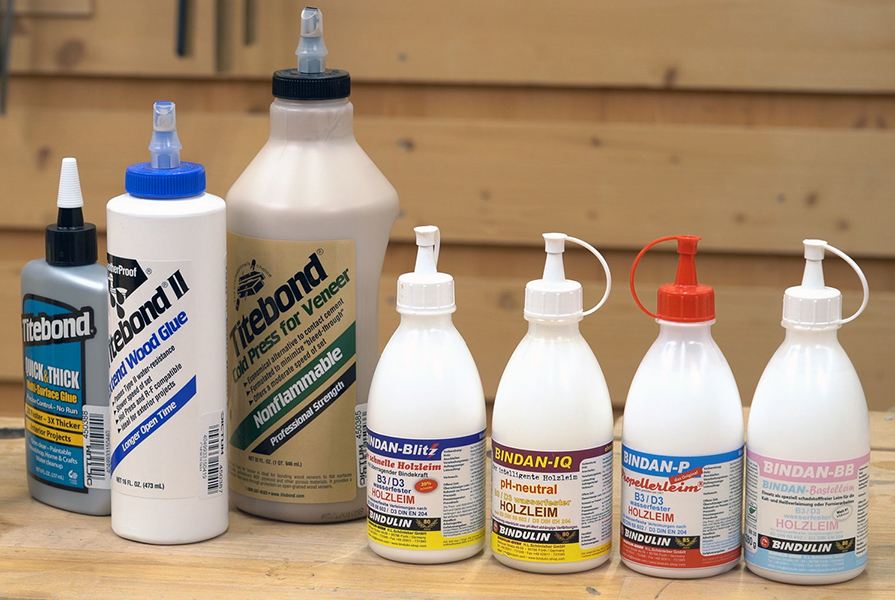
Wood glue is one of the most widely used types of adhesive. The glue ensures that joints hold securely and permanently without the need for nails or screws.
Properties and advantages
- Water resistance: The question of water resistance is particularly important when choosing a wood glue. Glues such as polyvinyl acetate (PVA) glue are well suited for indoor use, while waterproof variants classified as D3 or D4 can also be used for outdoor use or for pieces of furniture that are regularly exposed to moisture.
- High strength: A high quality wood glue forms a strong and durable bond. Wood glue is often described as stronger than the wood itself, as the glue has a high tensile strength after drying and binds the wood fibres together.
- Durability: Wood glue is resistant to temperature fluctuations and ageing, so the bond remains stable even after years. This makes it ideal for furniture, flooring and other wooden products that are subject to regular use.
- Easy to use: Wood glue is very easy to work with. It can be purchased in various Shapes (liquid, gel-like) and Sizes and is easy to dose during Use. Drying time varies depending on the type of glue and the ambient conditions.
Use
Wood glue is often used in furniture making, for the construction of wooden frames, in joinery and for general repairs to wooden objects. It is also used for gluing veneers and in the production of wooden toys. When joining materials, it is crucial to prepare the bonding surfaces thoroughly, for example by planes, to ensure optimum adhesion of the parts to be joined. In bonding technology, precise preparation of the surfaces plays a central role in achieving the best possible bond.
Quick-drying Adhesives - Superglues
Superglues, also known as cyanoacrylate adhesives, are very popular due to their ability to adhere extremely quickly. It is a quick-drying adhesive that has been specially developed for precise repairs and smaller uses. This 1-component adhesive does not require a hardness, as it hardens immediately on its own on contact with moisture in the air.

Properties and advantages
- Fast Drying time: Superglues cures in seconds, making it an excellent choice for quick repairs. When applied to a clean surface, the bond is fixed within seconds.
- High strength: this type of adhesive provides a very strong bond to many materials, including plastic, metal, rubber, glass and ceramic. This adhesion is particularly useful for repairing everyday items such as crockery, jewellery or even electronic devices.
- Easy to Use: Thanks to the practical bottle with fine dosage, Superglues can be applied very precisely. This is particularly useful for small repairs where the exact position of the adhesive is crucial.

Use
Superglues are used in many areas, including modelling, electronics repairs, handicrafts and in the home. Glues are particularly effective for repairing broken objects such as porcelain, glass or for fixing small components.
Tip: Activator for all types of Superglues (451981), accelerates the curing of Superglues (cyanoacrylate adhesives). It is used for highly absorbent and porous surfaces, low humidity and temperature or thick layers of adhesive.
2-component adhesives - Epoxy glue

Epoxy glue is a very strong 2-component glue consisting of two substances: an epoxy resin and a hardness. These two components are mixed together before use. After curing, they form an extremely stable, chemically and thermally resistant bond between a wide variety of materials.
Properties and advantages
- Extremely strong adhesion: Epoxy glue is particularly suitable for demanding uses where high loads and mechanical forces act on the joint. It is suitable for metals, plastics, ceramics, glass and wood.
- Water and chemical resistance: One of the most outstanding properties of epoxy glue is its resistance to water, oil, acids and other chemicals. This resistance makes it particularly suitable for use in the automotive, shipbuilding and construction industries.
- Versatility: Epoxy glue can come in various shapes, from liquid to paste. Drying time can also vary, from fast variants that cure within a few minutes to slower ones that allow for Lengthy processing time.
- Durability: Epoxy glue shapes a durable and stable bond that will last for years.
Use
Epoxy glue is often used in the automotive industry, in shipbuilding and in the Production of machinery and equipment. Epoxy glue is also important in art, in the production of sculptures or furniture, and is particularly in demand for the repair of large and heavy objects.

Tip:For fast and stable joints, we recommend Ber-Fix epoxy adhesive, which allows flexible handling with an open assembly time of either 5 or 30 minutes. The practical double syringe with attachable mixing nozzle facilitates handling and enables easy application.
Flexible Adhesives - Leather adhesives
Leather adhesives are, as the name suggests, specially developed for working with leather. Leather is a sensitive Material that places special demands on the Adhesives so that it is not damaged and the bond remains flexible.
Properties and advantages
- Flexibility: Leather adhesives remain flexible after drying and do not stiffen, so the leather retains its natural flexibility.
- Good adhesion to Leather: Leather adhesives provide a strong, durable bond and are therefore particularly suitable for the Production of Shoes, Bags and Furniture.
- Versatility: This adhesive is also suitable for combining Leather with other materials such as wood, metal and plastic.
- Fast drying: Some Leather adhesives offer a relatively fast Drying time, which speeds up processing and makes the production process more efficient.
Use
Leather adhesives are often used for the production of leather goods such as bags, shoes and belts. Glues are also very useful for repairing leather furniture or for craft projects. Leather adhesives are particularly useful in knife making, for example in the Production of Leather sheaths, which must ensure a stable and durable bond between the leather parts.
Adhesives for construction - Construction adhesives
Construction adhesives are very robust adhesives that have been specially developed for use in the construction industry. It is used to fix large and heavy materials such as tiles, boards or insulating materials.
Properties and advantages
- High load-bearing capacity: Construction adhesives offer exceptionally strong adhesion to many construction site materials such as concrete, bricks and wood.
- Waterproof: Many variants of Construction adhesives are Waterproof and suitable for use in damp environments.
- Suitability for porous substrates

Use
Construction adhesives are often used when laying tiles, in drywall construction, for repairs and when assembling building elements. Construction adhesives play a central role in the bonding of insulation materials.
Tip: Titebond GREENchoice Construction adhesives with environmentally friendly composition for high bonding forces indoors and outdoors.
Influence of temperature on the performance of adhesives and polymers
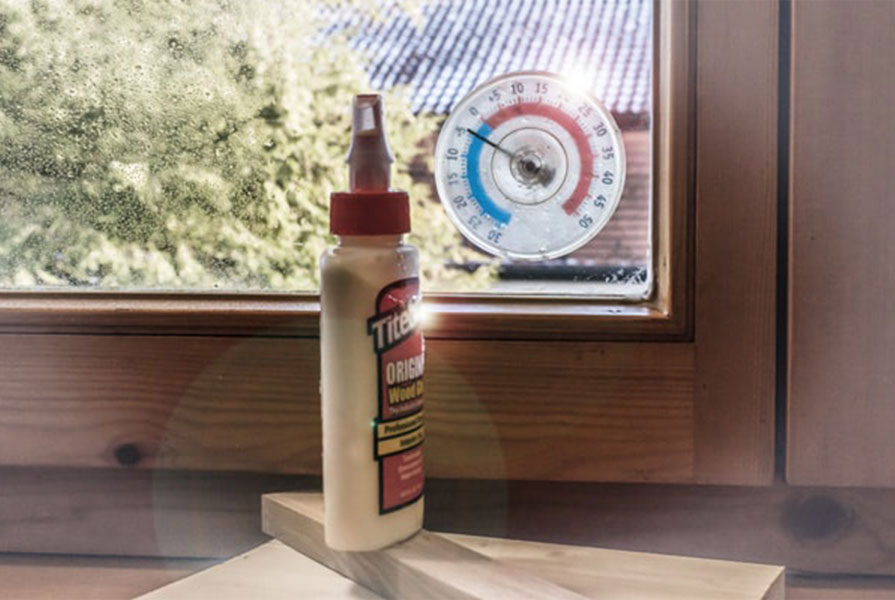
Adhesives often consist of polymers that form long molecular chains and have the ability to bond to different materials. Depending on its chemical structure and composition, the polymer can have different properties that influence its adhesive strength and flexibility. Temperature has a significant influence on the performance of polymers: At higher temperatures they can become softer and more flexible, while at colder temperatures they are harder and more brittle. It is therefore important to select the correct temperature for the Use of Adhesives to ensure optimum adhesion and strength. Glues stored below 5 Garde load speed are usually unusable.
