


Felling wedges / felling levers


Felling wedges / felling levers
EXPERT KNOWLEDGE FELLING WEDGES / FELLING LEVERS

What you need to look out for with felling wedges
- A felling wedge must always be made of a material that will not damage the actual felling tool (i.e. the chainsaw chain or axe blade). Aluminium and plastic are suitable, although wood was also used in the past.
- Choose a felling wedge that fits well into the gap or saw cut. Felling wedges are available in different sizes, lengths and with different wedge angles.
- Only drive the felling wedge with a suitable tool (e.g. splitting hammer / flail axe).
- Forestry wedge is an umbrella term for splitting wedges and felling wedges. There are wedges that are suitable for both applications. Splitting wedges, however, are often made of Steel and have too large a wedge angle or an unsuitable Size and Shape for felling.
Difference between felling and splitting wedges
Forestry wedges are indispensable tools in timber harvesting and processing, they fulfil different tasks depending on whether they are used for felling or splitting wood.
- Felling wedge: These wedges are used to fell trees safely and in a controlled manner. After the felling cut has been made on the tree, the felling wedge is driven into the cutting gap. This widens the gap and steers the tree in the desired direction of fall. Mechanical felling wedges are particularly useful as they generate an additional spreading force thanks to a built-in mechanism. This reduces the physical effort required and increases precision when felling the tree.
- Splitting wedges: These wedges are used when splitting wood. They can help to efficiently split metre-long pieces or even round pieces 250-300 mm in length. Splitting wedges are usually solid and have a high angle of inclination to prevent them from sticking in the wood.
To summarise, felling wedges are designed for precise control when felling trees, while splitting wedges offer high efficiency when splitting wood.
What special designations are used for forestry wedges?
Spindle wedges (mechanical felling wedges):
These wedges differ from conventional wedges in that they are driven into the gap in the wood by means of a spindle mechanism rather than by impact. A cordless screwdriver (impact screwdriver) turns the spindle, causing two metal plates to chuck apart and allow the tree to fall in the desired direction with little effort. This ensures precise and effortless felling. The disadvantage of this shape of felling wedge is its heavy weight.
Rotary splitting wedges
These wedges are specially designed for splitting firewood. Thanks to their twisted shape, they achieve a maximum splitting effect and remain firmly anchored in the wood. The shape ensures that the wood is split particularly efficiently.
Repositioning wedges
Additional wedges are used for particularly large felling jobs. These are driven into the cutting gap in addition to a felling wedge that has already been inserted. This increases the spreading angle.
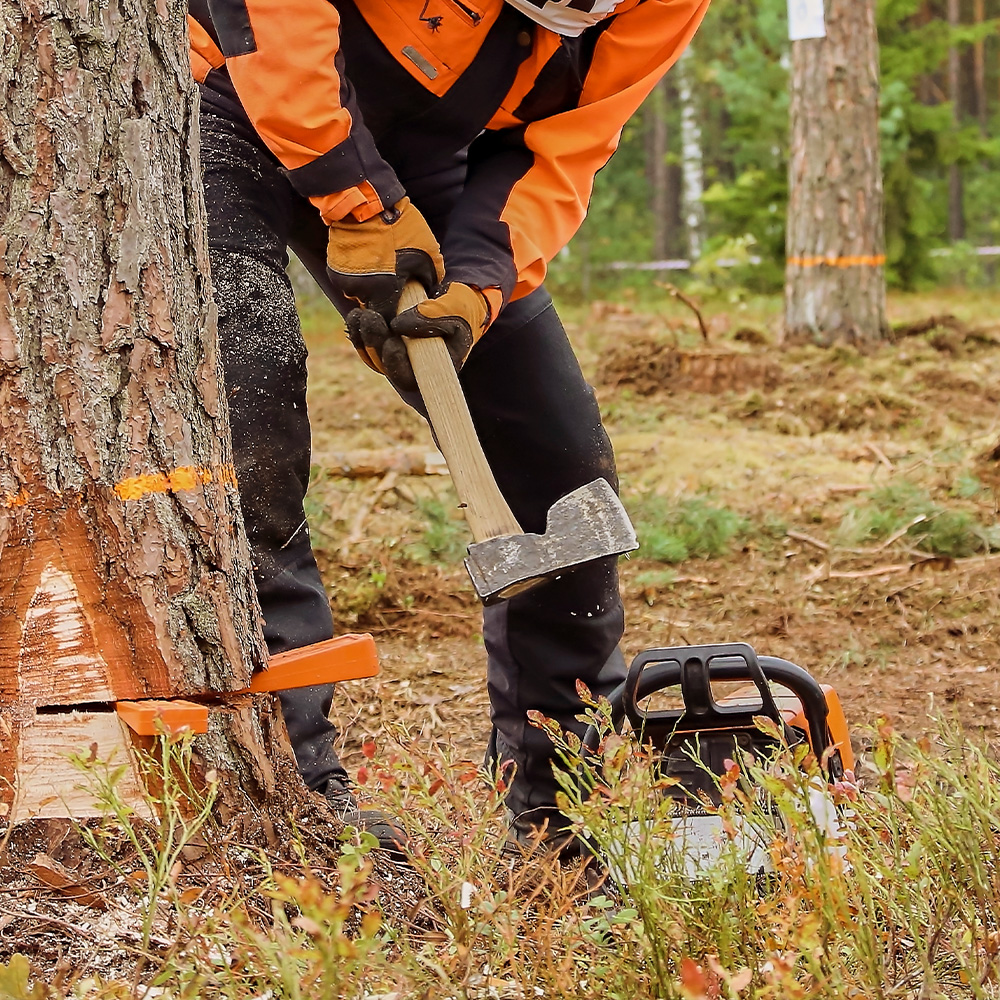
Winter wedges
These wedges have stronger scales than standard plastic felling wedges. The felling wedge therefore adheres better and the scales prevent it from springing back.
Chainsaw wedges
Chainsaw wedges are often made of sturdy but blade-friendly aluminium or plastic. For larger tree diameters or certain cutting techniques, the wedge is placed in the felling cut to stop the joint. This allows the chainsaw blade to work freely up to the break line. If there is a kickback into the wedge material, the cutting edge of the chain remains intact and work can continue without interruption. The damaged plastic wedge can be replaced at low cost. Weight is a decisive factor with chainsaw wedges, as the felling wedges are carried in addition to the other equipment (usually on the man).
Felling wedges are also suitable for keeping kerfs open when cutting down logs under tension, e.g. wind breakage.
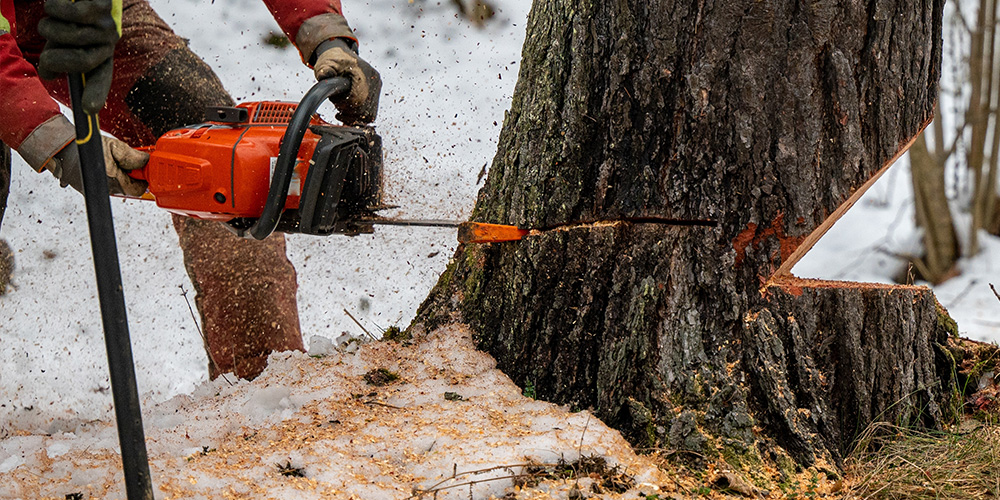
Each of these wedge types is designed for specific requirements and activities and ensures more precise, safer and more efficient forestry work as required.
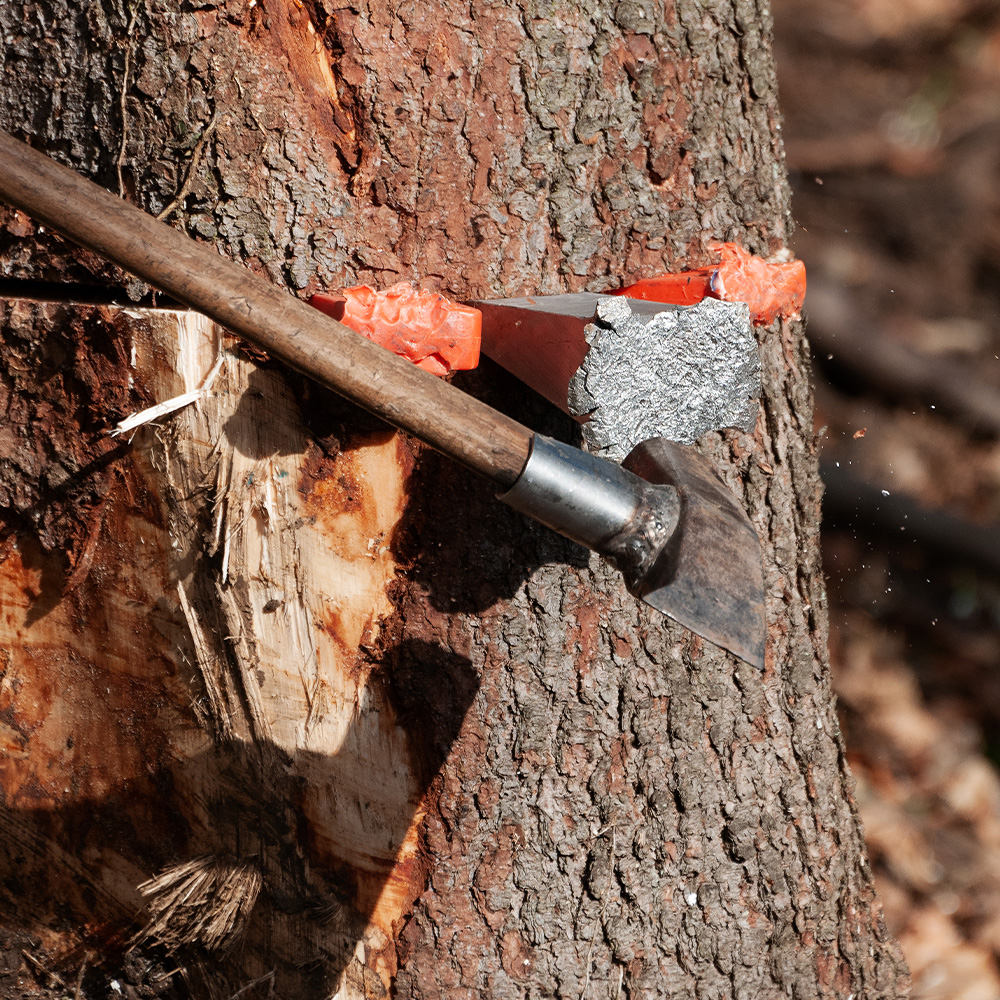
Handling metal wedges!
Steel or aluminium wedges can form a burr on the wedge. This raised burr can be sharp-edged and should be removed from time to time to minimise the risk of injury.
Use of felling jacks
A felling jack is used to lever a tree to be felled from a squatting position using the thigh muscles. This is a safer way of working than pushing the tree over by hand. The felling jack should be used up to a maximum diameter of 25 cm thick trees (measured at chest height).
