
Scythes


Scythes
Expert Knowledge - Scythes

The art of the scythe: Choice, use and care
The scythe is one of humankind’s oldest tools and is still widely used in agriculture and horticulture. Along with the sickle and the machete, it is a the traditional tool for thinning and pruning. The scythe is renowned for its efficiency when it comes to cutting grass, shrubs or even weeds. However, to use a scythe properly, it is crucial not only to choose the right blade, but also to adjust the tool to suit your body height and use the correct technique.
Choosing the right scythe blade
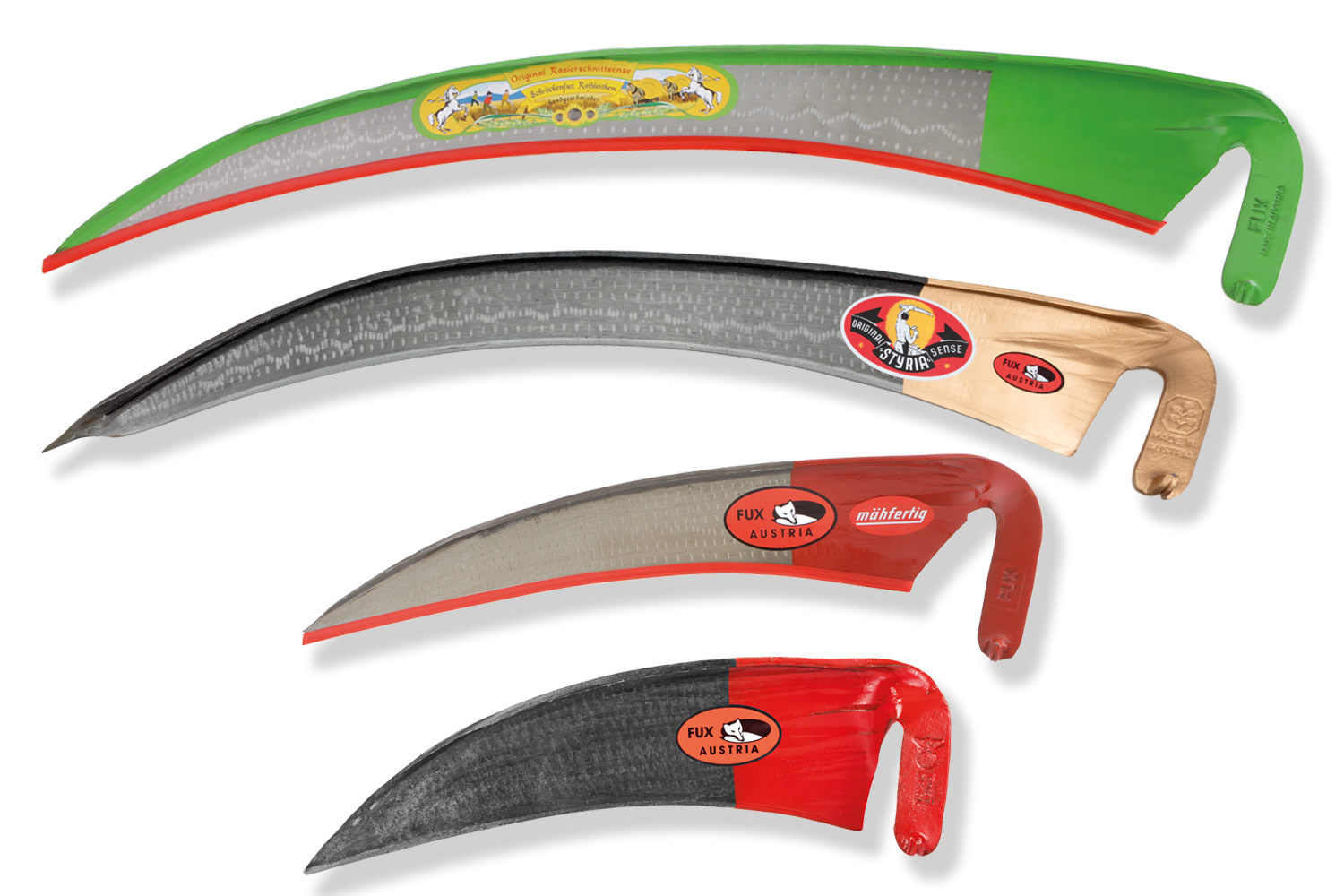
Scythes come in many different shapes, each designed for a specific application. The shape and size of the blade often reflects regional traditions and can vary depending on the blacksmith and their place of origin. The type of terrain and vegetation to be mowed largely determines which scythe blade is right for your job. A long, narrow scythe blade is ideal for maintaining meadows and pastures, as it provides an even, close cut. In contrast, a shorter, wider blade is preferred for cutting scrub or brush, as it offers greater stability when cutting through tougher materials.
Another example is the so-called »bush scythe«, which is designed for cutting tall grass or weeds and is also equipped with a shorter blade.
As a rule of thumb:
The tougher the material being mowed, the shorter and more stable the scythe blade should be.
The scythe snath: Ergonomics and adjustment
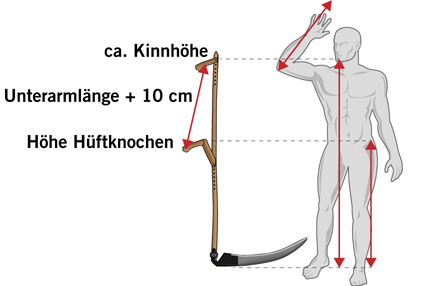
Efficient and ergonomic scything depends heavily on the snath, which needs to be individually adjusted in terms of its length and doles. When set up correctly, the snath should reach roughly to the chin to ensure a healthy mowing posture. Many high-quality scythes allow you to adjust the doles to suit your individual body proportions, making the work much easier.
Ideally, the front dole should be fitted to the shaft at hip height, while the rear dole should be positioned so that the distance between them is roughly equal to the length of the forearm plus about 10 cm.
These settings can be adjusted to suit the user, enabling an even more comfortable working method.
How to adjust a scythe blade correctly
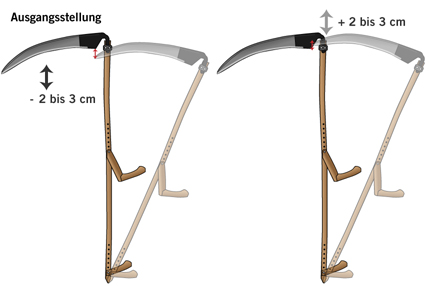
Besides choosing the right scythe blade and snath, the angle of the scythe blade also plays a key role in mowing performance. The correct angle ensures a clean cut and minimises the effort required. To adjust the blade, first hold it vertically and then optimise the angle by tilting the tip towards the mower. A blade that is slightly angled outwards creates a more efficient cut, but requires more physical effort. Beginners should start with the »normal setting« and experiment later to find out which setting suits them best.
The scythe snath
The scythe snath, also known as a snathe, snead, sneath, snaith or sned, plays a key role in hand mowing. It transfers the user's movement and force to the scythe blade, ensuring it remains in the correct position. A well-designed scythe snath allows the user to maintain an ergonomic posture whilst mowing, thereby avoiding long-term strain. It is important that the scythe snath is both stable yet light enough to enable efficient mowing. Scythe snaths are available in various materials, such as wood and metal, with both materials having their advantages and disadvantages. Wood offers greater adaptability to body height and is often considered more environmentally friendly, whereas metal snaths are more stable and suitable to heavy-duty use. Furthermore, the length of the scythe snath plays an important role in ensuring a comfortable posture; snaths that are too short can lead to back problems. Depending on personal preferences and work requirements, users can choose from different shapes and materials. Wooden scythe snaths being particularly regarded as valuable for their adaptability and individual adjustments.
Sharpening and maintaining the scythe

As with any tool, a scythe requires regular maintenance and sharpening. There are various methods for keeping the cutting edge sharp. The traditional method is peening, in which the scythe blade is thinned down using a peening anvil, so that the cutting edge becomes sharp again. This method requires practice, but delivers excellent results, as it extends the scythe’s service life and keeps the cutting edge extremely sharp. Since no material is removed during peening, this method naturally has a particularly positive effect on the scythe’s sustainability and service life.
Scythes with thicker blades, such as those used in Japan or Scandinavia, can be honed or sharpened with a whetstone. To do this, a whetstone is dipped in water and moved gently across the scythe blade. This method is easier to learn, but regular sharpening is still essential to maintain a sharp cutting edge and reduce the effort required when mowing.
Efficient, sustainable and effortless mowing
The scythe is a wonderful tool which, when used with the right technique and maintained properly, ensures efficient, environmentally friendly and ergonomic work in the garden as well in the fields. Anyone who takes the time to choose the right scythe blade, adjust the snath to the optimal position and maintain it regularly, will achieve excellent results by using this traditional tool. The scythe is not just a reminder of times gone by; it is also a modern, sustainable tool for modern gardens.
Hand scything: Is that still appropriate these days?
The question of whether mowing by hand is still appropriate today can be answered with a resounding »yes«, at least in terms of sustainability, ergonomics and precision. Whilst garden power tools dominate many areas of horticulture and agriculture, the scythe still has its place. It offers a range of advantages that are often lacking in modern, garden equipment.
Advantages of the hand scythe over garden power tools
Sustainability and environmental protection
One of the biggest advantages of the hand scythe is that it is environmentally friendly. It requires no petrol or electricity and produces no emissions whatsoever. At a time when sustainable and ecological working methods are becoming increasingly important, the scythe is the ideal solution. In comparison, garden power tools consume fossil fuels or electricity, which both harm the environment and incur operational costs.
Quiet and stress-free
Another clear advantage of the hand scythe is its low noise level. Whilst lawnmowers and power scythes can be loud and disruptive, the hand scythe operates almost noiseless. This makes it more pleasant not only for the user, but also for the neighbours. Especially in residential areas where noise protection is a concern, mowing by hand is a very quiet alternative.
Ergonomics and health
When mowing with a hand scythe, the body moves naturally.
The swinging motion from the hips promotes ergonomic posture and strengthens the muscles.
By contrast, working with power tools, especially if used incorrectly or with poor handling, can lead to postural damage or strain.
Although the hand scythe requires good physical fitness and concentration, the snath can be adjusted to suit your height and needs, making it often less stressful for the body than heavy power devices.
Precision and control
When mowing with a scythe, the user has more precise control over the cut. While garden power tools often struggle to work in inaccessible areas such as under hedges or between fruit trees, the hand scythe enables precise mowing, even in difficult areas. It is ideal for smaller areas, uneven terrain and precision work where the user wants to control the amount of clippings precisely.
Lower maintenance costs
Another advantage of the hand scythe is that it requires less maintenance and repair work. While power scythes and other power tools require regular oil changes, repairs and replacement parts, a hand scythe mainly needs to be sharpened periodically to ensure it is functioning correctly. These low maintenance costs also make the hand scythe a cost-effective option over the long term.
The scythe remains an essential tool, especially in smaller gardens, on steep slopes, under shrubs or in areas where precision is required.
Its advantages in terms of environmental protection, health, cost and precision make it a sustainable and valuable alternative to garden power tools.
Anyone who chooses to mow with a hand scythe is not only helping to protect the environment, but is also using an efficient and health-promoting tool
