
Oil stones vs. water stones

- Why are sharpening stones used with a liquid and not dry?
- Why are different liquids used?
- Which sharpening stone is suitable for which tools?
- Which sharpening stones are more practical?
- Where do oil stones and water stones come from?
- What are the typical properties of oil and water stones?
- Are there stones that can be used with oil and water?
- What influence does the steel have on the choice of oil or water stones?
What is the difference between oil and water sharpening stones? When is it better to use one sharpening system and when the other? What are the differences between oil stones and water stones? We will look at these questions in more detail below.
Why are sharpening stones used with a liquid and not dry?
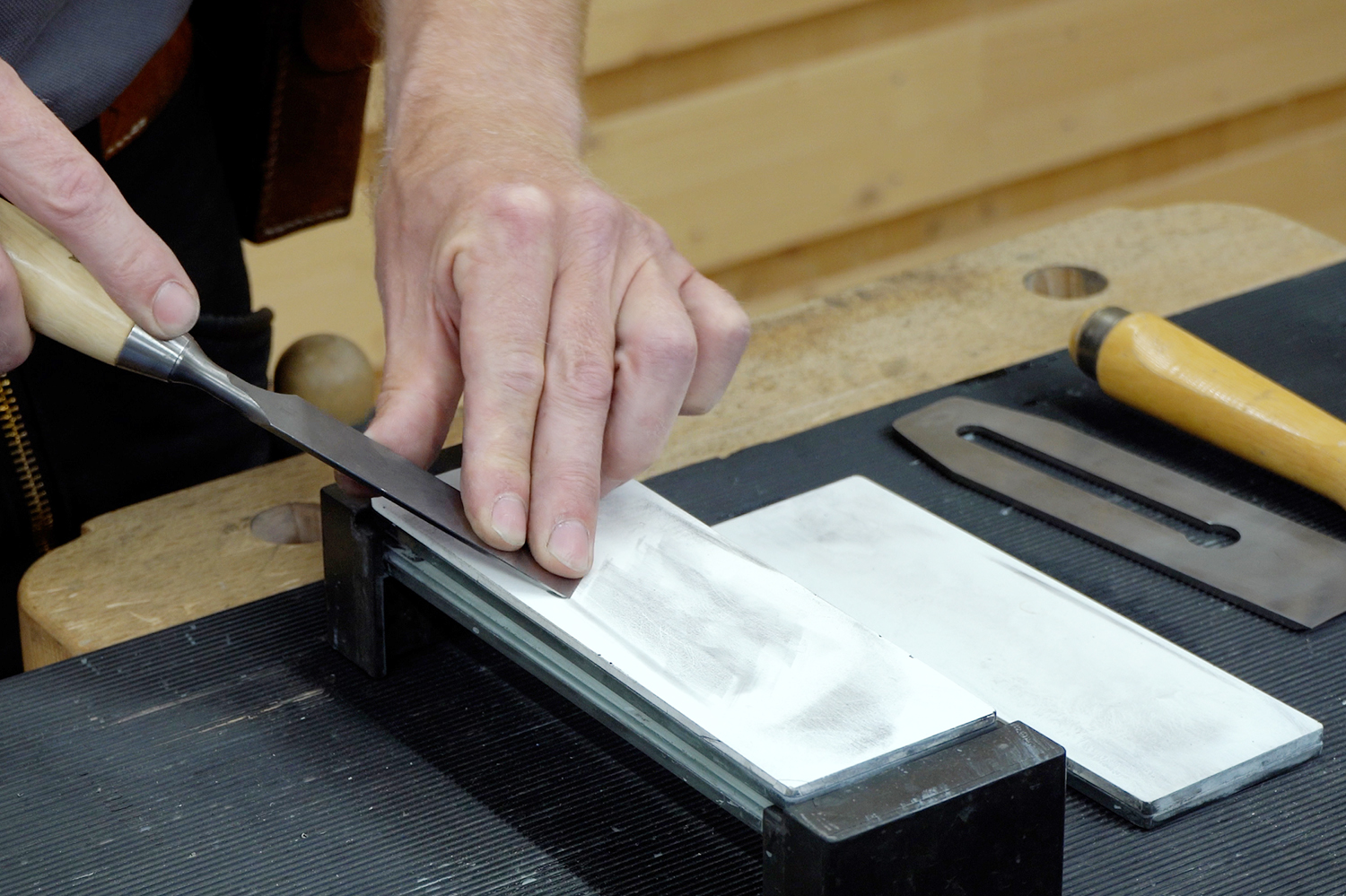
Many people assume that the liquid serves as a lubricant during sharpening. Of course, the use of water or oil facilitates the movement of the tool on the surface of the stone. However, the main reason for using liquids is that they prevent abrasion from the tool and stone from sticking to the stone surface. Without the liquid, the abrasive would settle between the grinding particles and prevent the particles from touching the steel and the stone from working effectively.
Bench stones are wetted with liquid during sharpening
Why are different liquids used?
Why are some stones used with oil and others with water? Some stones do not work with water because they either clog up quickly when used with water or because water rolls off their surface. These include, for example, the Arkansas stones from the US state of the same name, which clog very quickly when used with water.
Which sharpening stone is suitable for which tools?
Oil stones are generally harder, which is why their surface does not wear down as quickly. They remain flat for longer and tools that have a very small contact surface on the stone leave fewer grooves or scratch marks in the stone surface. This is why oil stones are very popular with sculptors, whose carving tools often have very strongly rounded cutting edges. Due to the greater stability of the stones, they can be used to produce filigree moulding stones(set of 5 pieces), which are necessary for removing the inner sides of sculpting tools.
However, the oil stones work more slowly due to their high hardness. With the comparatively softer waterstones, used, blunt abrasive particles break out of the surface more quickly and make room for fresh, sharp particles. This means that waterstones always have full sanding performance and are therefore faster and more efficient in their removal. However, the softer bond also causes waterstones to wear much faster, which is why they need to be dressed more frequently.
Which sharpening stones are more practical?
The liquid used also makes a difference when using the stones. Oil works very well in the workshop. Water is easier to handle when travelling. Water is almost always available everywhere and is much cheaper than oil. It makes less of a mess and leaves no stains. In the outdoor area, it is much easier to work with waterstones. A typical example of this is the whetstone for sharpening scythes. Water leads to corrosion very quickly on rusting steels (carbon steel). As most tools are made of this type of steel, the water must be removed without leaving any residue after sharpening or the tool blade must be dried thoroughly. Oil, on the other hand, prevents rusting.
Where do oil stones and water stones come from?
What are the typical properties of oilstones and waterstones?
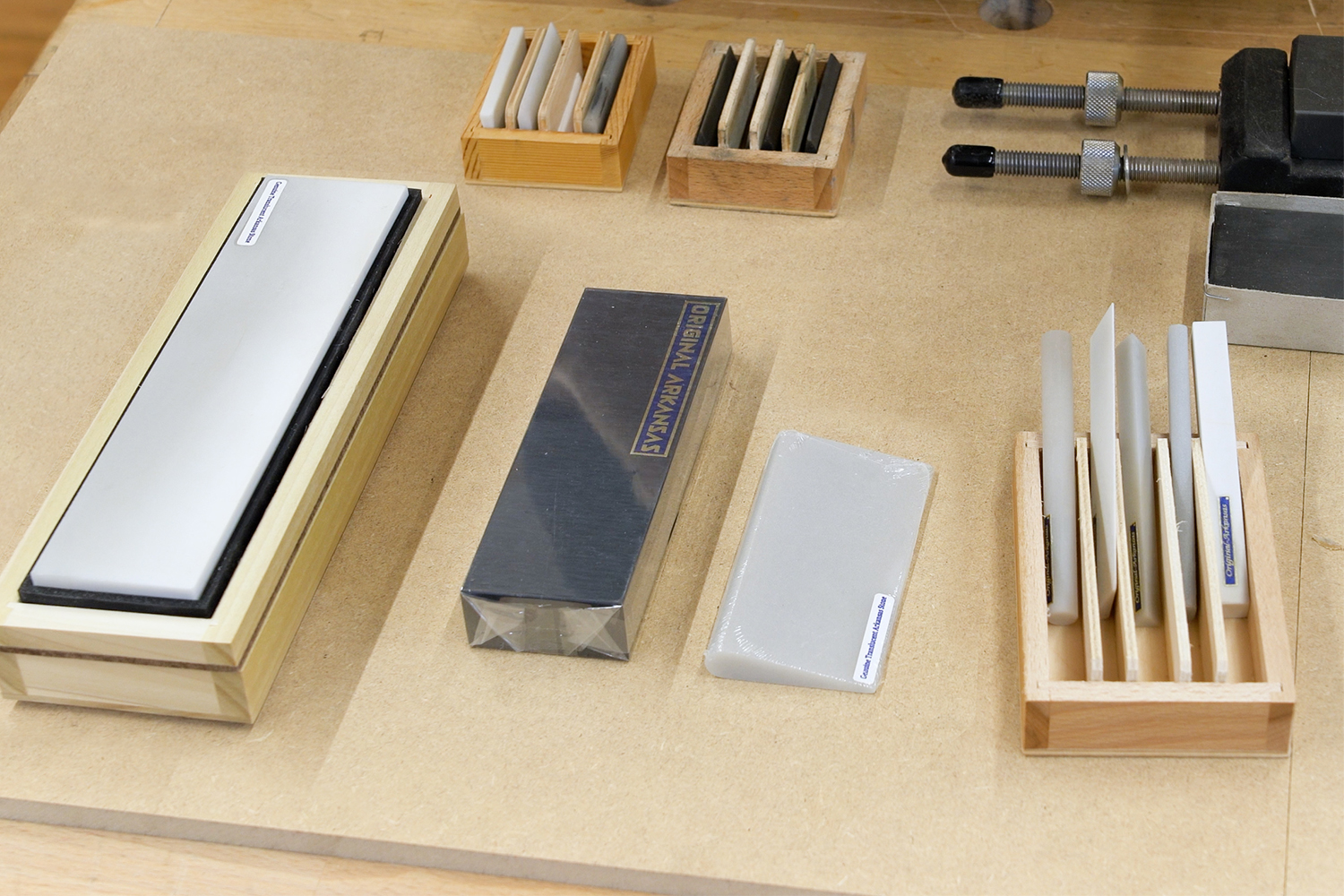
Oil stones. There are very fine-grained examples of the Arkansas stones mentioned above, with which the cutting edge can be polished very well. They are very popular as polishing stones. If such an oil stone is used for honing the cutting edge, it makes sense to also use oil stones for the preparatory work. However, the coarser variants of Arkansas stones are very soft, which is why synthetically produced stones have become established for this purpose. One manufacturer of such artificial oil stones is Norton. However, Norton stones are relatively coarse and the grain size difference to the Arkansas whetstones is quite large. This gap is closed by Kunsuto oilstones with medium grain sizes.
Typical representatives of oilstones
Oil stones should be cleaned from time to time to maintain them. It is best to use petroleum or turpentine substitute for this. Hollow-ground oilstones are dressed in the same way as waterstones, using dressing plates or water sandpaper. However, you should use one of the above-mentioned solvents for dressing.
Water stones. The Belgian chunk as a natural stone has already been mentioned. This is a very fine whetstone with very good removal and polishing properties. As the layers of rock from which the Belgian chunks originate are very thin, the whetstones are bonded to a slate backing. The darker slate stone only serves as a carrier and is not suitable for sharpening or polishing. Rectangular Belgian chunks are now rare and expensive; irregularly shaped pieces are usually found. Very good natural stones with different grain sizes also come from Japan. Due to the greater homogeneity and purity of the abrasives, artificially produced bench stones have become established for waterstones.
Soft and hard-bonded waterstones from different manufacturers
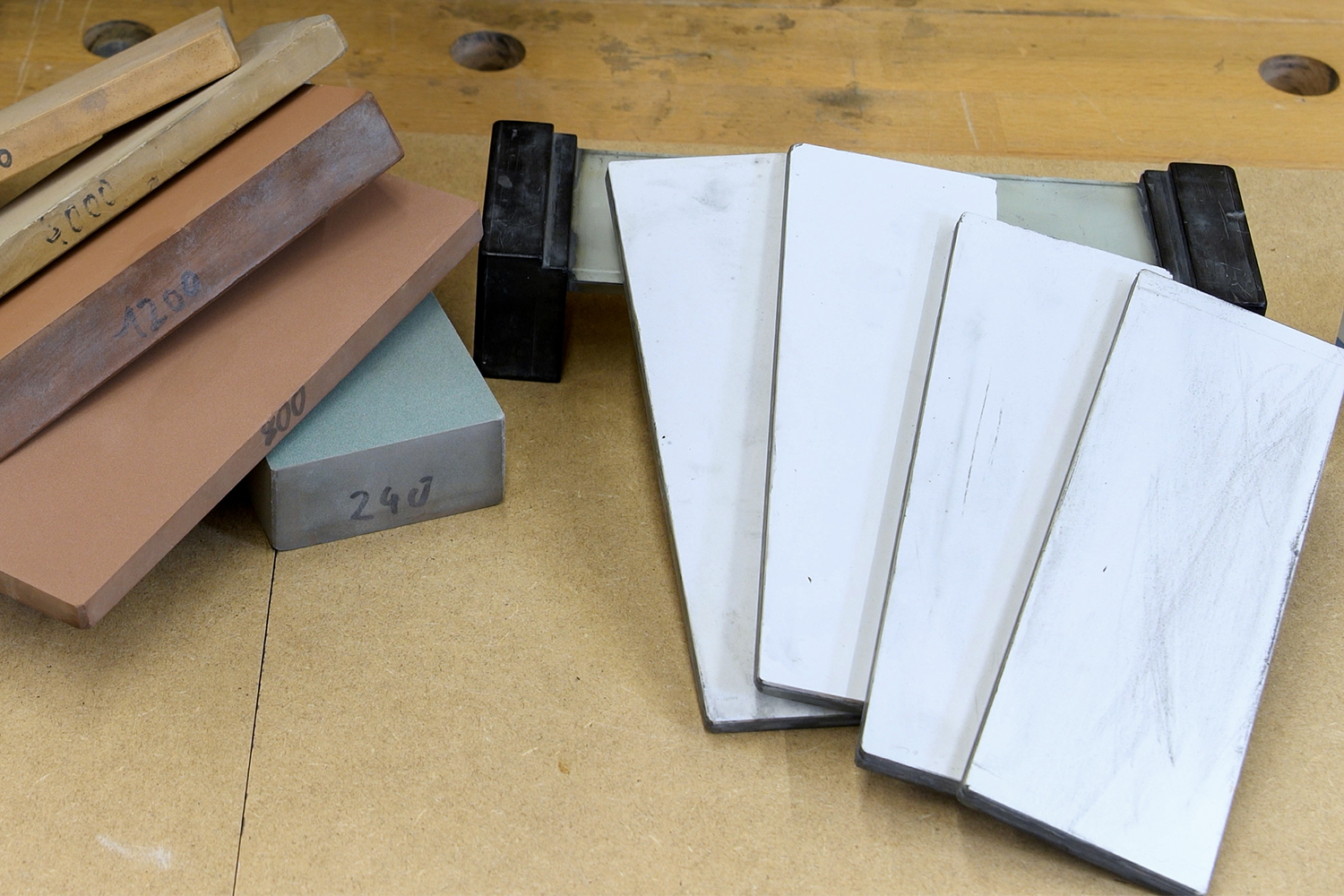
Sun Tiger/King stones are the most widely used. They are very soft and ideally suited to the pure carbon steels used in Japan. Their soft bond makes them very fast, but they often need to be dressed. Other Japanese manufacturers also produce stones with different hardnesses. Shapton offers comparatively hard-bonded stones for water stones. Shapton stones (e.g. Glass Stones Set) provide a very soft sharpening feel despite their very fast abrasion, even in the finest grit sizes.
Are there stones that can be used with oil and water?
One manufacturer of such stones is Missarka(Missarka combi sharpening stone, grit 150/1200 and Missarka combi sharpening stone, grit 1200/4000). These are also hard-bonded and can be used with both oil and water. However, you should stick with the chosen liquid once you have made your decision. It may still be possible to change from water to oil (the stone must be completely dry). Conversely, switching from oil to water involves a great deal of effort (the stone has to be cleaned with solvents).
What influence does the steel have on the selection of oil or water stones?
The alloy components of high-alloy steel grades are often very coarse-grained, which wears down the soft stones quickly. This is counteracted by a harder bond, which would speak in favour of using oil stones. However, there are now also very good, hard-bonded waterstones that are suitable for sharpening high-alloy steel grades. Whether you use oil or water stones is therefore up to you and depends on your preferences and requirements.
We show you how to use sharpening stones correctly in our online course "Sharpening high-quality knives".


