How to find the right scythe
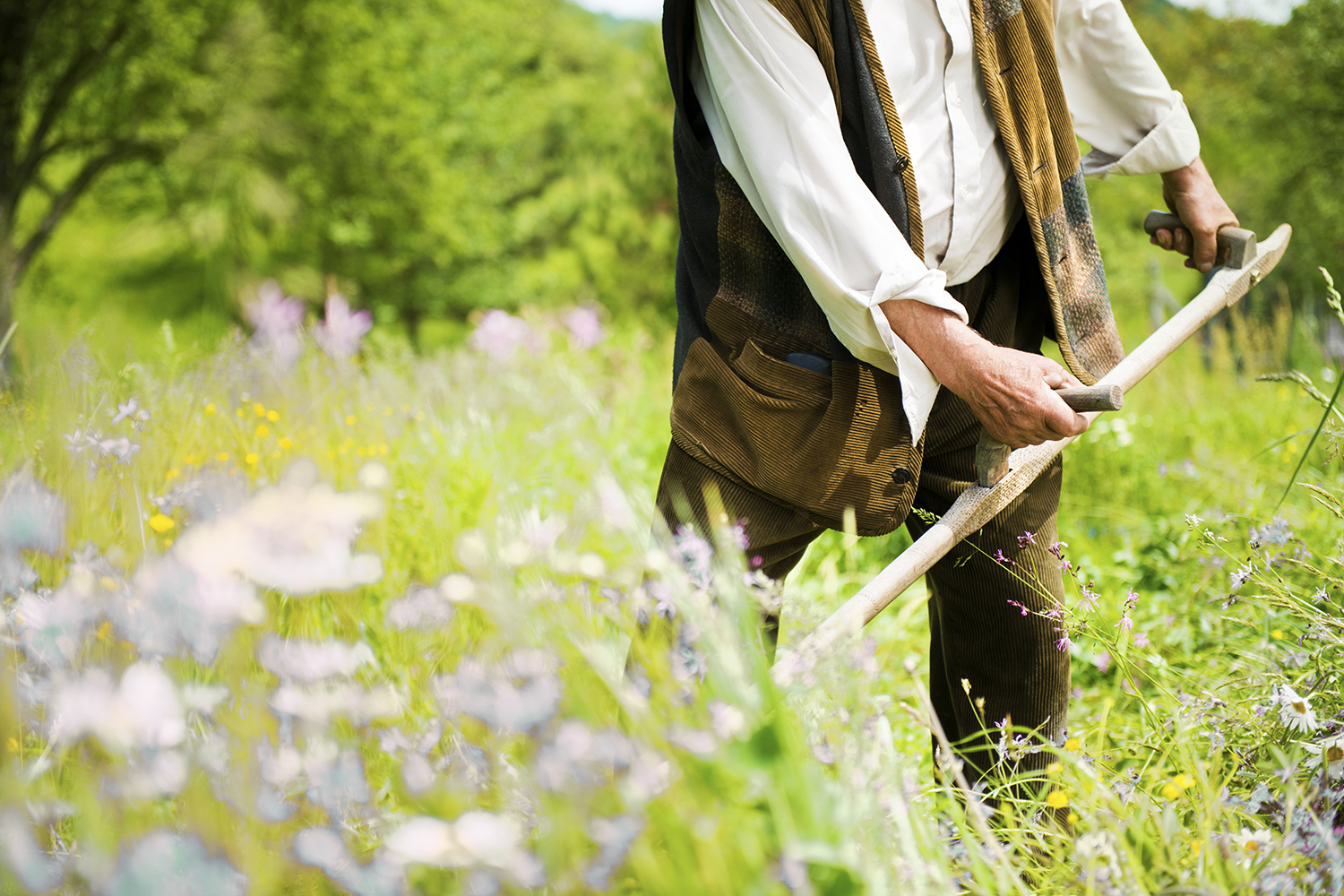
There are different scythe shapes for different tasks in the garden and in the field. In this article, we will give you tips on how to select a suitable scythe blade and how to adjust the scythe arm to your individual proportions in order to mow effectively and ergonomically.
The right scythe blade
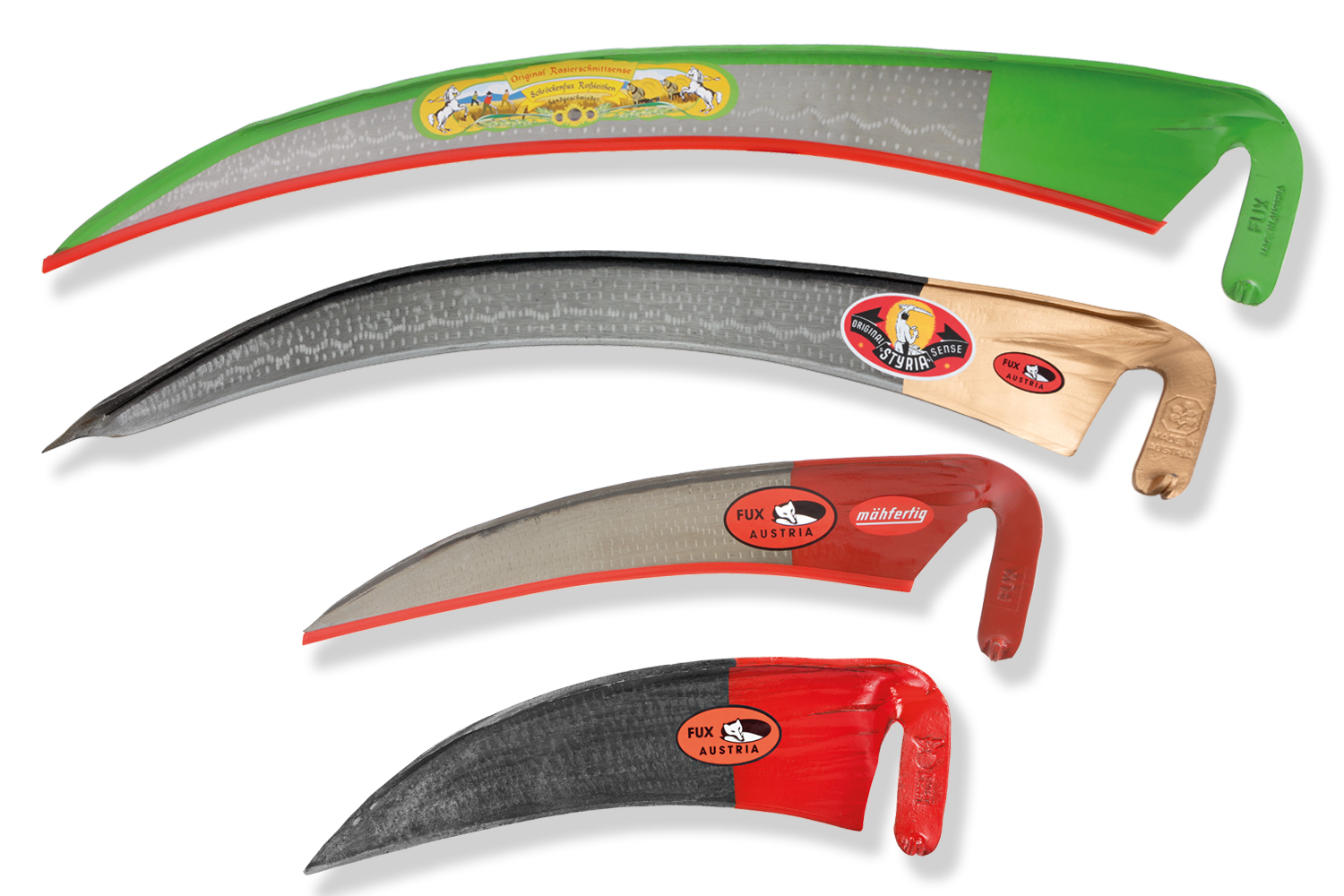
There are numerous, sometimes very different scythe blades, whose individual shapes are often due to their regional origin. The scythe blade can look very different depending on which blacksmith made the scythe and whether it comes from a mountainous region or the lowlands, for example. The main reason for the many shapes, however, is the variety of tasks for which scythes are used. There are different scythe blades for mowing meadows and pastures, for clearing bushes and undergrowth or for mowing in stony terrain. To put it simply, the harder and more resistant the plant material is, the shorter and more stable the scythe blade should be. For example, a long, narrow razor-cut blade is used to mow a large meadow, while a shrub and undergrowth scythe with a short, wide blade is favoured for keeping woody plants short.
Different scythe blades: razor-cut scythe, Styria scythe with stone tip, wild growth scythe and shrub and undergrowth scythe (illustration not to scale)
The right scythe throwing arm
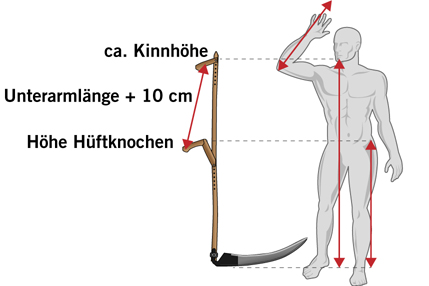
To be able to mow effectively and ergonomically, you need to select a throwing arm that fits your height and adjust the two handles to your individual proportions. You can find information on the height for which a throwing arm or scythe is suitable in the DICTUM Shop directly in the product description. When set up, the throwing arm (with mounted scythe blade) should reach from the ground to about your chin.
With high-quality scythe throwing arms, it is possible to set the two handles to the positions that suit you. The front handle is mounted at the height of the hip bone. The rear handle is orientated to the front handle and is mounted at a distance that corresponds to your forearm with outstretched hand plus approx. 10 cm. You can adjust these guide values further and, for example, increase the distance slightly for wider shoulders/hips or reduce it slightly for a narrow build.
The scythe throwing arm should fit your body measurements
Optimising the angle of the scythe blade
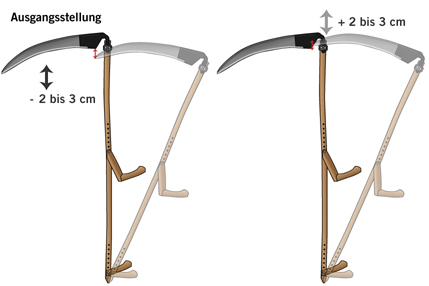
You can adjust the cutting performance of the scythe by adjusting the angle of the scythe blade. Here's how to find the "normal position" to start with:
- Set up the scythe vertically, scythe blade at the top.
- The starting point is the beginning of the cutting edge near the throwing arm, mark the point.
- Swivel the scythe with the tip of the scythe blade towards the mark.
- The tip should arrive approx. 2 to 3 cm below the starting point.
For more effective, but also somewhat more strenuous mowing, the tip can be tilted outwards, approx. 2 to 3 cm already makes a significant difference. Try this out if you already have some experience in mowing and have already mastered the correct swing.
In the starting position, the tip of the scythe blade should be approx. 2 to 3 cm below the starting point