Brush, roller or sponge - which is better?
Different application tools are sometimes more and sometimes less suitable for different paints, such as oils, varnishes or stains. In this article, restorer and course instructor Melanie Kirchlechner compares different brushes, rollers and sponges in a practical way and gives tips on how to use them correctly.
What can brushes do?
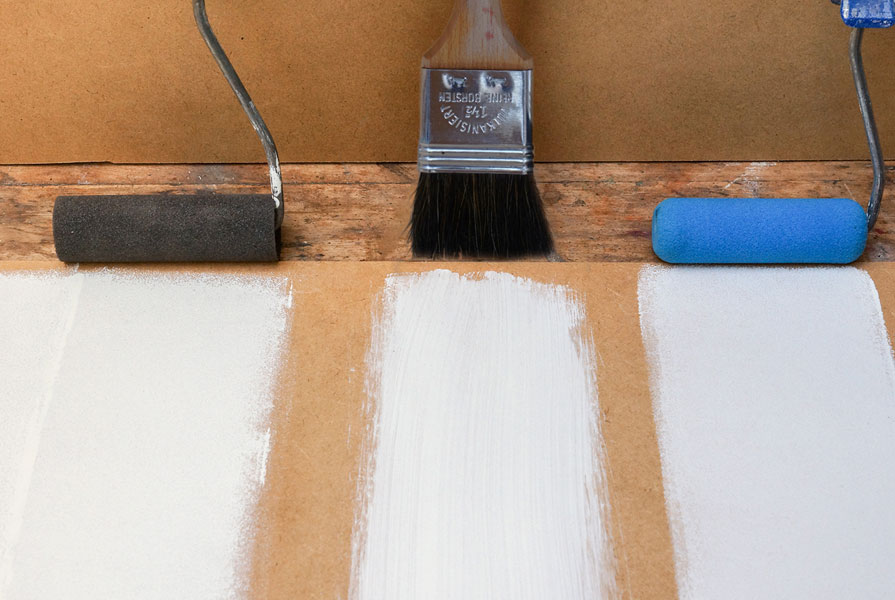
Ring brushes made from natural hair are the oldest and most common application tools of all. The soft hair brushes are intended more for artistic work, while the stiffer bristle brushes are much more effective for painting surfaces, edges, recesses and curves.
Flat brushes are a more recent development and are suitable for painting surfaces, edges and recesses. They are available in all conceivable widths and thicknesses.
Tip: Particularly wide, thick flat brushes for very large surfaces are also known as "surface brushes".
Brushes can be used to apply almost all surface products quickly and effectively

With natural bristles, whether as a ring or flat brush, both solvent-based systems such as chemical stains and glazes as well as oil-based products can be optimally applied. Synthetic bristles, whether ring or flat brushes, are ideal for working with water and alcohol-based products such as water-based stains and varnishes (acrylic varnish), as well as alcohol-based products such as spirit-based stains and brush-on shellac.
Tip: If you only dip brushes into the paint up to about two thirds of the hairs or bristles, the application will be particularly clean!
What can rollers do?
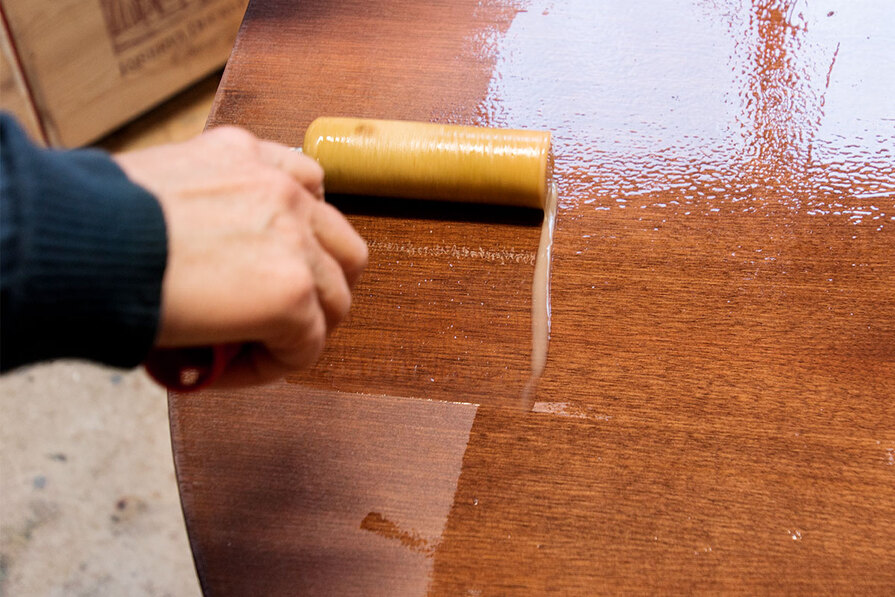
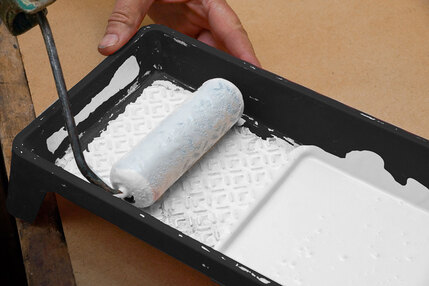
Paint rollers or rollers apply a larger quantity quickly than brushes. Rollers are particularly recommended for quick-drying paints. In addition, the surface structure on larger areas is more even than with brushes because the application pressure is better distributed. Fleece rollers, whether with natural or synthetic hair, apply more product in less time than foam.Foam rollers , with their micro-fine pores, are suitable for both flat and uneven application. The application is particularly even if you wipe off the excess of a roller soaked with paint in a paint tray.
Tip: For larger areas, it is advisable to first roll on the paint quickly with a fleece roller and then level out any uneven layer with the foam roller . But please do not press, otherwise you will push a "bow wave" in front of the roller!
Foam rollers with rounded edges are ideal for quickly coating surfaces
What can sponges do?
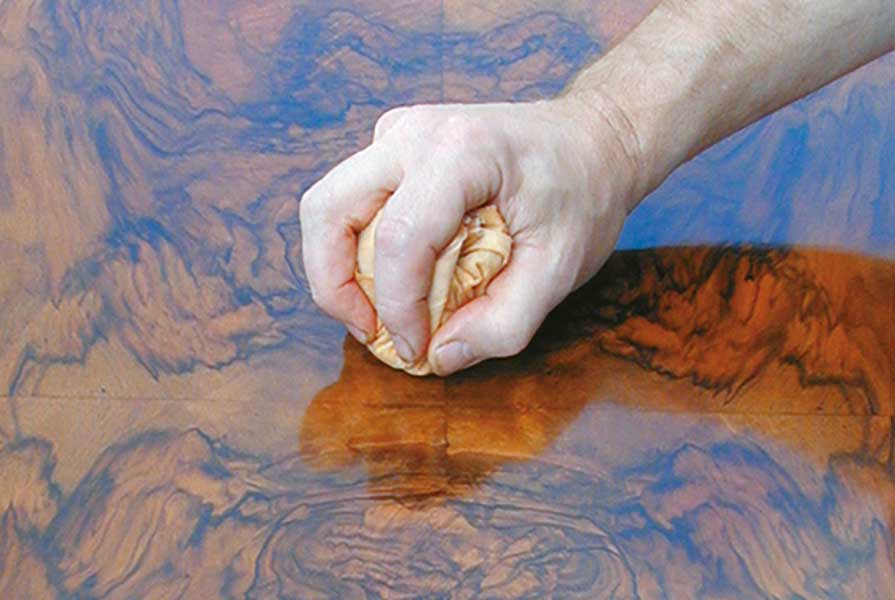
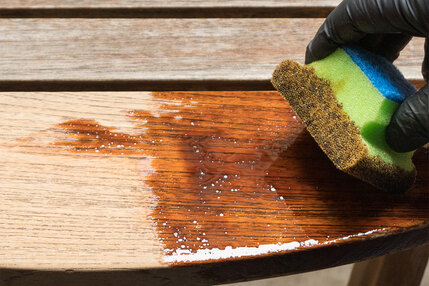
Clean-cut household sponges are particularly suitable for applying viscous to thin oils, stains and glazes.
Tip: If you squeeze out a sponge that is initially very damp, you can optimise the application quantity!
Cut-to-size household sponges can be used to apply penetrating oils in a rich and clean manner
How do you clean applicators?
Fleece rollers are generally more difficult to clean. Brushes and foam rollers are best cleaned with the appropriate thinner. For water-thinned systems such as chalk paint, stains, acrylic paints, glazes etc., this is tap water. Essential balsamic turpentine is best for cleaning oil-based products. Alcohol-soluble products such as spirit stains and shellac products are best cleaned with methylated spirits.
Tip: To minimise the amount of dirty thinner you have to dispose of, rub the brushes and rollers dry on a piece of cardboard or rough-sawn wood before placing them in the thinner for a short time.
Environmental tip: Special brush cleaners are available for stubborn cases and dried-on applicators. Based on xylene, however, they are classified as toxic and must never be disposed of via the sewage system!
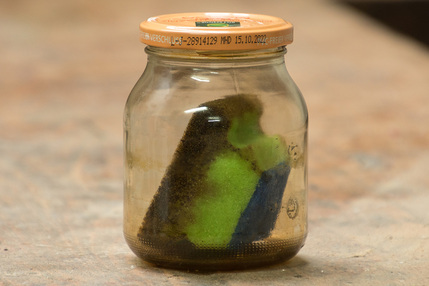
Sponges remain elastic and usable for several weeks in a tightly closed jar. Once dried out, they can be disposed of with household waste.
How to find the right application tool:
Important questions need to be asked before choosing the right application tool:
- What is the base or dilution of the product: solvent-based - oily - water-based or alcohol-based?
- What is the viscosity of the product: thin - liquid - viscous - paste-like?
- How large is the surface to be treated? Does it have corners and/or indentations?
The following table provides information on which product can be optimally applied with a brush, roller or sponge:
x means well suited -- means unsuitable
Brush, natural | Brush, synthetic | Roller, fleece or flocked | Roller, foam | Sponge | |
| Chalk paint, chalk paint | x | x | x | x | -- |
| Milkpaint, milk colour | x | Foam brush | x | x | x |
| Water stain | Stain brush | x | -- | -- | x |
| Spirit stain | -- | x | -- | -- | x |
| Oil absorbing | x | x | x | x | x |
| Oil layer forming | x | x | x | x | x |
| Decking oil layer-forming | Surface coating | -- | -- | x | x |
| Hard wax oil layer-forming | x | x | x | x | x |
| Oil pigmented | x | x | x | x | x |
| Glaze natural resin | -- | x | x | x | x |
| Glaze synthetic resin | x | -- | x | x | x |
|
Wax, pasty | -- | -- | -- | -- | Rags |
| Lacquer, natural resin | x | x | x | x | x |
| Lacquer, synthetic resin | x | x | x | x | x |
| Coating shellac | -- | x | x | -- | -- |