
10 tips for accurate measuring
"If you measure, you miscalculate" is an old saying in the trade. We give you simple tips to help you make fewer mistakes when measuring and scribing in future.
"Always the same" is the goal when measuring
- Always use the same unit of measurement, centimetres or millimetres, when planning. If different units are mixed up, there is a risk of confusion. 28.5 mm then quickly becomes 28.5 cm.
- Always use the same measuring tool. It is best to use the same folding rule for measuring and marking out. If you constantly switch between metre rule, tape measure and ruler, you should not be surprised at deviations.
- Define a reference edge (angled edge) on the workpiece and start each measurement at this edge.
This is how it becomes accurate: Place the metre rule at 10 mm and extend the final measurement accordingly
Using tools correctly
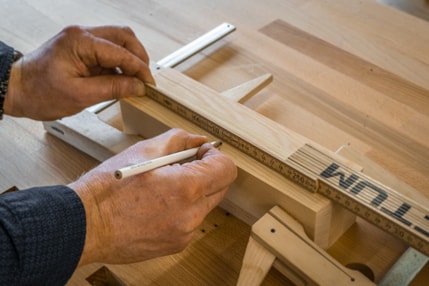
- Place a folding rule upright on the workpiece and start the measurement at 10 mm. This allows you to mark the exact measurement on the surface and ignore any deviations caused by a loose metal clip on the first link of the rule. However, do not forget to add the 10 mm at the end point.
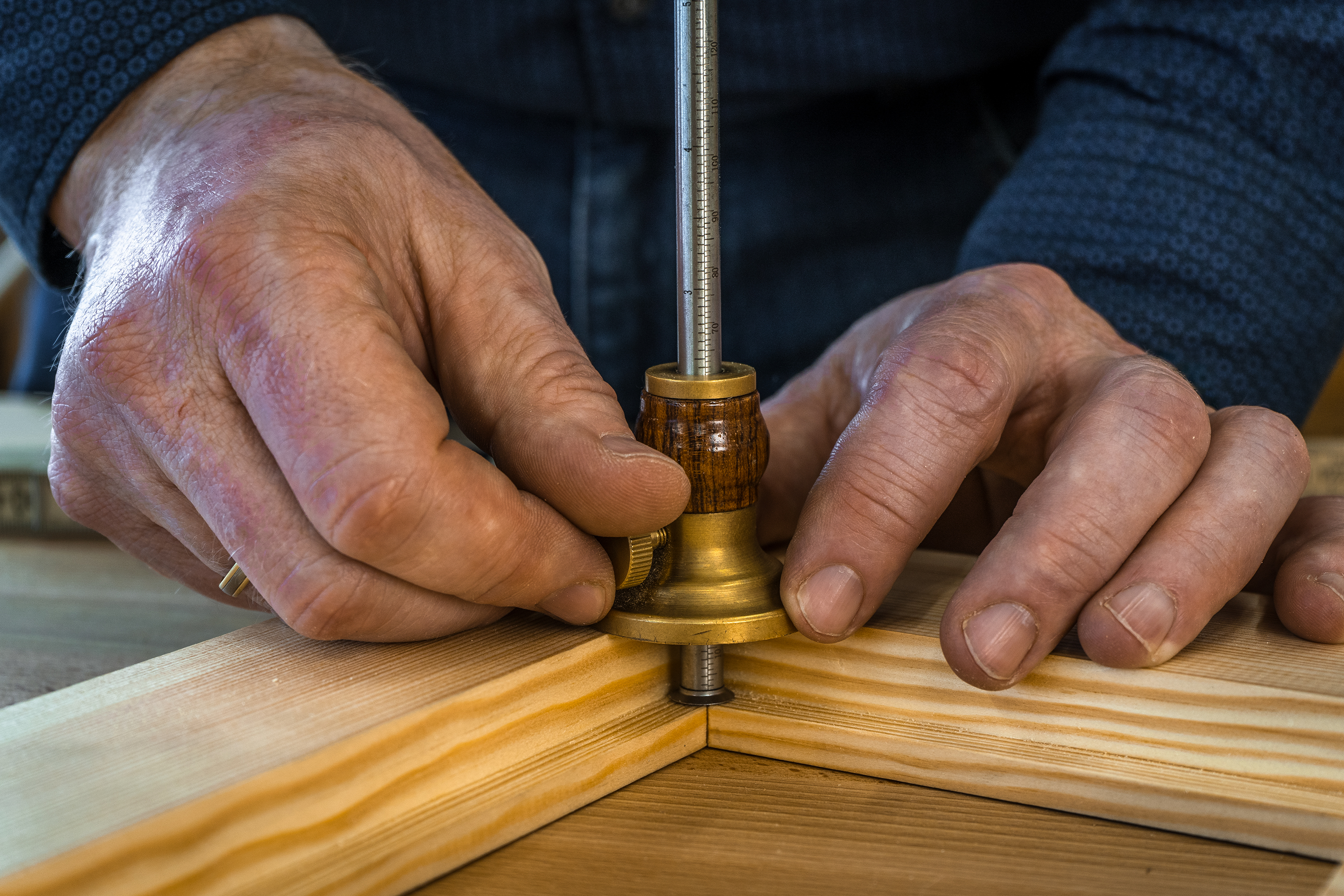
- Take depth measurements using a moulding gauge with a cutting wheel and transfer these measurements directly to other workpieces. For example, you can mark the material thickness, mortise depth or rebate width more accurately than if you measure and mark the depth.
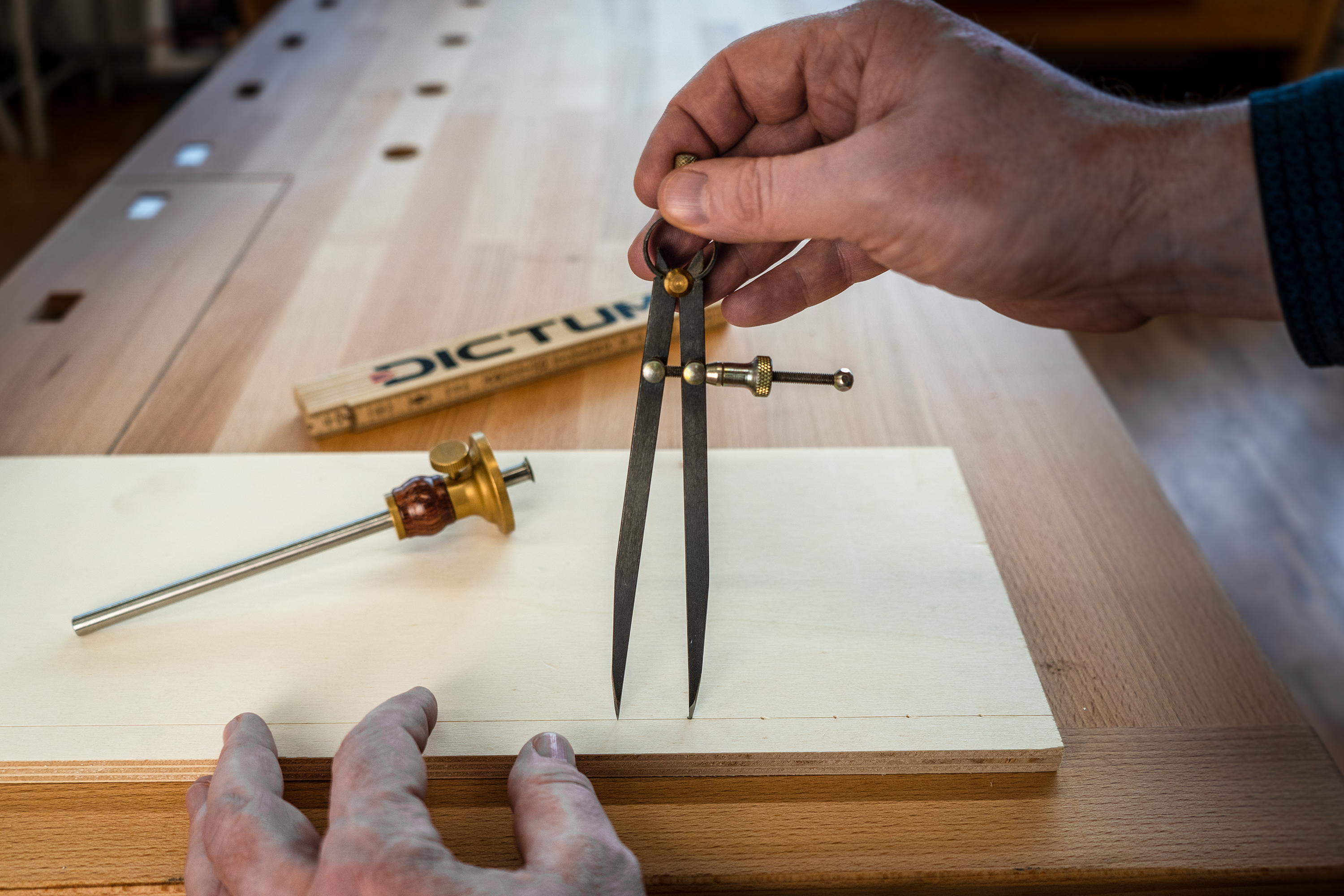
- Use a pointed compass for measurements that are repeated several times. The positions of dowels and screws or distances between studs and shelf supports will always be consistent.
A moulding rule with a cutting wheel is suitable for transferring depth measurements
Best together
- Measure the longest dimension and then divide it into individual sections. This is more accurate than adding up individual measurements. Where possible, measure with fractions, e.g. total height 90 cm, seat height 45 cm = half the height, cross strut at the top at 77.5 cm = centre between total height and seat height, etc.
- Mark out workpieces with identical dimensions together. It is best to clamp the parts together with a clamp so that they do not slip when turned round.
- Transfer instead of measuring. If the same dimensions are required on another workpiece, mark a reference line and align the workpieces with it. All other dimensions are transferred.
Can be set precisely: Dividers with adjusting screw
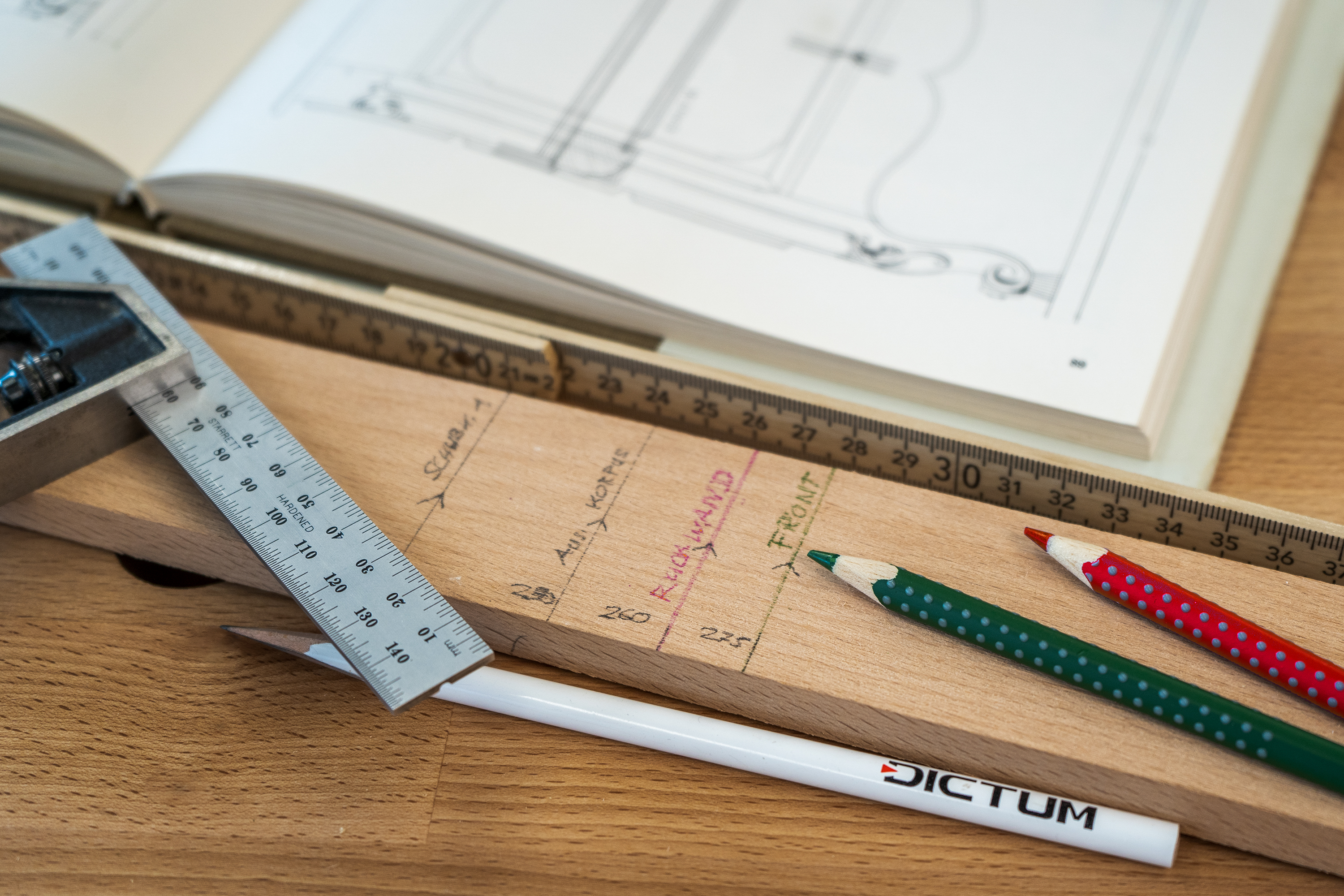
- Make yourself a "story stick". Mark all the dimensions for a project on a planed strip. Label the markings with meaningful designations (e.g. length of table leg, top edge of strut). To be able to distinguish between different components, use different colours, one for each part. It is particularly worth making a "story stick" if you want to build a piece of furniture several times.
Storage space for dimensions: the complete project on a story stick.


