Wood is exposed to a range of stresses, particularly in outdoor applications. It is a natural process that dead wood—no longer supplied with nutrients via the tree’s roots—breaks down over time through the action of microorganisms and exposure to ultraviolet radiation from sunlight. For processed timber components in use, these environmental factors must be actively counteracted to ensure durability.
Contents:
What risks is wood exposed to outdoors?
UV light breaks down key components of wood, particularly lignin. When the surface is exposed to weathering, the water-soluble degradation products of lignin are washed out by rain, leaving behind the photochemically stable, silvery-white cellulose.
In addition to purely visual changes in colour, this process leads to the characteristic greying of wood. Moisture from dew and rain further encourages colonisation by dark mould fungi and the deposition of dust particles, causing the surface to gradually turn grey to black over time.
Garden gate and fence made of larch. The older section of the fence has already weathered to a pronounced grey tone.

Wood-destroying organisms contribute to the natural breakdown of timber. Insects and fungi are generally only a threat when the wood is not adequately protected from moisture due to insufficient constructive wood protection.
Fungi require a wood moisture content of at least 20 % to survive. With effective constructive protection in place, outdoor wood typically remains at a moisture level of around 15–18 %, which is below the threshold favourable for fungal growth. If such protection cannot be permanently ensured, timber components must be safeguarded against fungal attack through impregnation or a protective coating system.
Animal wood pests are usually the larvae rather than the adult beetles. Depending on species and environmental conditions, these larvae live in the wood for between one and ten years before pupating and emerging as beetles. The adult beetle typically has a lifespan of only three to five weeks and does not feed during this period.
Most wood-boring insects are so-called freshwood pests, laying their eggs exclusively in freshly cut, sap-rich timber. In Germany, only three native species are known to infest already installed structural timber. These so-called structural timber or drywood pests include the common furniture beetle (woodworm or deathwatch beetle), the house longhorn beetle and the powderpost beetle.
If cracks develop in the wood due to inadequate protection, they can become entry points for wood-destroying organisms.
What is boiled linseed oil?
Boiled linseed oil is produced by heating linseed oil, which initiates a polymerisation process that causes the oil to thicken. By allowing it to cool and storing it in airtight containers, this process is halted. During heating, drying agents known as siccatives are added. The type and quantity of siccative used have a significant influence on drying times and the environmental compatibility of the varnish.
DICTUM uses only aged and refined, cold-pressed linseed oil for its linseed oil varnishes. It is gently boiled to keep it as fluid as possible, ensuring excellent penetration and relatively fast drying. The manganese-based siccatives used are among the most environmentally compatible drying agents available and are subject to strict quality control in terms of dosage. This significantly reduces drying time and ensures a streak-free finish even in variable weather conditions.
How do interior and exterior varnishes differ?
First of all: boiled linseed oil on its own offers no UV protection due to its clear colour and should therefore only be used outdoors in combination with pigmented linseed oil pastes.
For the production of our Boiled Linseed Oil for Exterior Use (No. 810097), high-quality cold-pressed linseed oil is used. During the cooking process, small amounts of manganese-based siccatives are added. To ensure long-term protection against fungal attack, a low dose of IPBC fungicide is also incorporated into this varnish.
The wooden gate is primed with exterior-grade linseed oil varnish.

Boiled Linseed Oil for Interior Use (No. 810093) is also produced from cold-pressed linseed oil with small amounts of siccatives added. However, it does not contain any fungicides. When mixed with pigment pastes that have a high zinc content—and therefore provide their own resistance to fungal growth—this boiled linseed oil can also be used for exterior applications without added fungicides. Zinc provides long-lasting protection against fungal attack.
Which boiled linseed oil is recommended for outdoor use?

As exterior surfaces are usually not fully protected from the elements, coatings should dry as quickly as possible. For this reason, boiled linseed oil is generally recommended as a base for exterior finishes.
If you prefer to avoid siccatives, a small proportion of the pigment Burnt Umber can be added to the linseed oil paint instead, as it naturally accelerates drying.
What alternatives are there to boiled linseed oil?
How are linseed oil paints applied?
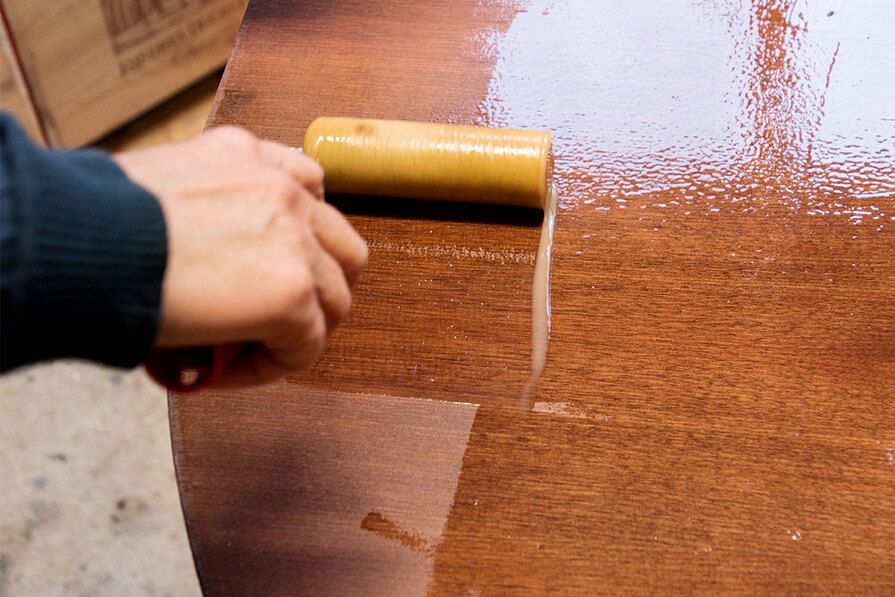
For applying the finish, dense brushes with firm, high-quality bristles (China bristle) are best suited. Linseed oil must always be worked out thoroughly and effectively massaged into the wood surface. Coatings should be applied in thin layers only. A thick film dries more slowly and may lead to wrinkling or surface distortion.
How to build up an exterior coating system
To ensure optimal protection of untreated wood, a three-coat system is recommended. Sand the bare wood to a grit of 180 and remove all dust from the surface.
The first coat—a primer of cold-bleached linseed oil (No. 705275) or boiled linseed oil—must be allowed to dry thoroughly (at least 48 hours for linseed oil, approx. 24 hours for boiled linseed oil). This is followed by the first coat of linseed oil paint.
Drying times for linseed oil paints depend on a range of factors. In general, they cure faster in well-lit rooms due to UV exposure, while drying is significantly slower in dark environments such as cellars. Outdoors, the next coat can typically be applied after around 24 hours.
The third and final coat further extends the service life of the finish.
Linseed oil paint is not recommended for resin-rich, freshly planed timber—particularly larch. However, once the wood has been weathered for around one year, application is generally unproblematic.
Can old finishes be renovated with linseed oil paints?
On exterior surfaces, the linseed oil used as a binder in the paint is gradually broken down over the years by exposure to wind and weather. After approximately two to three years, the pigment layer remains on the surface in a dry state and can be rubbed off.
Before repainting, simply wipe the surface with a damp cloth. If the surface is still smooth, sanding is not necessary. A light application of linseed oil is usually enough to rebind the loose pigment particles and quickly restore a fresh, even appearance to dull areas.
If the pigment layer is still intact, it can be re-consolidated with linseed oil.

How should wooden garden furniture be maintained?
Outdoor furniture is constantly exposed to changing weather conditions. On sunny days, the surface heats up under direct sunlight, while at night it cools down again and moisture forms as dew in the morning. In addition, furniture is regularly exposed to rain showers and thunderstorms. This constant cycle of heat and cold, wet and dry places considerable stress on the wood.
For this reason, garden furniture is typically made from naturally durable species such as larch or teak. However, even these robust timbers require occasional maintenance.
For the care of outdoor furniture made from teak, acacia, larch and other durable hardwoods, specialised maintenance oils are particularly suitable, such as ASUSO® NL Larch Oil (No. 810069) or Terrace Oil (No. 714210). These oil blends are formulated for the respective wood species and help replenish essential components, supporting long-term protection against weathering and environmental stress.
For exterior wood protection


Tip: Whether you are applying a new finish or carrying out renovation work, always test the coating on an inconspicuous area first.
You may also be interested in the following articles
Brush, roller or sponge - which is better?

10 tips for storing paints, varnishes and glues